Decommodification and social accountability in cooperative housing movements restricted by neoliberal housing systems. A comparative study of policies and practices in Montréal and Barcelona.
McGill University
School of Urban Planning
Montréal / Tiohtià:ke, QC, Canada
M.Sc. in Urban Planning Policy and Design
Supervised by:
Prof. Nik Luka, Associate Professor, Peter Guo-hua Fu School of Architecture and School of Urban Planning, McGill University
Prof. David Wachsmuth, Associate Professor, School of Urban Planning, McGill University
ABSTRACT / PROJECT CONCEPT
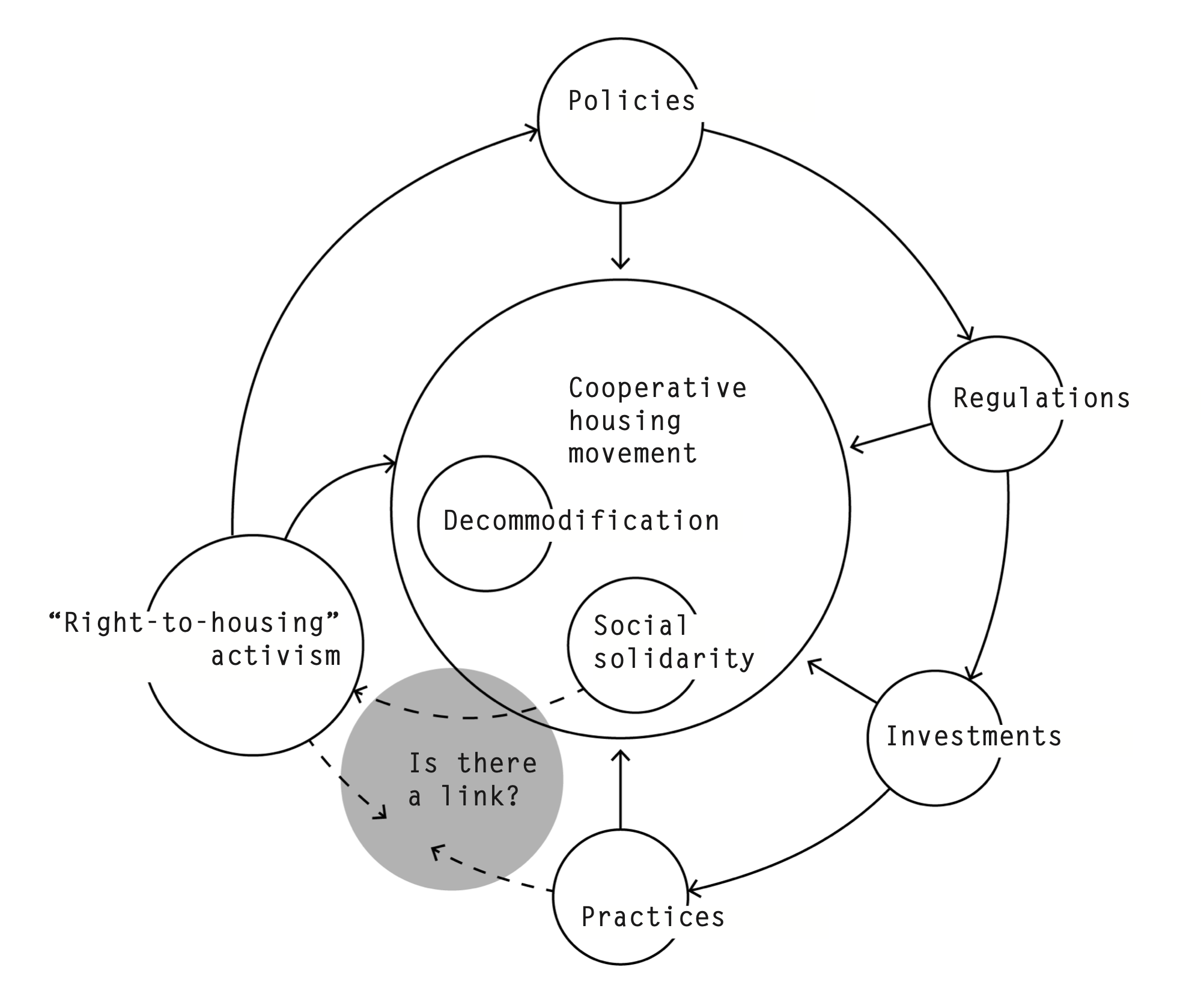
This study explores how non-commodified cooperative housing initiatives contribute (or not) to stable non-profit housing options for low- to median-income households amidst a growing crisis of housing unaffordability engendered by housing systems under neoliberal regimes, and whether there is evidence of proactive social accountability through existing links with housing advocacy groups and solidarity networks. To address this question, long-term affordability mechanisms (policies and practices) that are embedded in non-commodified cooperative housing models are studied vis-à-vis voluntary and proactive actions of social accountability, such as: what dynamics (if any) connect cooperative housing initiatives with broader forms of housing activism and how cooperative housing initiatives contribute to housing advocacy groups, solidarity networks and mutualism. For this purpose, primary data is generated through interviews with experts in housing cooperatives (n=4), housing activists (n=4), and residents of six existing housing cooperatives (n=8), equally split between two cities with distinct attributes: Montréal, with its mature institutional landscape of cooperative housing, and Barcelona, with its emerging cooperative housing movement. The study is expected to confirm or contest the “binding” social contract that is enacted in non-commodified cooperative housing initiatives through public investment, policies, regulations and involvement of housing advocacy groups and solidarity networks, as well as the following themes:
• cooperative housing initiatives are able to contribute in significant ways to longer-term (‘deep’) housing affordability
• with appropriate practices and regulations, cooperative housing initiatives are inclusive towards low- to median-income households,
• public investment and governmental involvement are crucial for keeping cooperative housing affordable and accessible for low- to median-income households, and
• cooperative housing initiatives exist within broader cooperative movement, social economy and “right-to-housing” frameworks and tend to be involved in advocacy for housing rights, thus effectively “giving back” to solidarity networks, urban-based social movements, and housing advocacy groups, as well as contributing to knowledge exchange, mutualism, and public discourse on housing rights.
Key words: cooperative housing, social economy, decommodification in housing, social accountability, housing movements, housing advocacy, right to housing
RESEARCH GAP
Nearly all the existing studies on cooperative housing movements look into the context of long-term affordability and accessibility (Baiges et al., n.d.; Ferreri & Vidal, 2022), as well as political and lifestyle choices of its residents, and rootedness in housing activism, while some look into an elitist nature of such housing estates, particularly in North America and Great Britain (Arbell, 2022; Madden & Marcuse, 2016). There is a notable lack of empirical research on the social accountability of cooperative housing projects over an extended post-development timeline, while in the majority of cases, they benefit from public investments; in some cases, they are built on public land and are subject to relevant state regulations. There is a clear scarcity of data on the extent to which the cooperative housing movements engage with housing activists and solidarity networks once they are established and on the dynamic of their relationship with housing movements and solidarity networks, which can be taken as one of the measurements of social accountability and will be done in this study.
Understanding the complexities of formal and voluntary social accountability is crucial for the sustainability of the movement as a whole and within the principles of cooperativism and solidarity economy.
RESEARCH DESIGN
RESEARCH QUESTIONS
The following main research question will be addressed:
How fully and effectively are decommodification and social accountability achieved in cooperative housing movements in Montréal and Barcelona?
The main research question will be answered through a series of research sub-questions, two (2) analytical and four (4) empirical.
Analytical sub-questions:
• What similarities and differences can be seen in the claims made about housing affordability, accessibility (inclusivity), and decommodification among (a) residents of site-specific cooperative housing initiatives, (b) key actors in the cooperative-housing sector, and (c) housing activists?
• What are the long-term strategies for the decommodification of cooperative housing?
Empirical sub-questions:
• What policies and practices support long-term housing affordability and stability of living arrangements within cooperative housing?
• What strategies are considered for ensuring that low- to median-income households have access to cooperative housing, and how does it translate on the ground?
• To what extent are cooperative housing movements involved in and collaborate with housing advocacy groups, housing activists and solidarity networks and vice versa?
• How involved are housing cooperatives in advocating for the cooperative housing movement and housing rights?
POLICY RELEVANCE & ACADEMIC CONTRIBUTION
Research findings will contribute to the advancement of academic knowledge on:
• decommodification practices through alternative housing tenures, in this case, housing cooperatives;
• interaction of housing cooperatives with solidarity networks and solidarity economy during development and post-development;
• interaction of housing cooperatives with housing movements post-development;
• how cooperative housing initiatives contribute back to housing movements and solidarity networks and shape them post-development;
• if the absence of larger involvement/response of the housing cooperative movement to the housing unaffordability crisis in Montréal is merely a symptom of a larger structural problem.
The research will also contribute to:
• the operationalization of decommodification of housing, and will demonstrate the role of housing movements as they apply appropriate pressure for policy change, and
• the methodological insights on comparative studies at different timelines and at different stages of maturity.
OVERVIEW OF CASE STUDIES: MONTRÉAL
Concentration of co-op dwellings on the Island of Montréal (map):
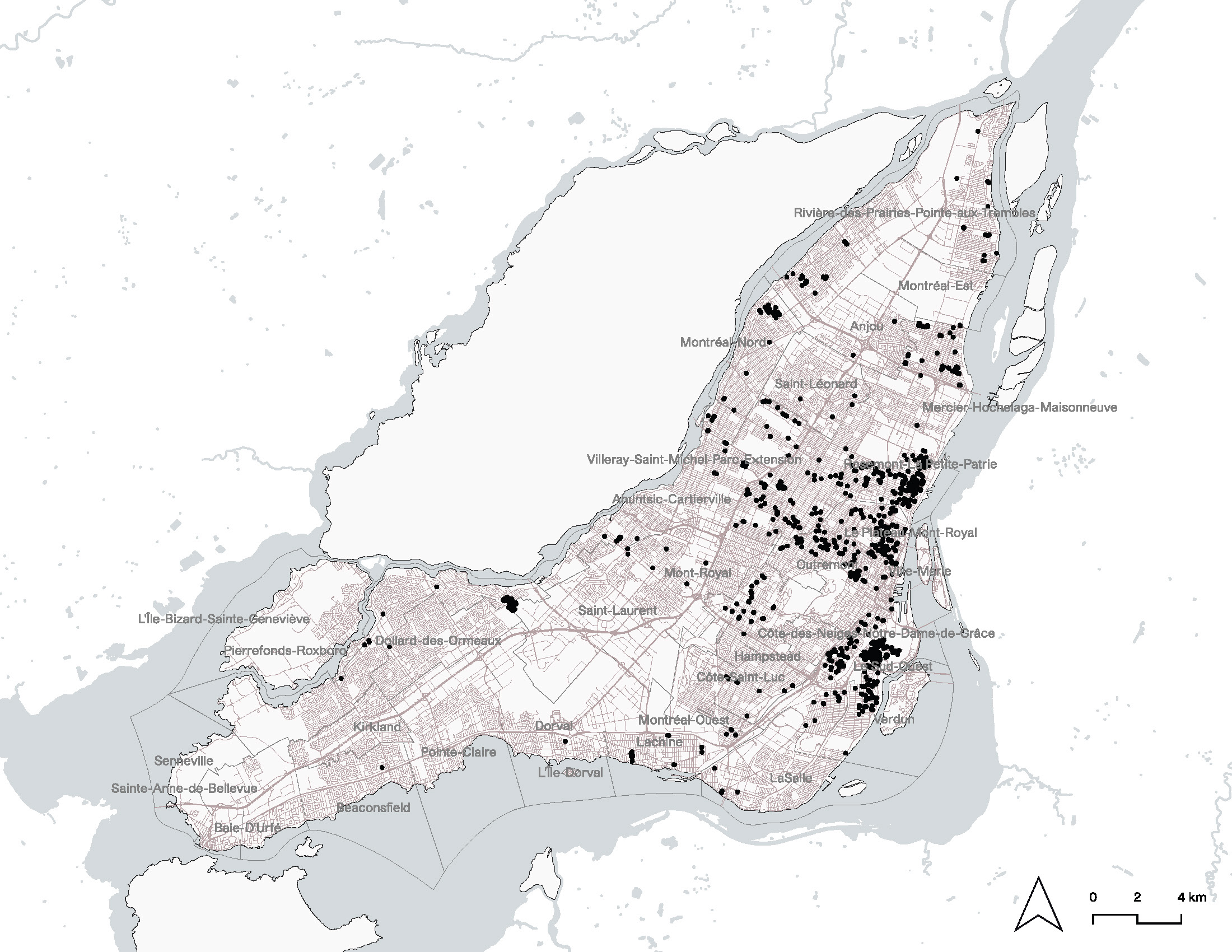

* Source: Logements hors marché dans l'agglomération de Montréal; Données Ouvertes Montréal
** Source: FHCQ (Fédération d’habitation coopérative du Quebec) public catalogue of registered co-ops
OVERVIEW OF CASE STUDIES: BARCELONA
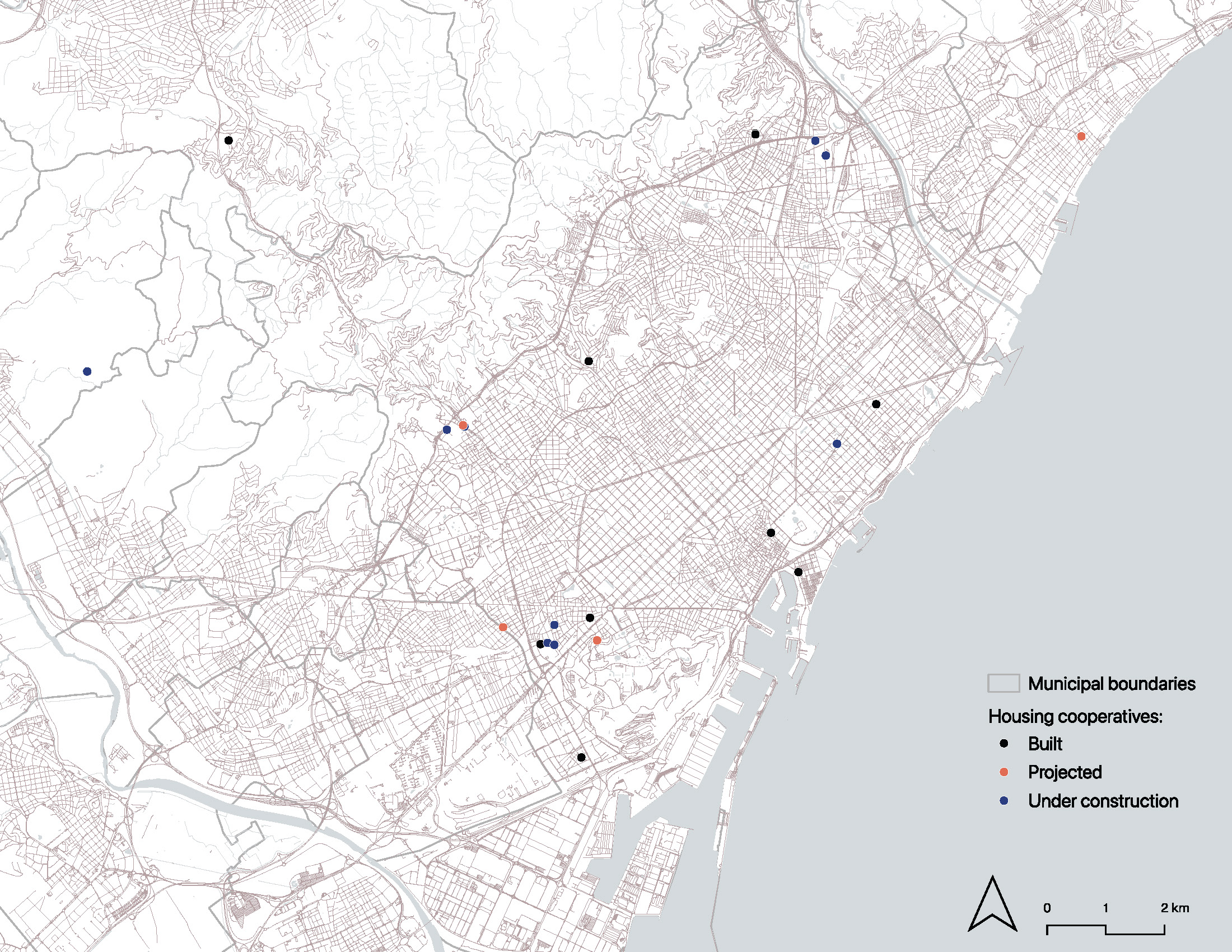
Concentration of co-op dwellings (built, under construction, and projected) in Barcelona (map):
Concentration of co-op dwellings (built, under construction, and projected) in Catalonia (map):
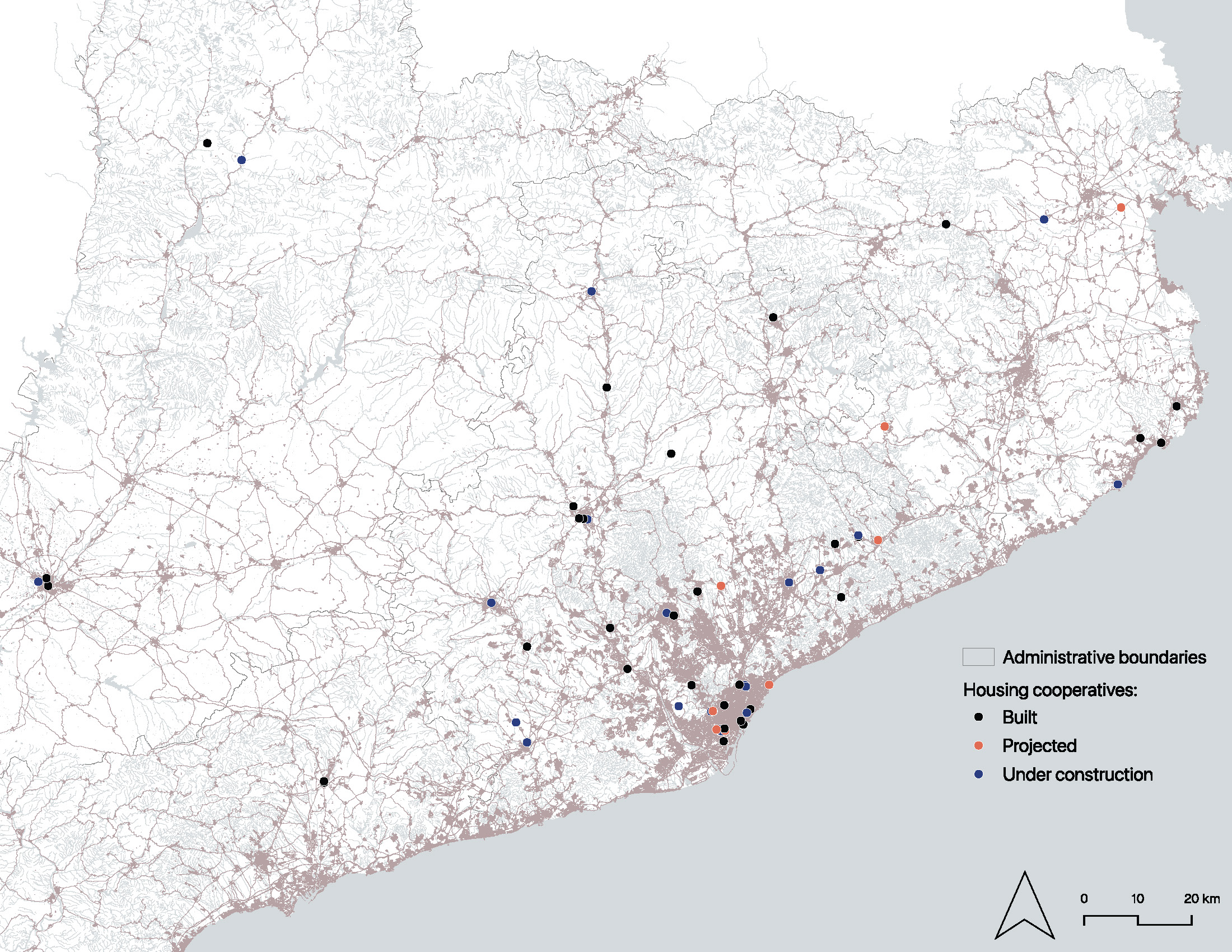

Source: Llargavista – Observatori de l’habitatge cooperatiu
RESEARCH PARTICIPANTS: MONTRÉAL
* Confirmed, ** completed, and potential:
** Co-op Le Coteau Vert - 95 dwellings:
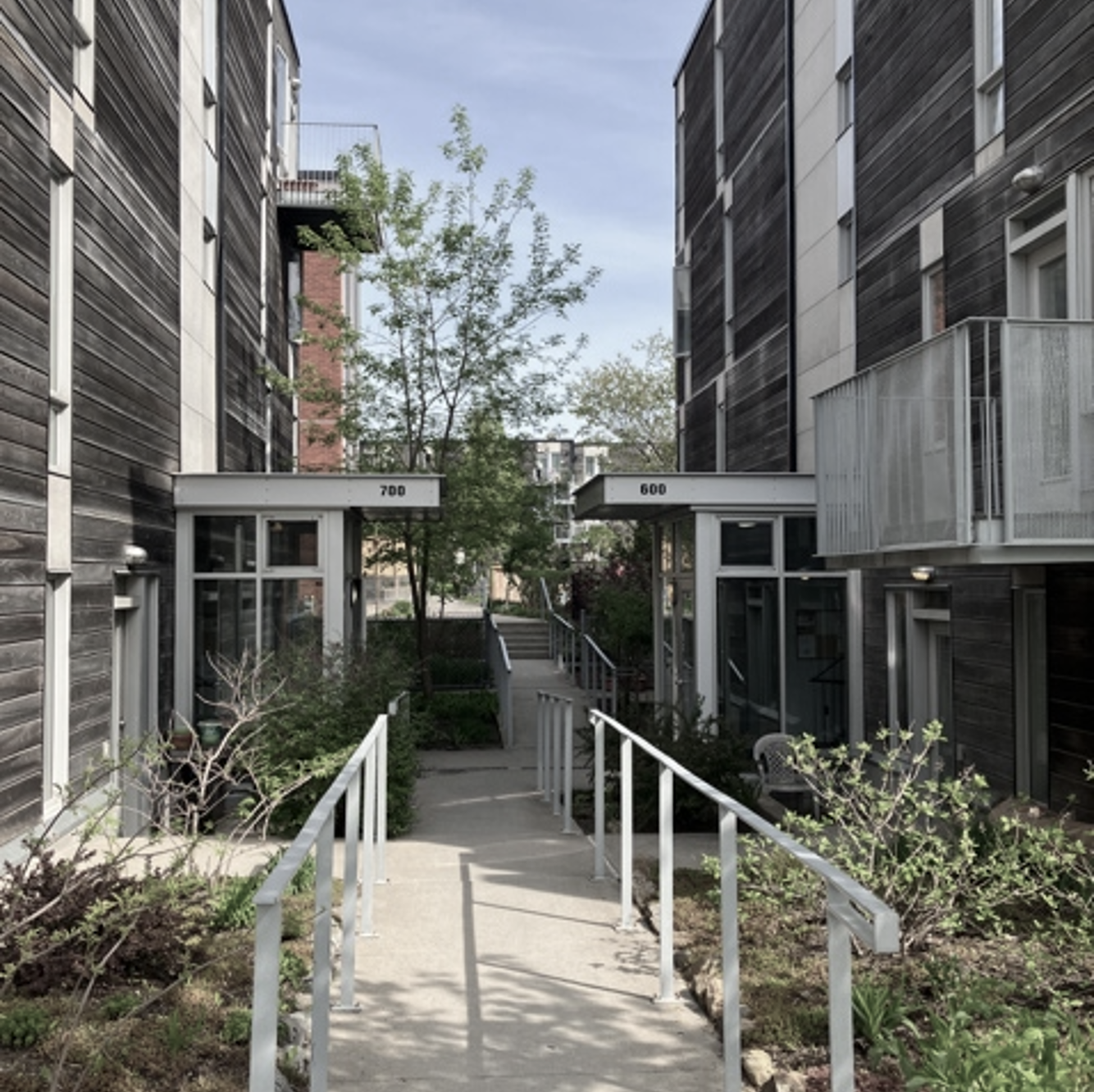
Co-op Station no. 1 - 74 dwellings:
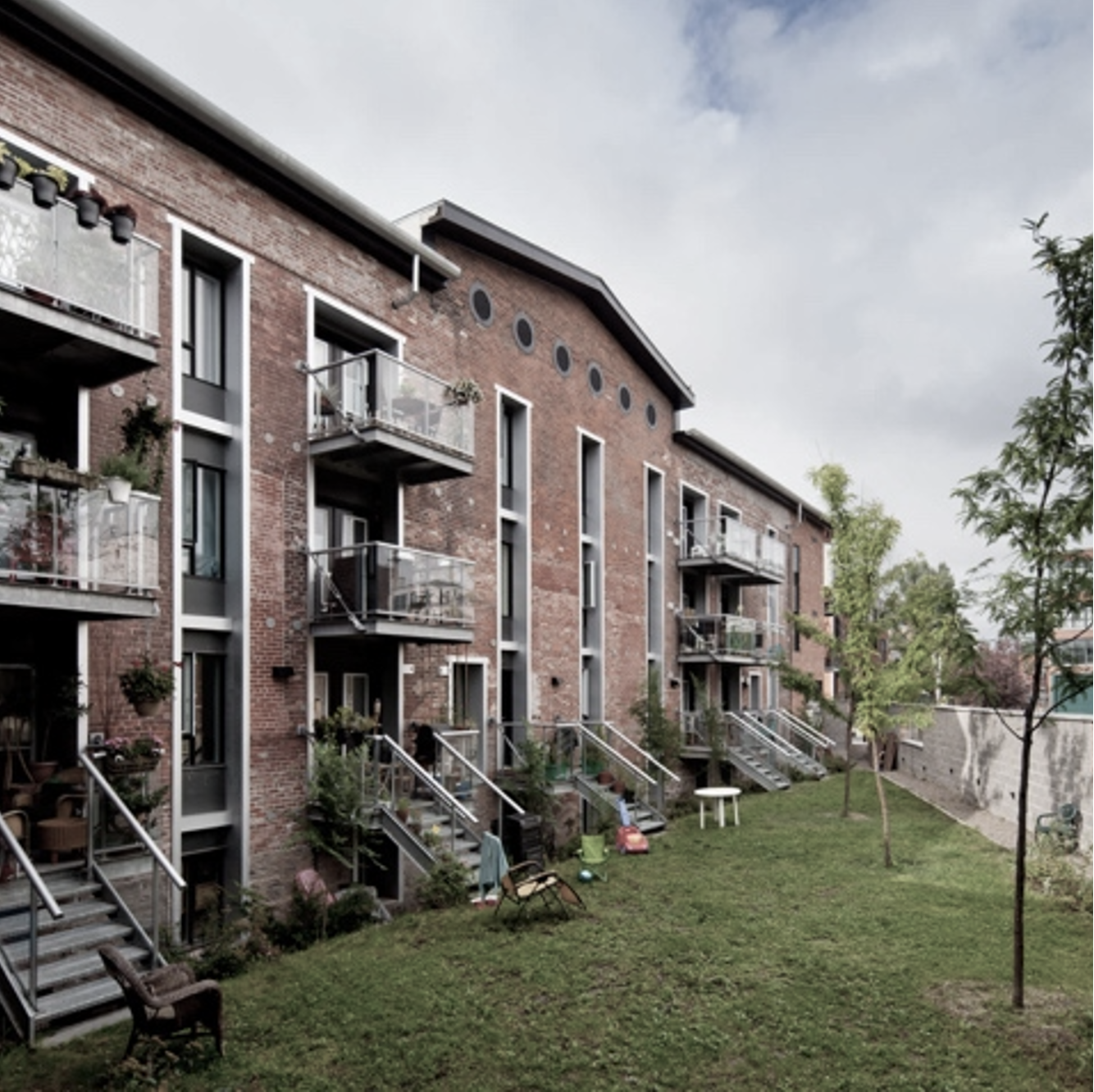
* Co-op Mile End - 94 dwellings:
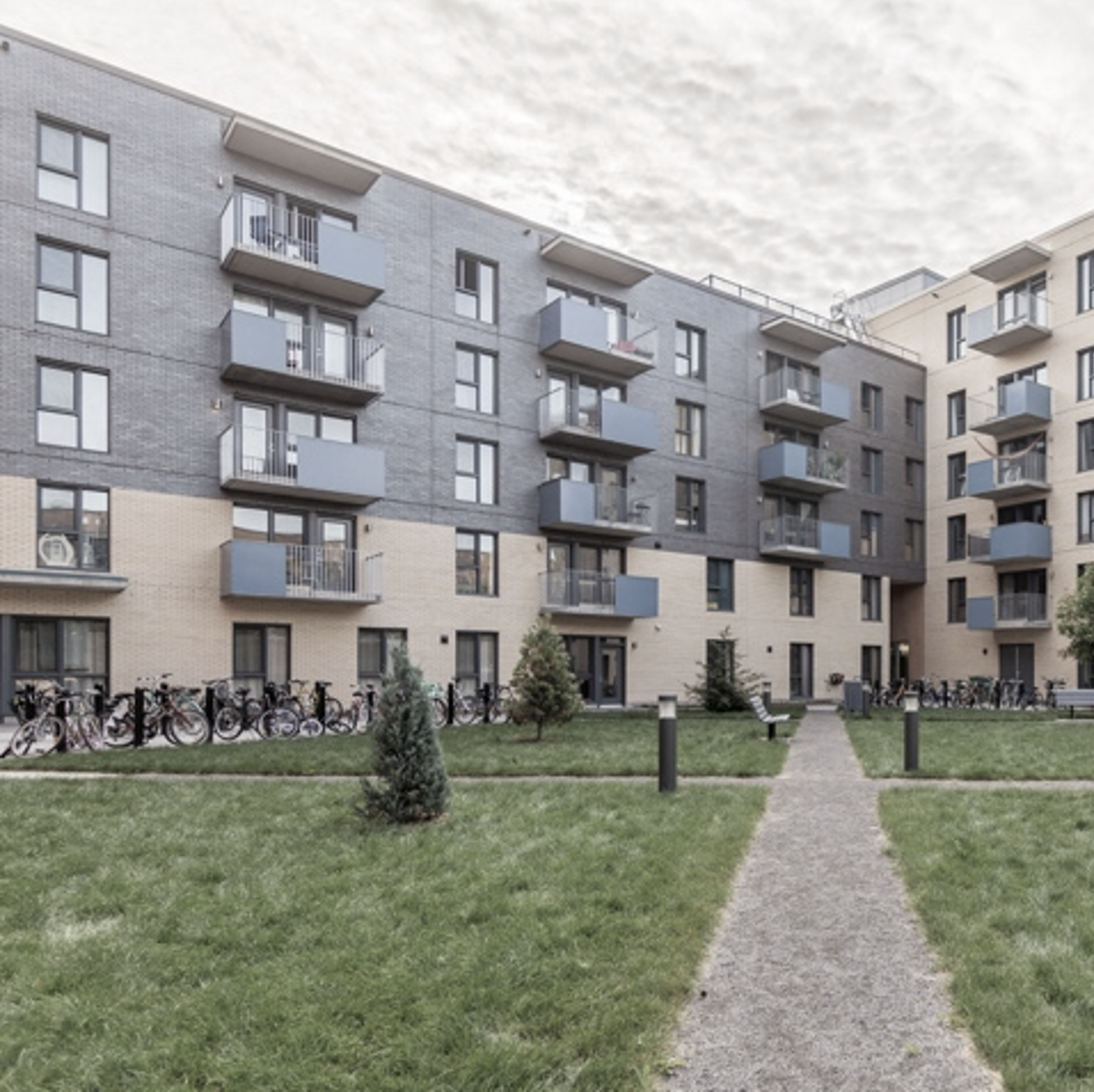
TBD Co-ops:

Groupe CDH
Bâtir son Quartier
Front d’action populaire en réaménagement urbain (FRAPRU)
Comité logement Petite-Patrie
* Comité logement de Pointe Saint-Charles
* Pivot Coopérative d'Architecture
Comité Bails
Regroupement des comités logement et associations de locataires du Québec (RCLALQ)
RESEARCH PARTICIPANTS: BARCELONA
* Confirmed, ** completed, and potential:
** Co-op La Xarxaire - 8 dwellings
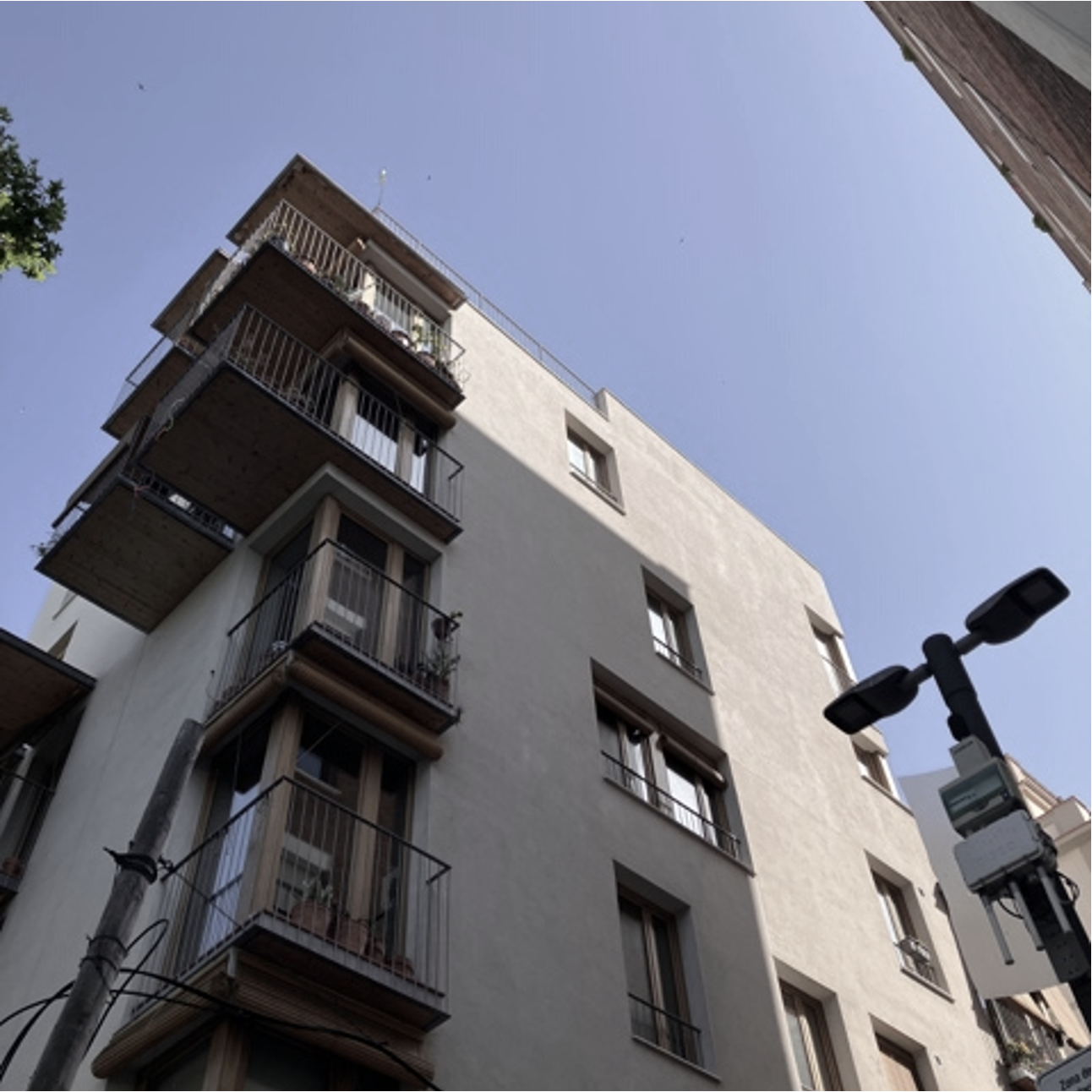
** Co-op La Chalmeta - 32 dwellings
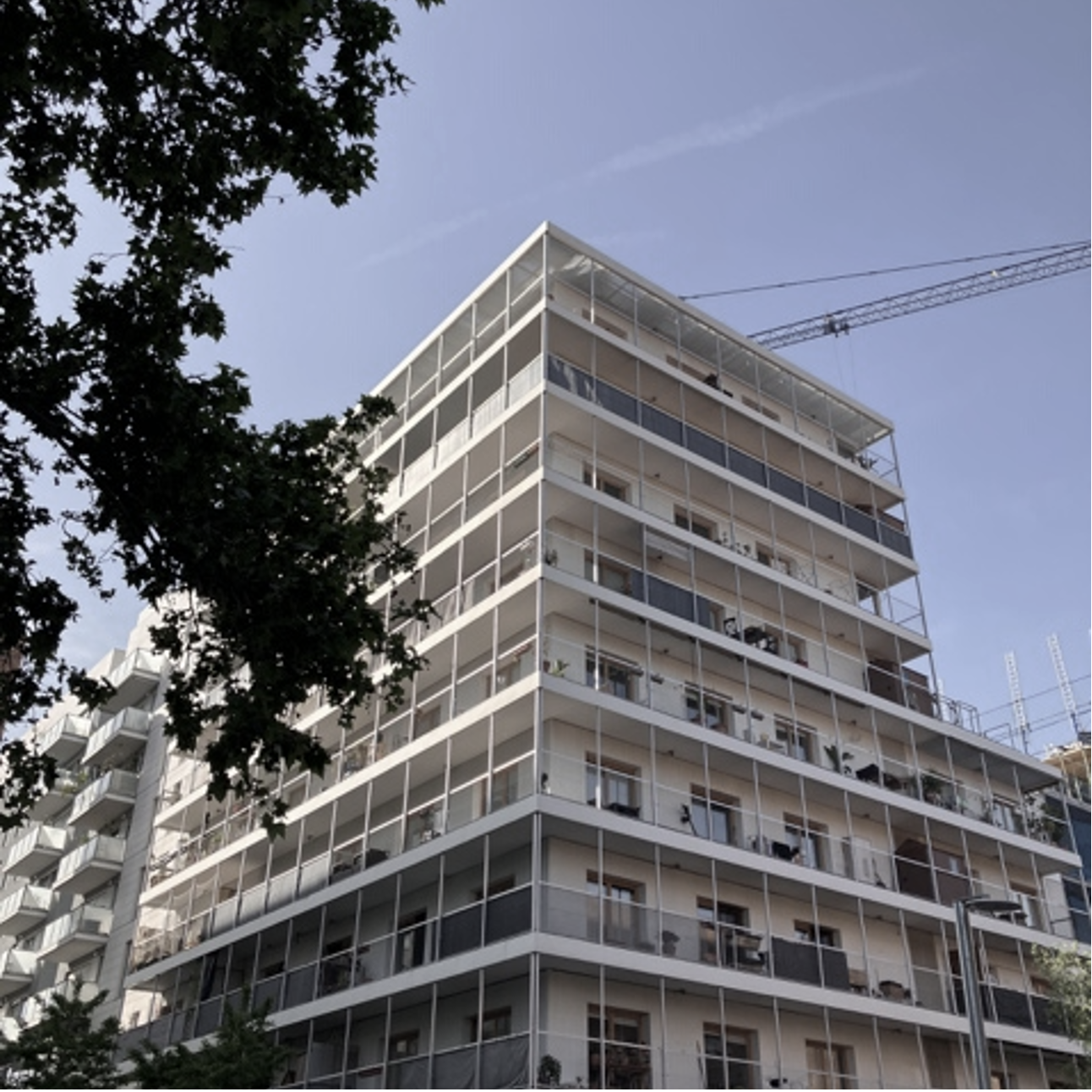
** Co-op Cirerers - 32 dwellings
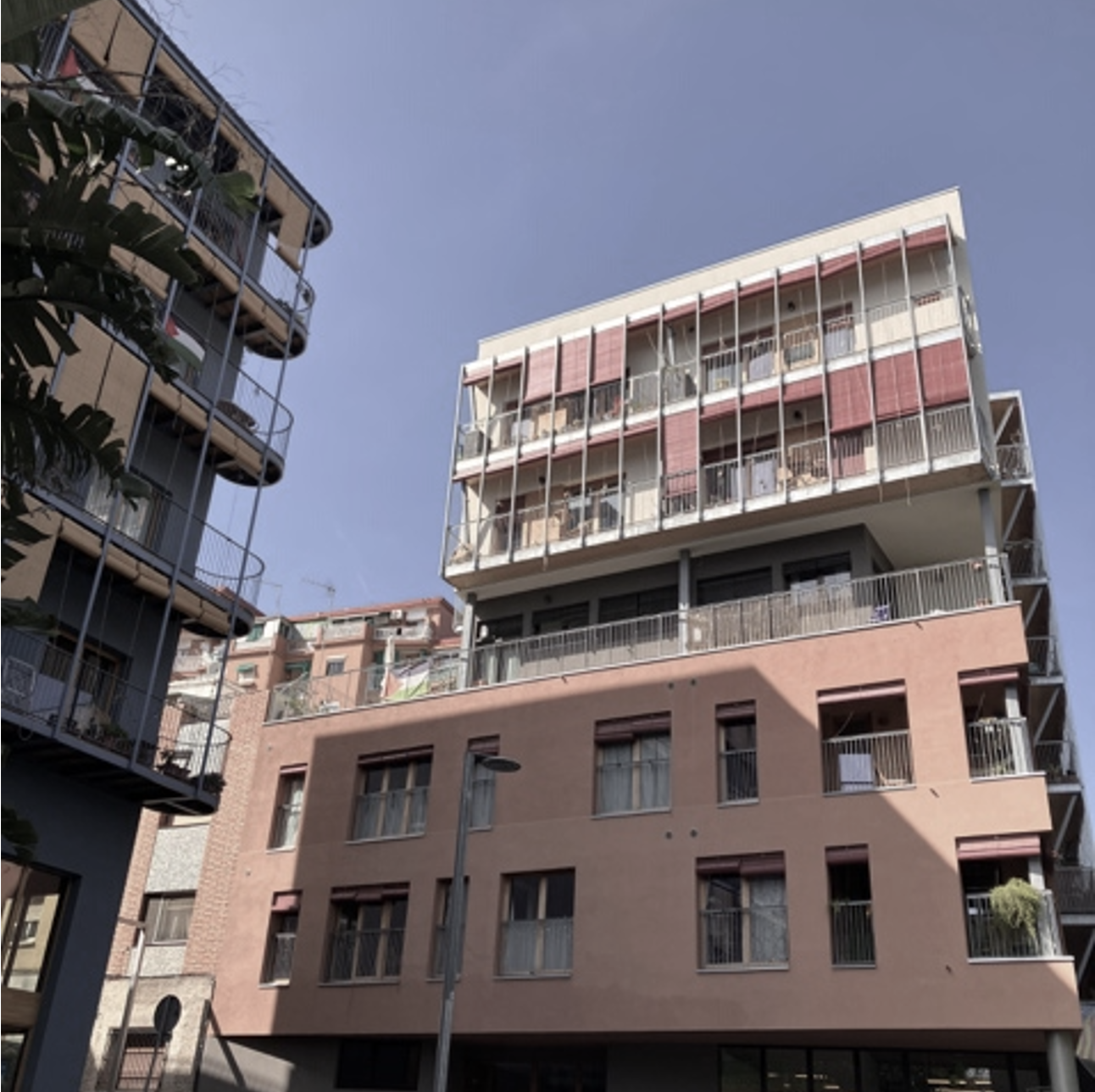
** Co-op La Morada - 12 dwellings
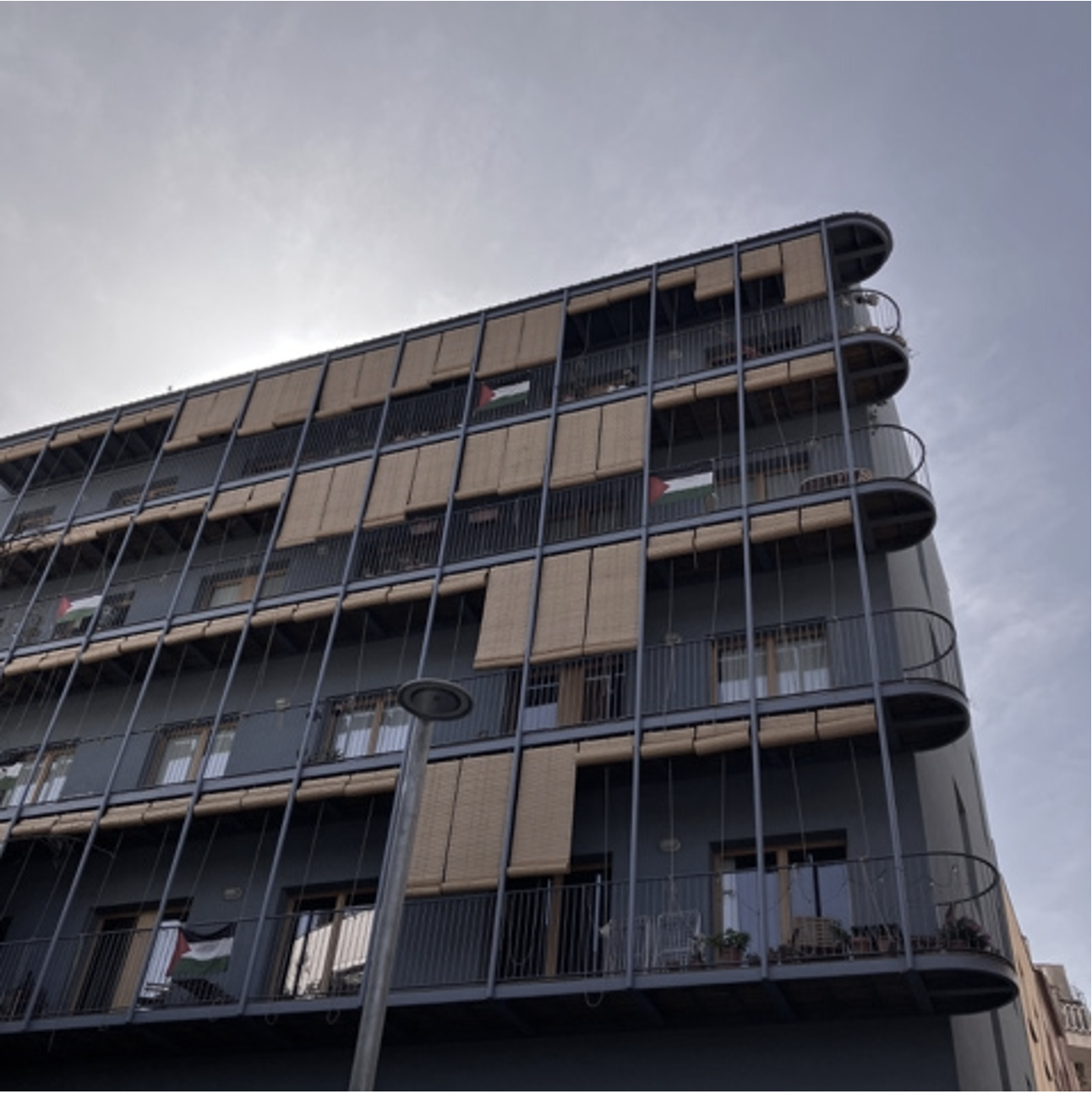
** Sostre Cívic SCCL
** La Dinamo Fundació
** Sindicat d’Habitatge del Poblenou
Sindicat de Llogateres
One of Barcelona's housing unions:
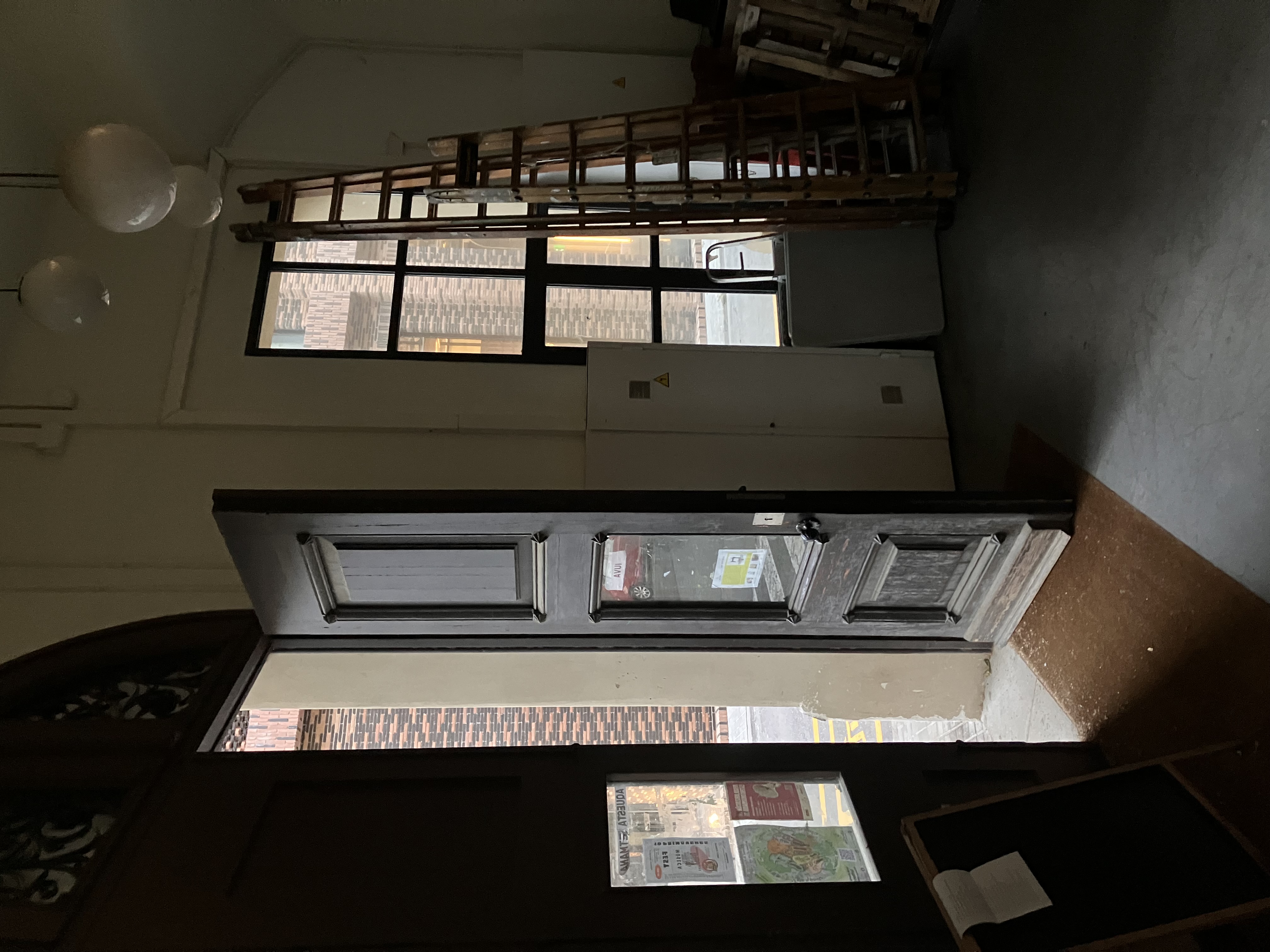
STATE OF THE DEBATE
based on writings by Ulrich Beck, Anthony Giddens, Peter Marcuse, David Harvey, John Logan, Harvey Molotch, Jamie Peck, David Hulchanski, Manuel Castells, Carolyn Whitzman, François Saillant, Margit Mayer, Sascha Delz, Carles Baiges, Mara Ferreri, and Lorenzo Vidal
Theoretical Framework:
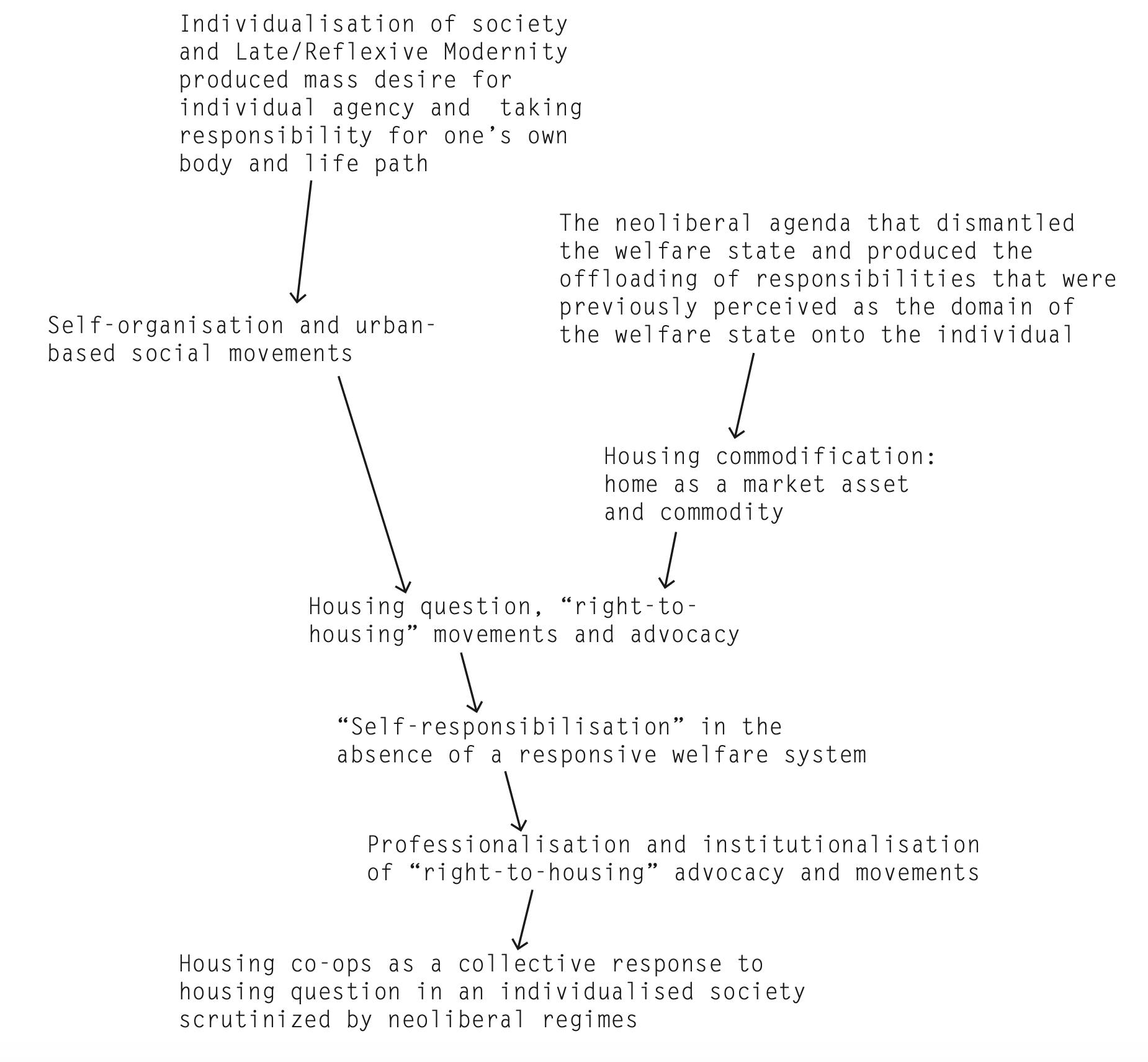
Contextualisation:
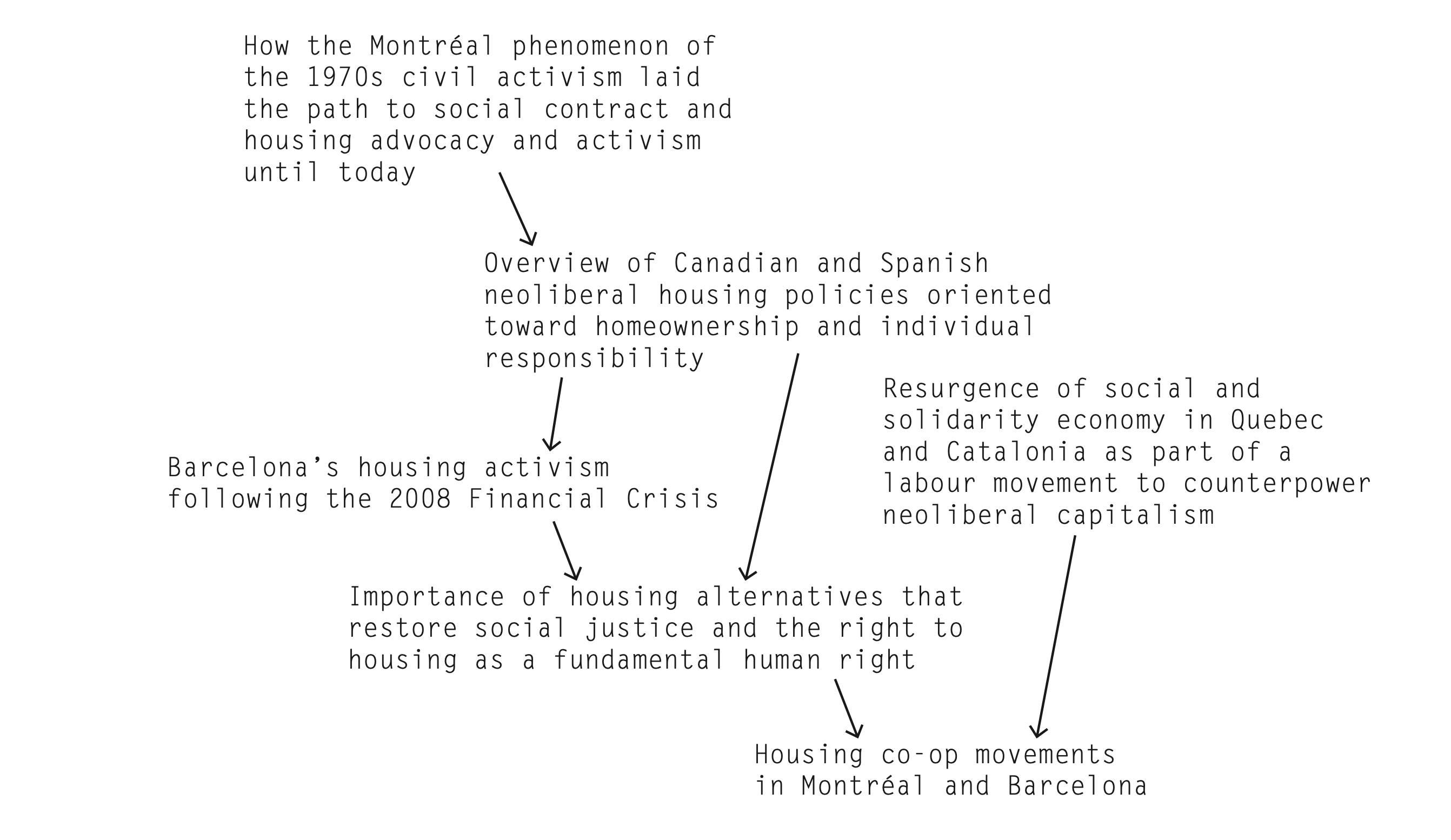
WHY COMPARE MONTRÉAL & BARCELONA?
Montréal:
Quebec considers itself an unsovereign nation in which linguistic identity and French language sentiment shape both political discourse and social landscape.
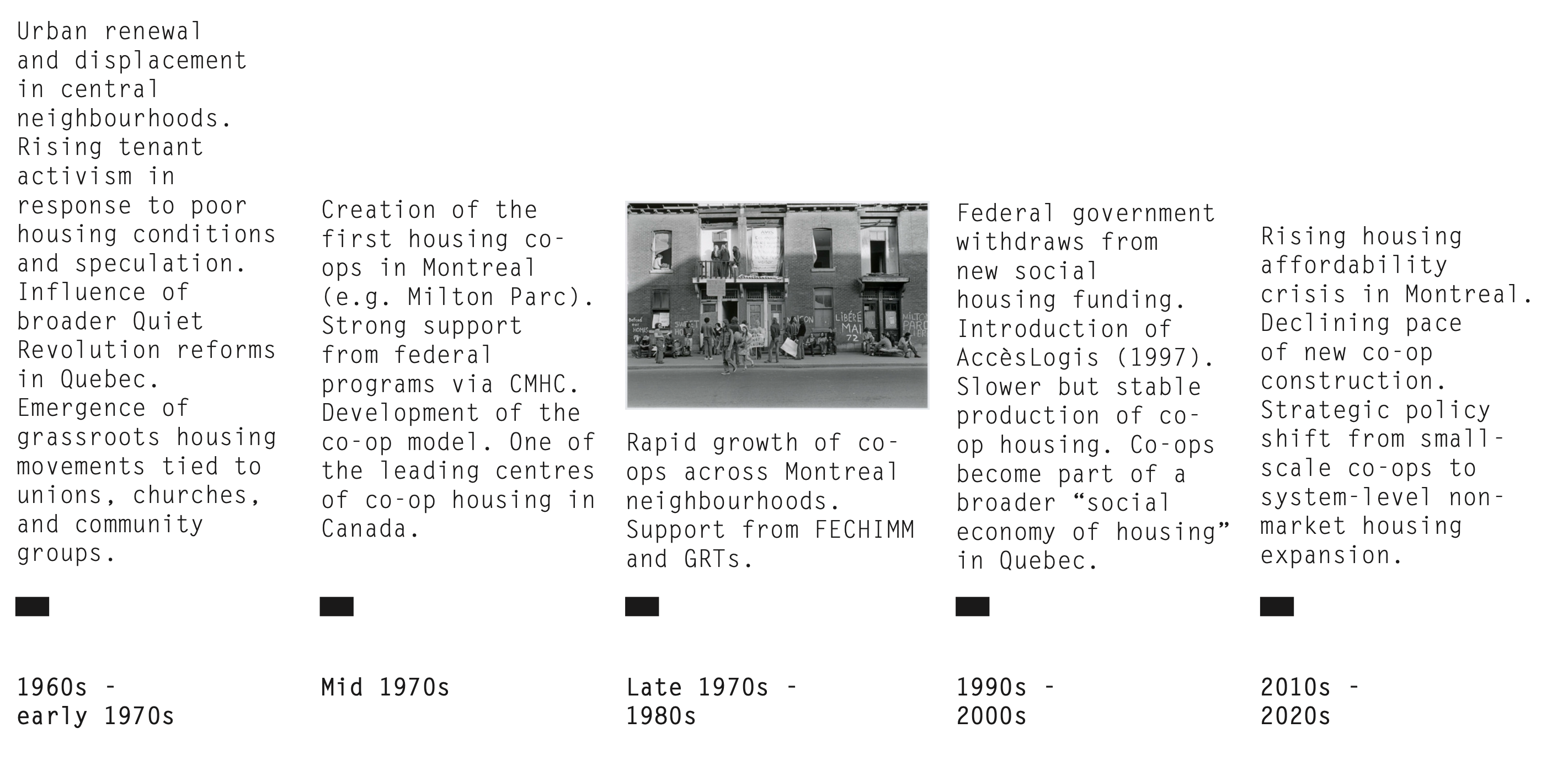
Montréal has a history of active citizenship, urban social movements, and solidarity networks, particularly in the area of housing rights, which are rooted in broader political movements and Quebec’s claims for sovereignty. This, in turn, over time created a social contract and cultural landscape of social activism.
Montréal is famous for its cooperative housing movement that emerged in the 1970s with the Milton Parc cooperative and community land trust. 60,000 ppl live in co-ops in Quebec, with the majority of them located on the Island of Montréal.
But with the reduction of federal funding in the 1980s associated with deregulation and its complete withdrawal in 1992, the cooperative housing movement is at a relative standstill, unable to respond to the growing crisis of housing unaffordability.
Montréal has a broad landscape of community groups and solidarity networks with their early professionalization and institutionalization in the 2000s.
Barcelona:
Similarly to Quebec, Catalonia considers itself an unsovereign nation with its own particular linguistic landscape that shapes both political and social discourse.
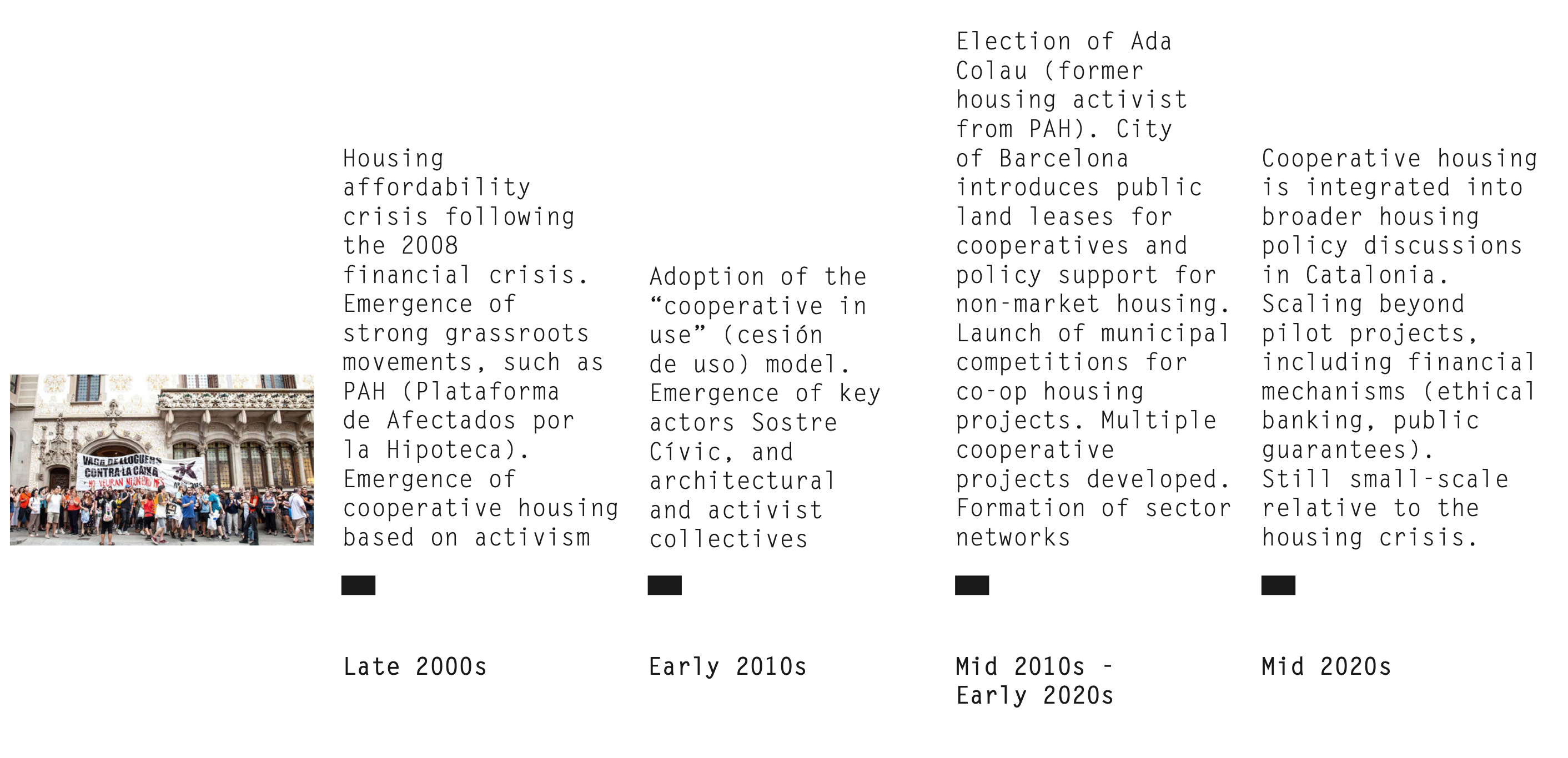
Barcelona has a history of active citizenship, urban social movements, solidarity networks, and squatting, being rooted in broader political movements, which, over time, contribute to a social contract and cultural landscape of social activism.
Barcelona is famous for the professionalisation and institutionalisation of urban social movements, and their contribution to the emergence of an alternative urban governance, progressive municipalism, as a response to and replacement of the austerity governance of the post-2008 financial crisis era.
Barcelona has a new and rapidly growing cooperative housing movement (since the 2010s) and indications of its ongoing institutionalisation.
Despite an accommodating (within the last decade) policy response, the cooperative housing movement is struggling to scale up.
Montréal Housing Co-op Movement Timeline:
Barcelona Housing Co-op Movement Timeline:
As a by-product:
Methodological insights into conducting comparative studies at different temporality
WHY AM I EVEN STUDYING THIS ?
Despite an existing or emerging set of policies oriented on non-profit/community housing, cooperative housing movements in both contexts remain niche and struggle to scale up. In fact, in Montréal volumes of cooperative housing construction only steadily decreasing.
Additionally, cooperative housing movements are commonly accused of being elitist and housing affluent population groups on the account of public funding. State involvement is crucial for ensuring accountability of housing cooperatives, and downscaling government support is not an option for long-term sustainability of the movement, which is to be confirmed or contested through this research.
Cooperative movements in both contexts are situated within social activism and solidarity economy, while their role can be active or only aspirational due to operational constraints.
Cooperative housing represents agency over one’s housing situation, consistent with the individualisation of society during late modernity and as a countermovement to neoliberal commodification of housing.
DESKTOP REVIEW FINDINGS: LOW CO-OP HOUSING CONSTRUCTION VOLUMES ACROSS BOTH CONTEXTS
Declining co-op housing production volumes in Montréal:
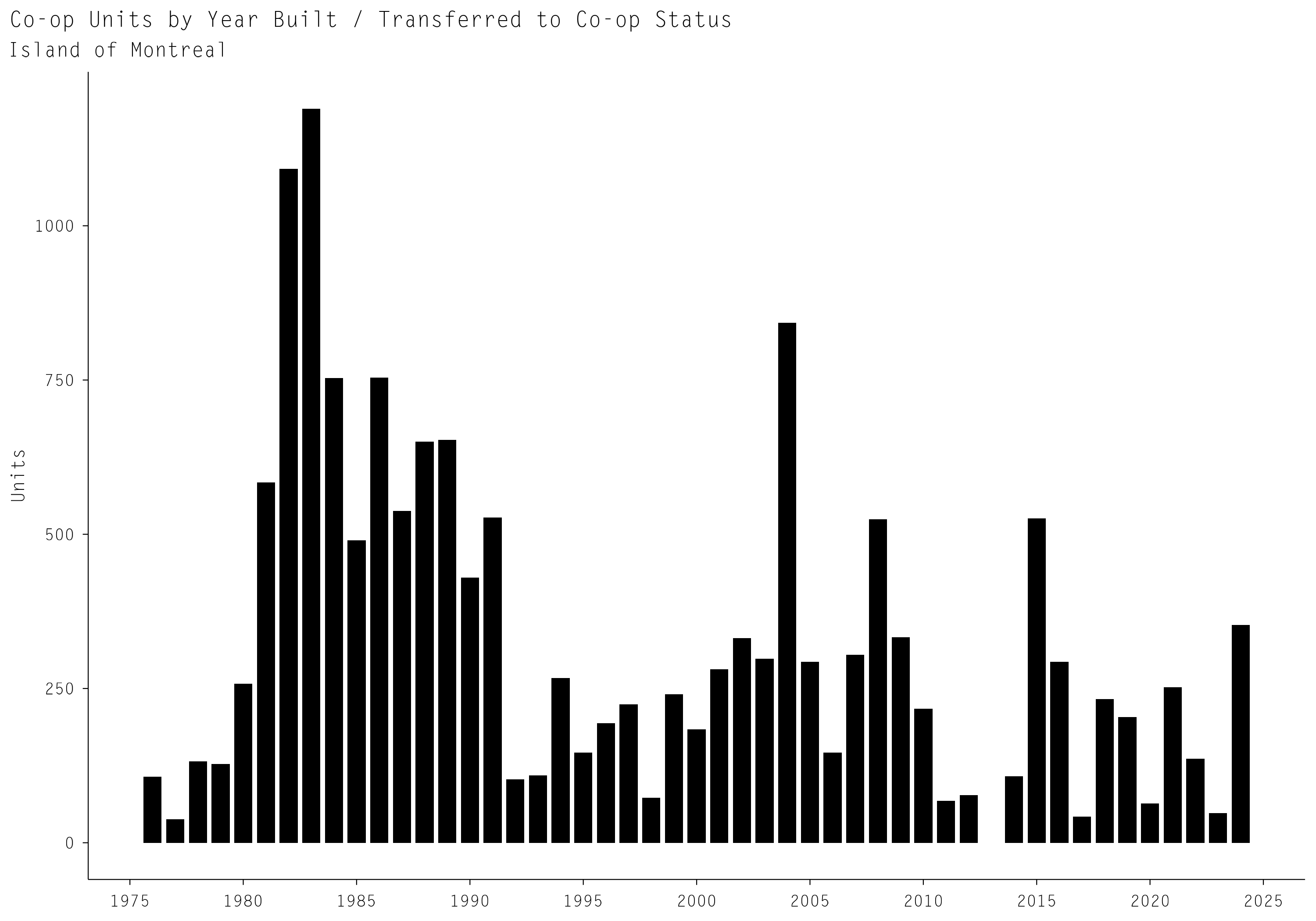
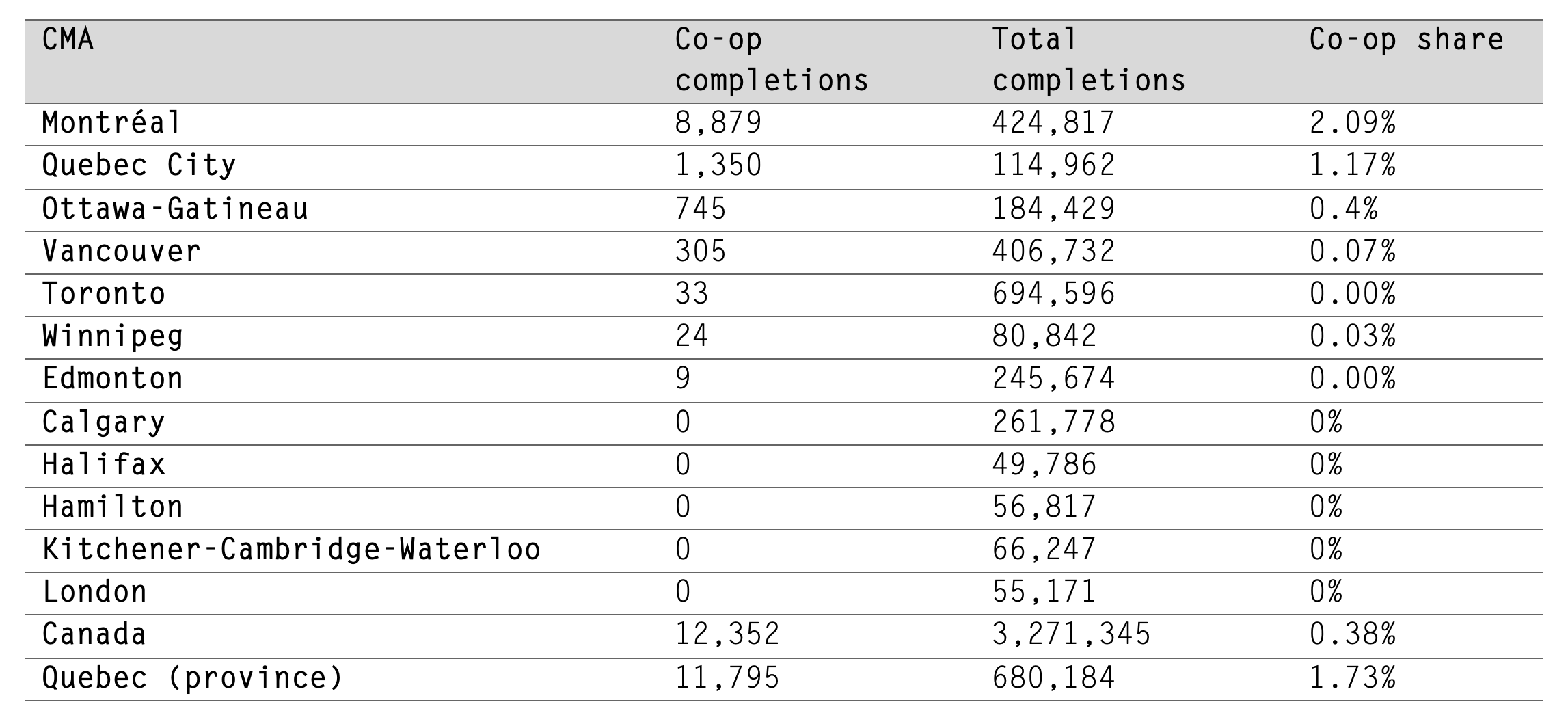
In Canada cooperative housing is basically built only in Quebec and Montréal:
Cooperative housing completions by CMA, cumulative 2006-2025:
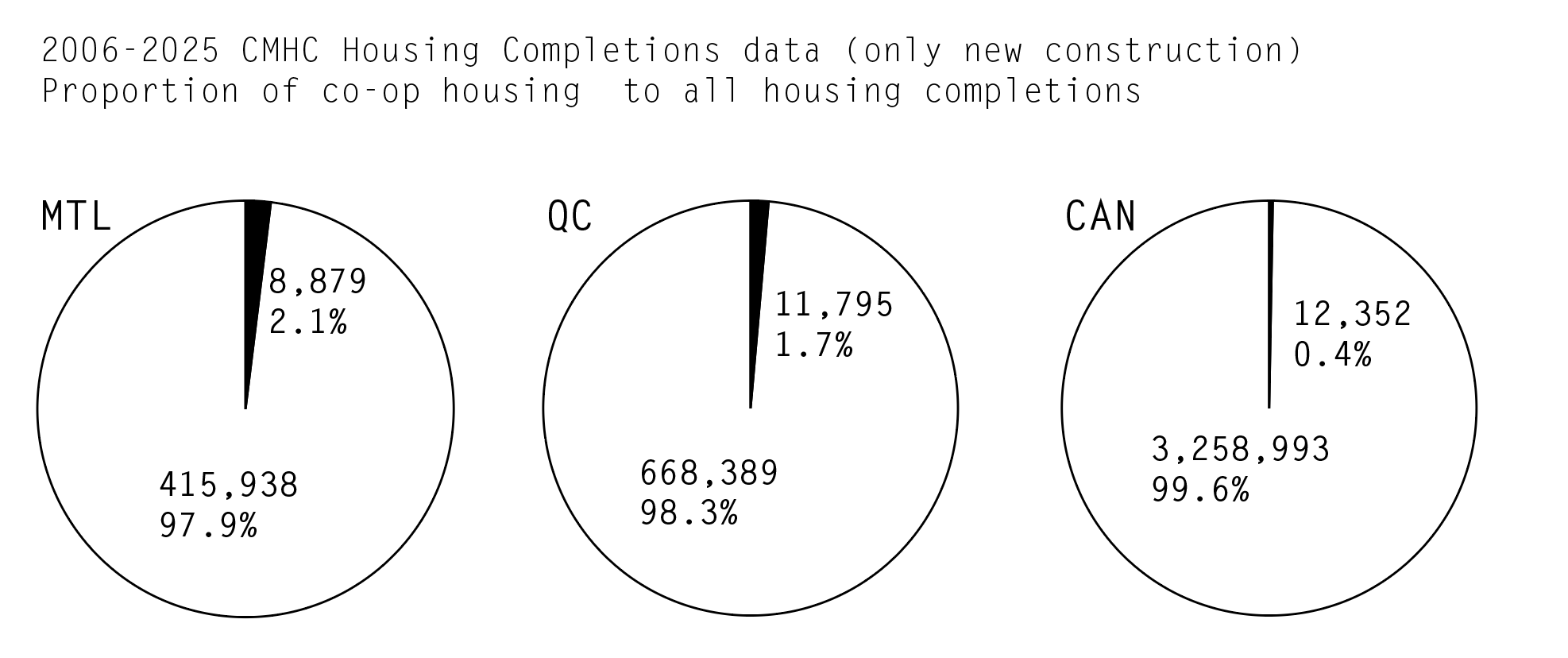
2006-2026 CMHC Housing Completions data (only for new construction) and proportion of co-op housing to all housing completions in Montréal, Quebec and across Canada:
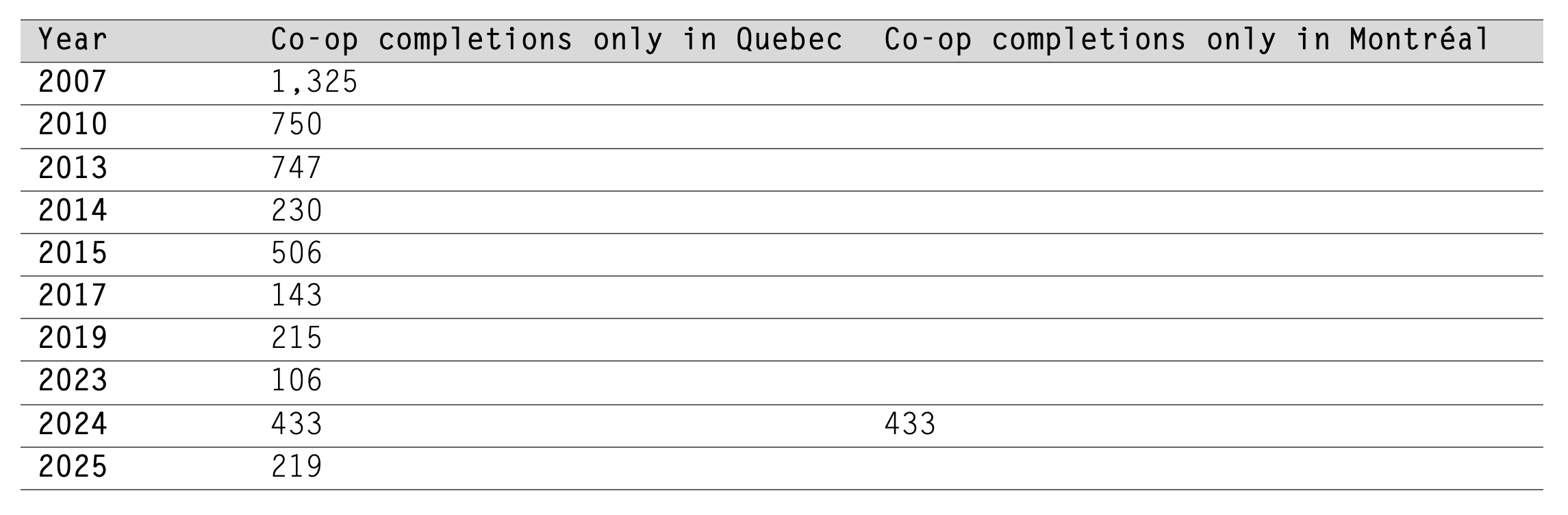
Years, when all of Canada’s co-op housing was built in Quebec and all Quebec’s co-op housing was built in Montréal (2006-2025):
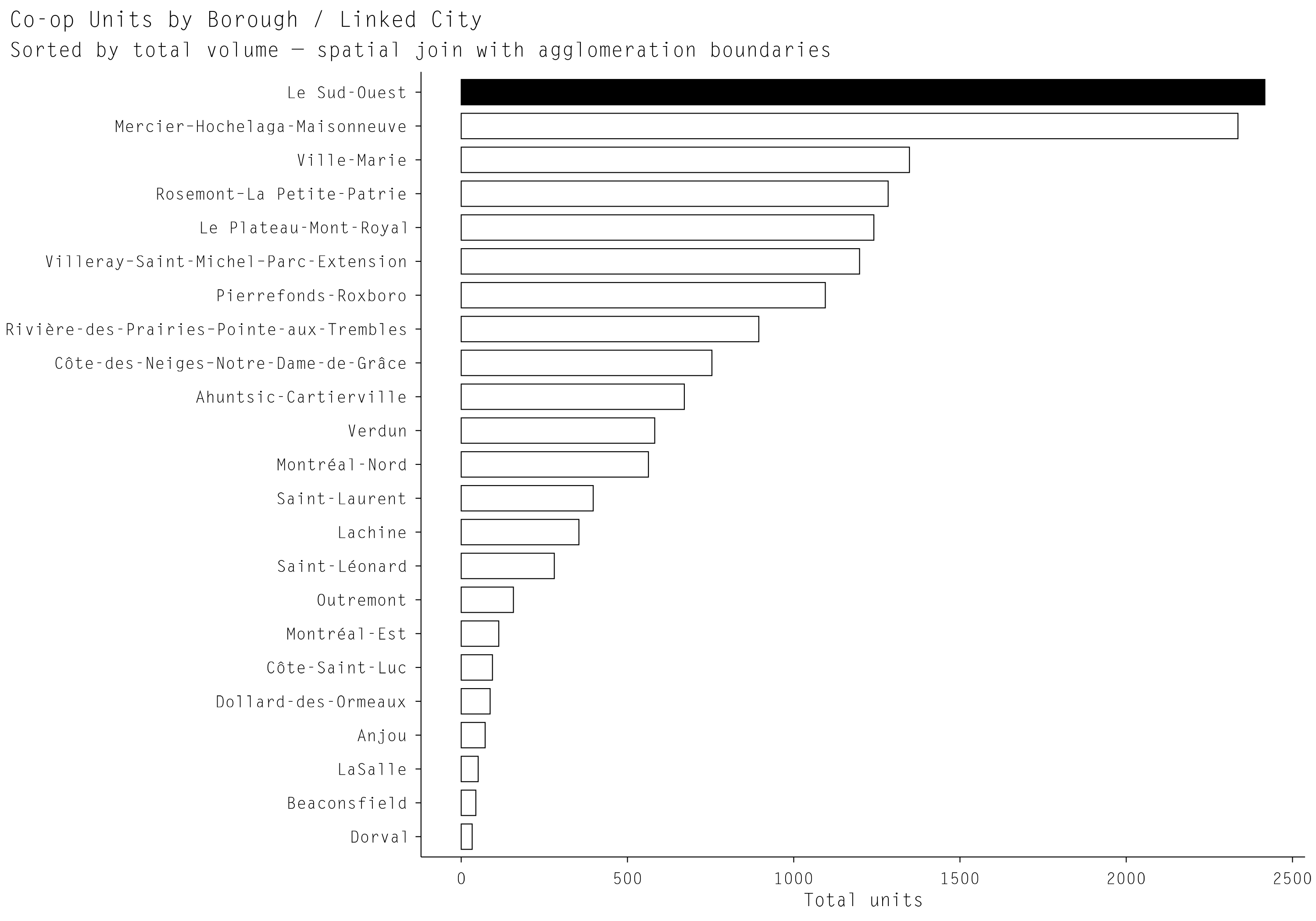
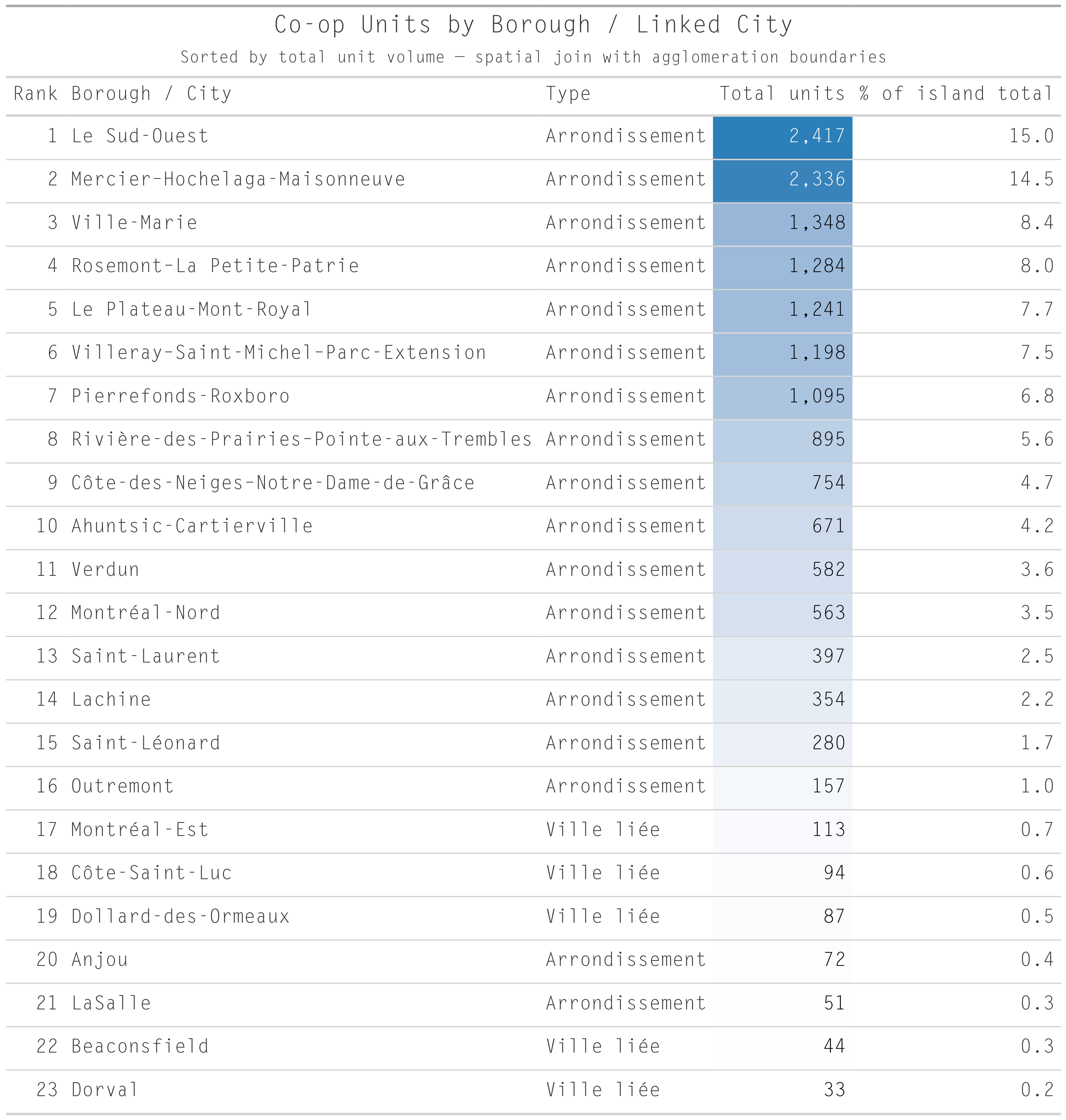
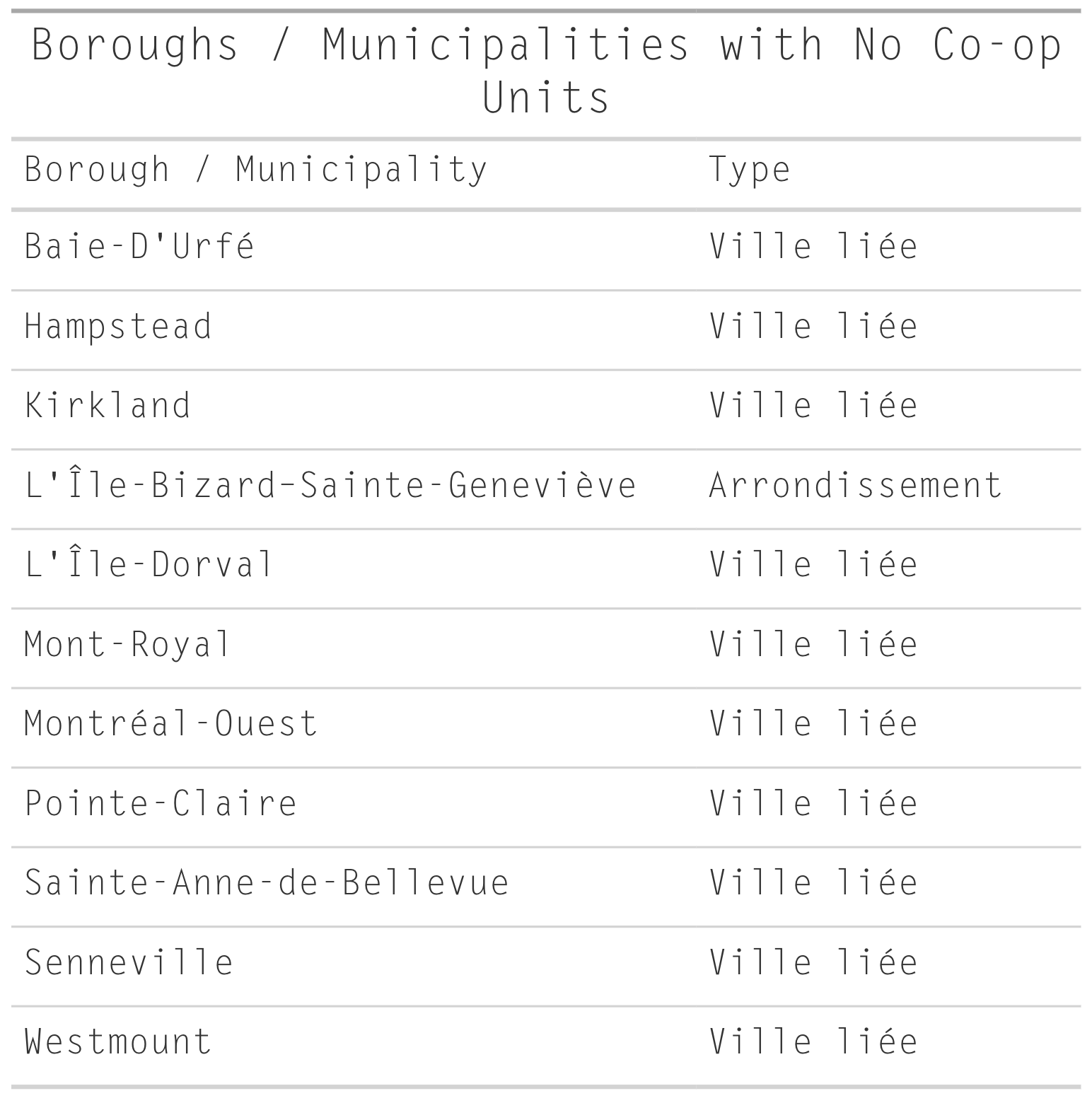
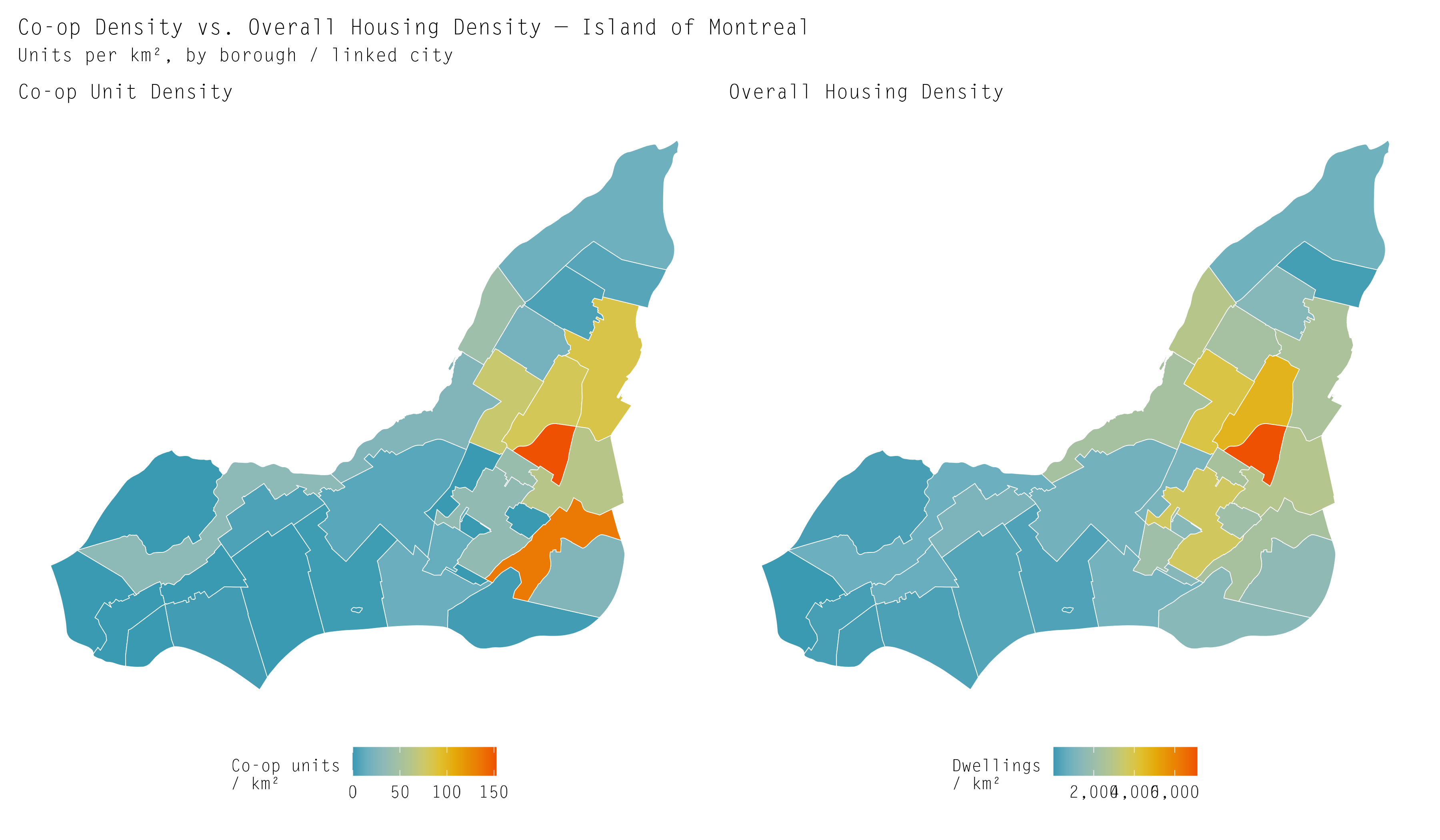
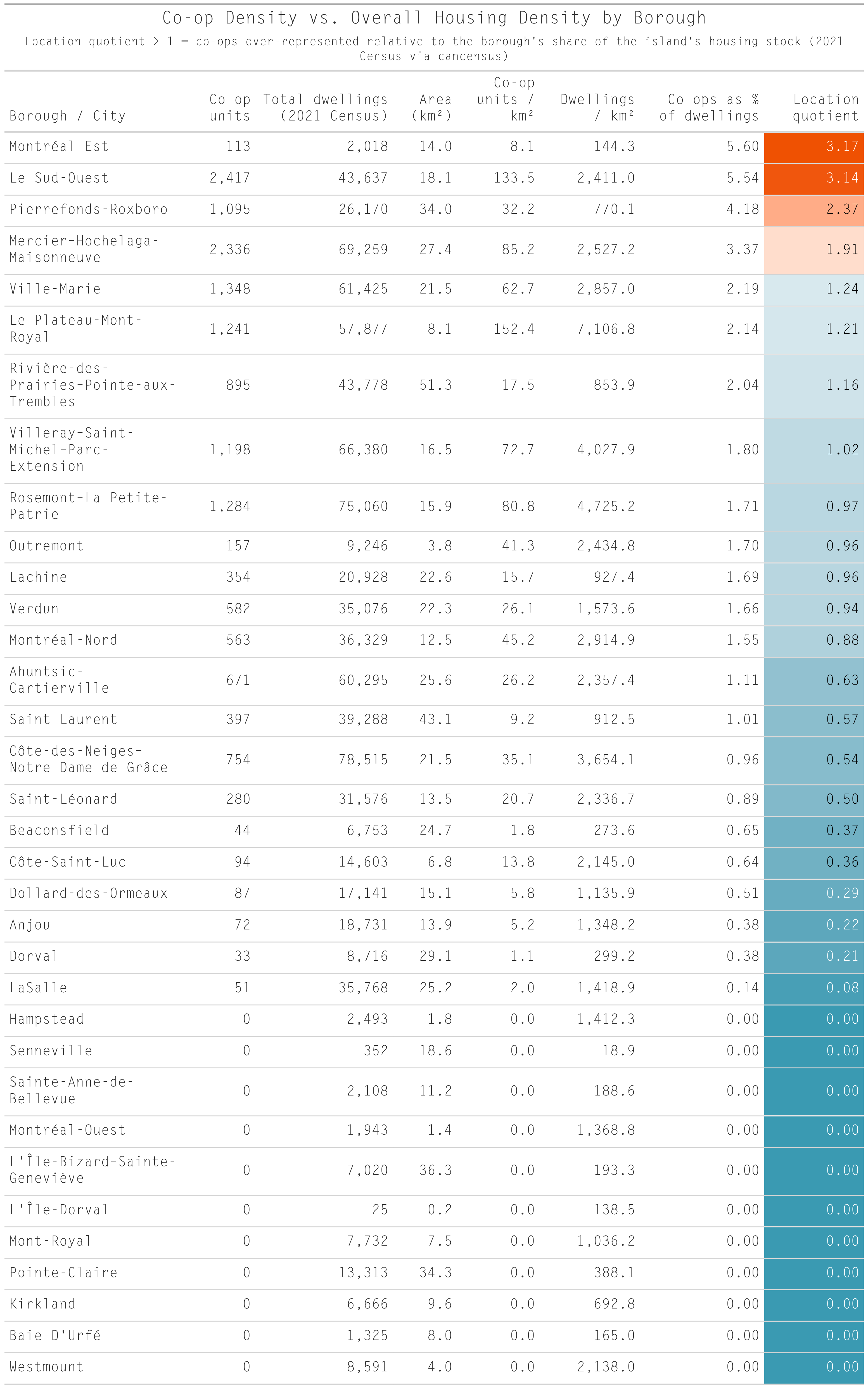
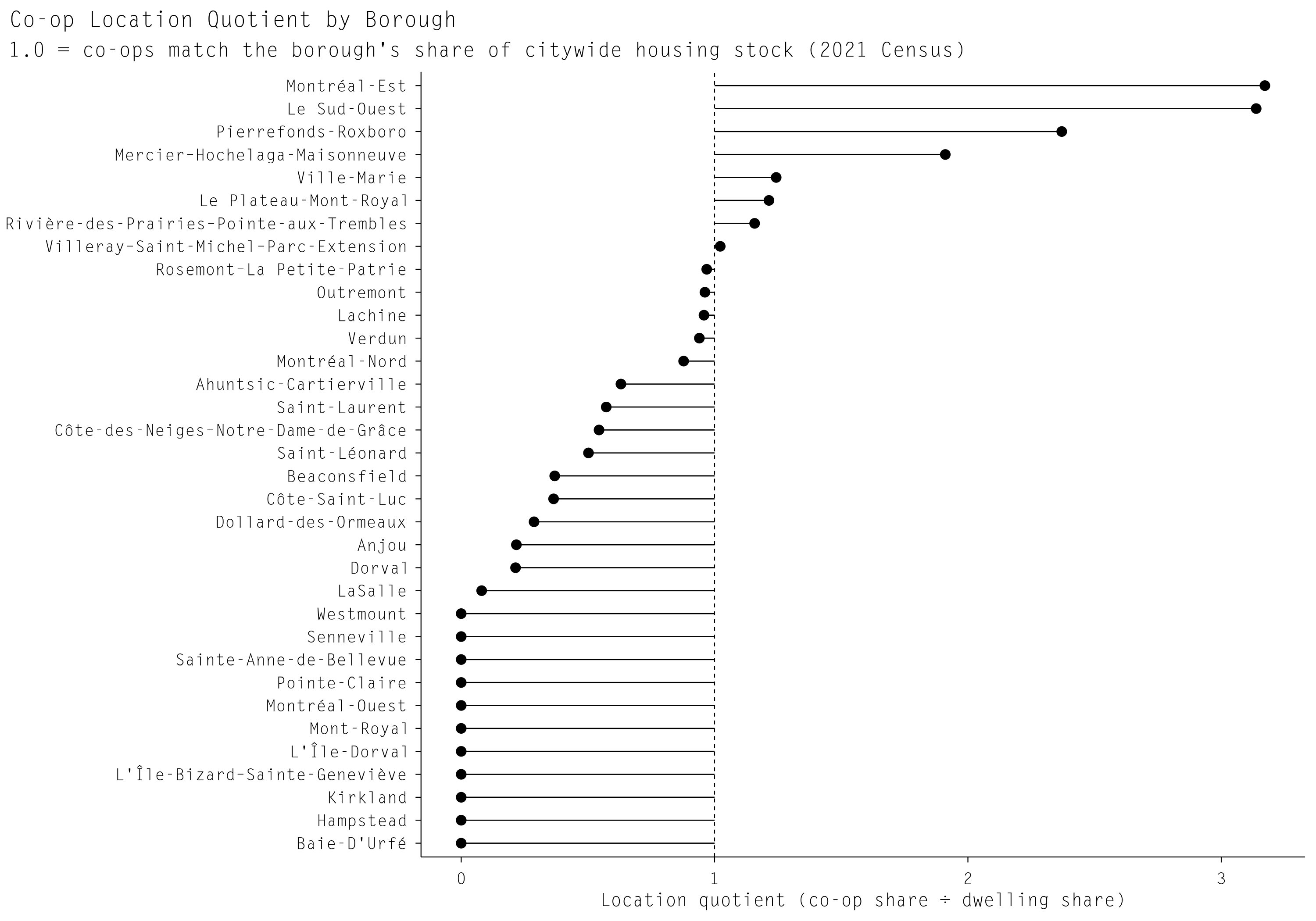
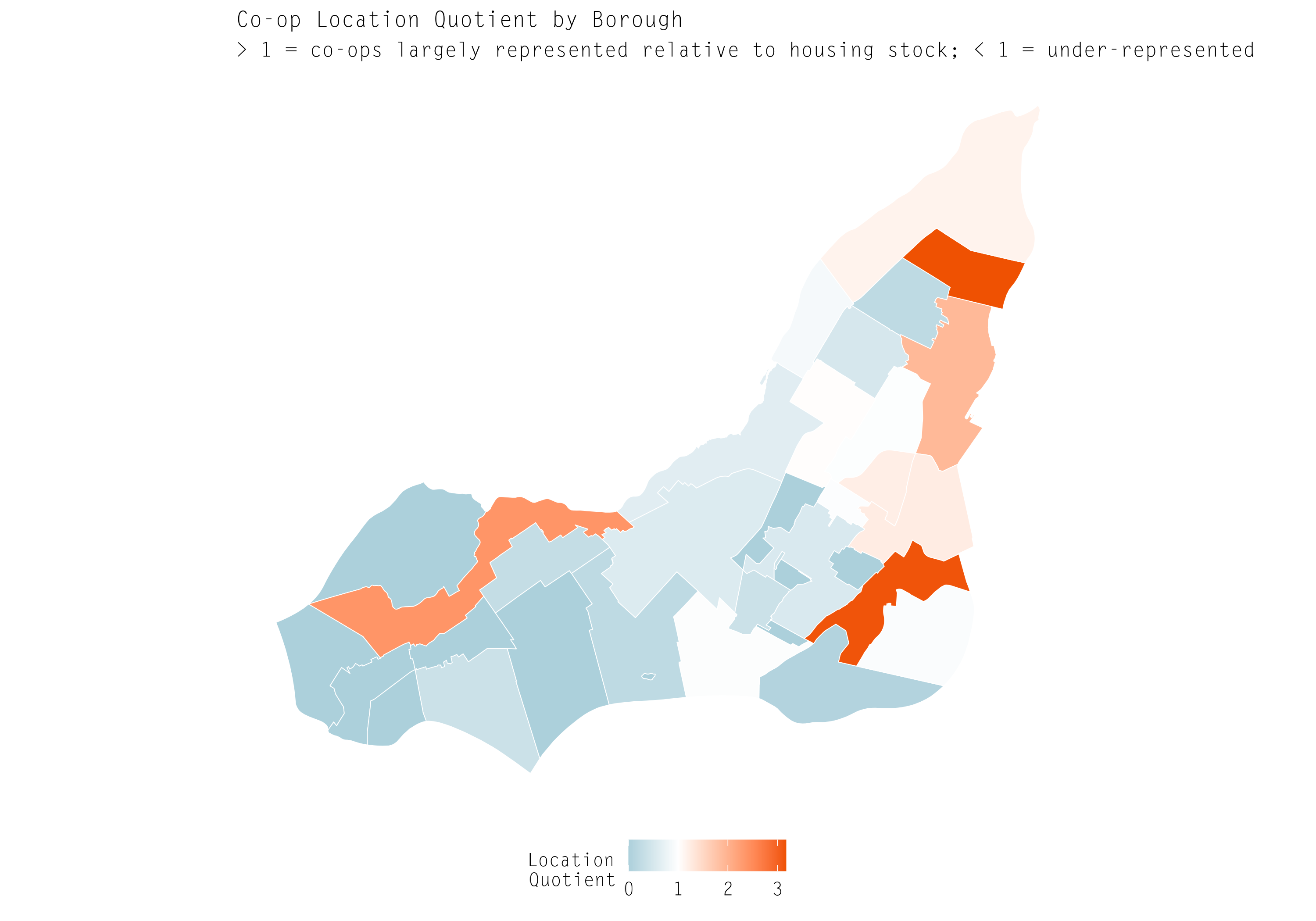
DESKTOP REVIEW FINDINGS: MONTRÉAL'S COOPERATIVE HOUSING STOCK
DESKTOP REVIEW FINDINGS: HOUSING AFFORDABILITY ACROSS BOTH CONTEXTS
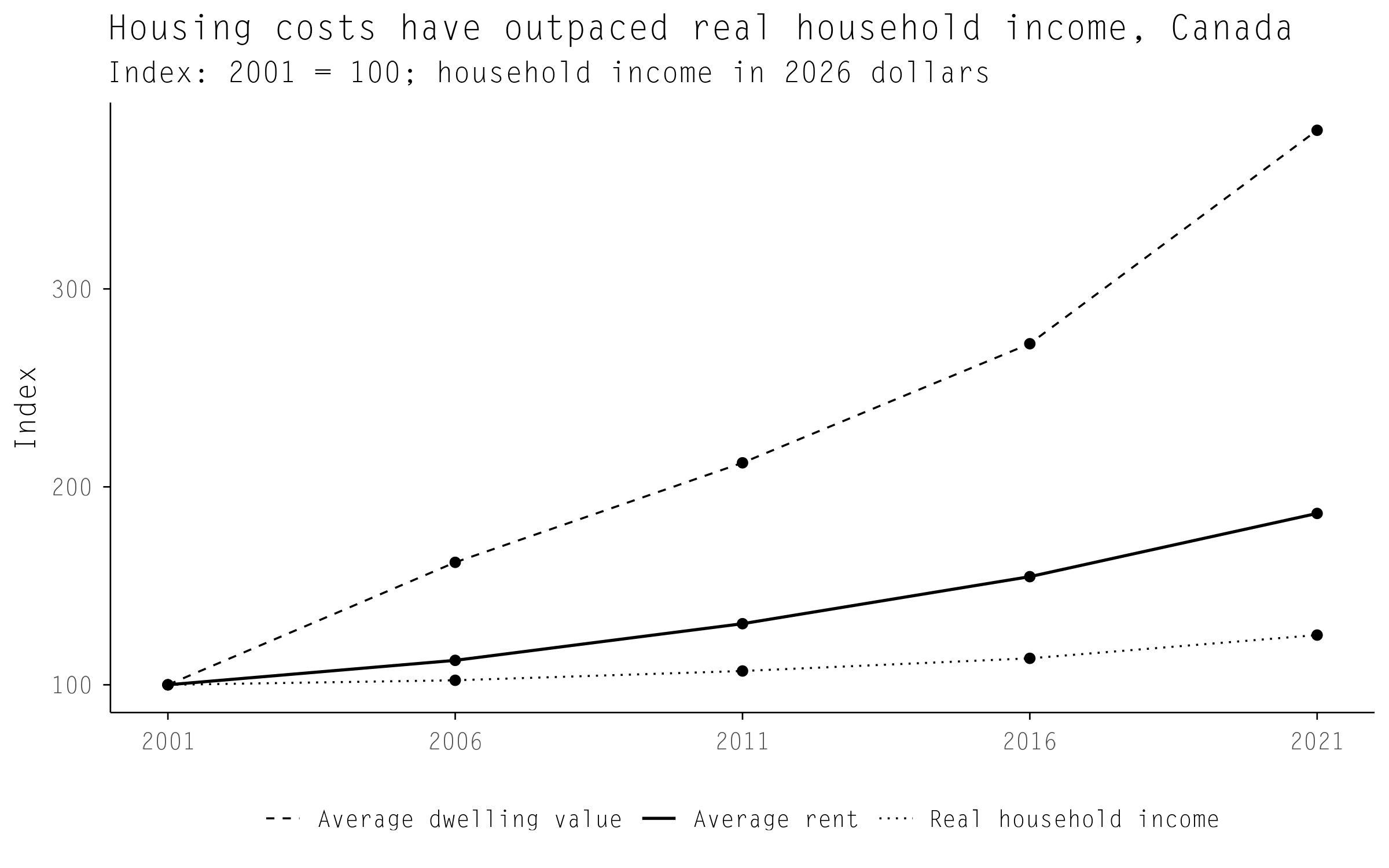
Overview of Canada's housing affordability gap:
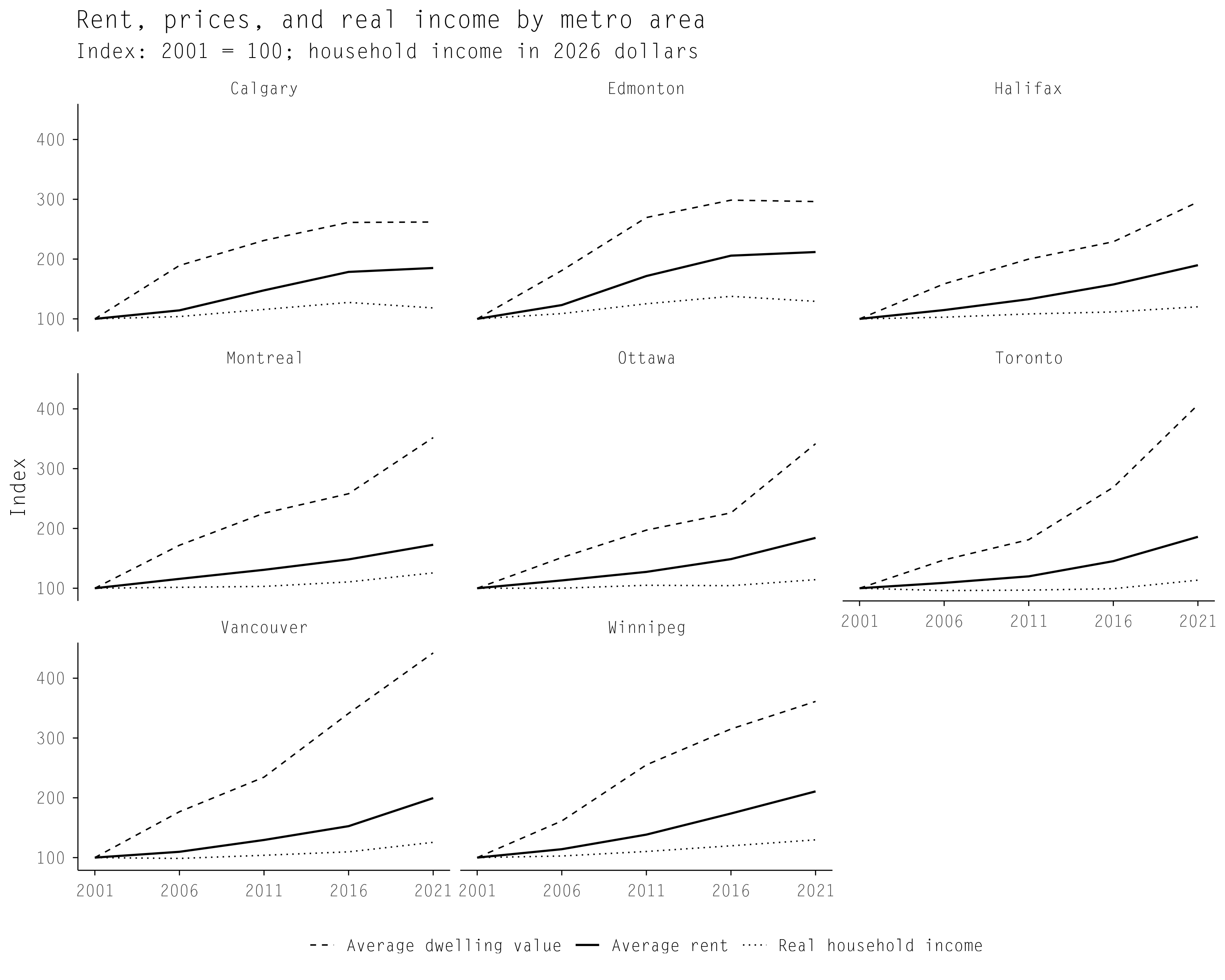
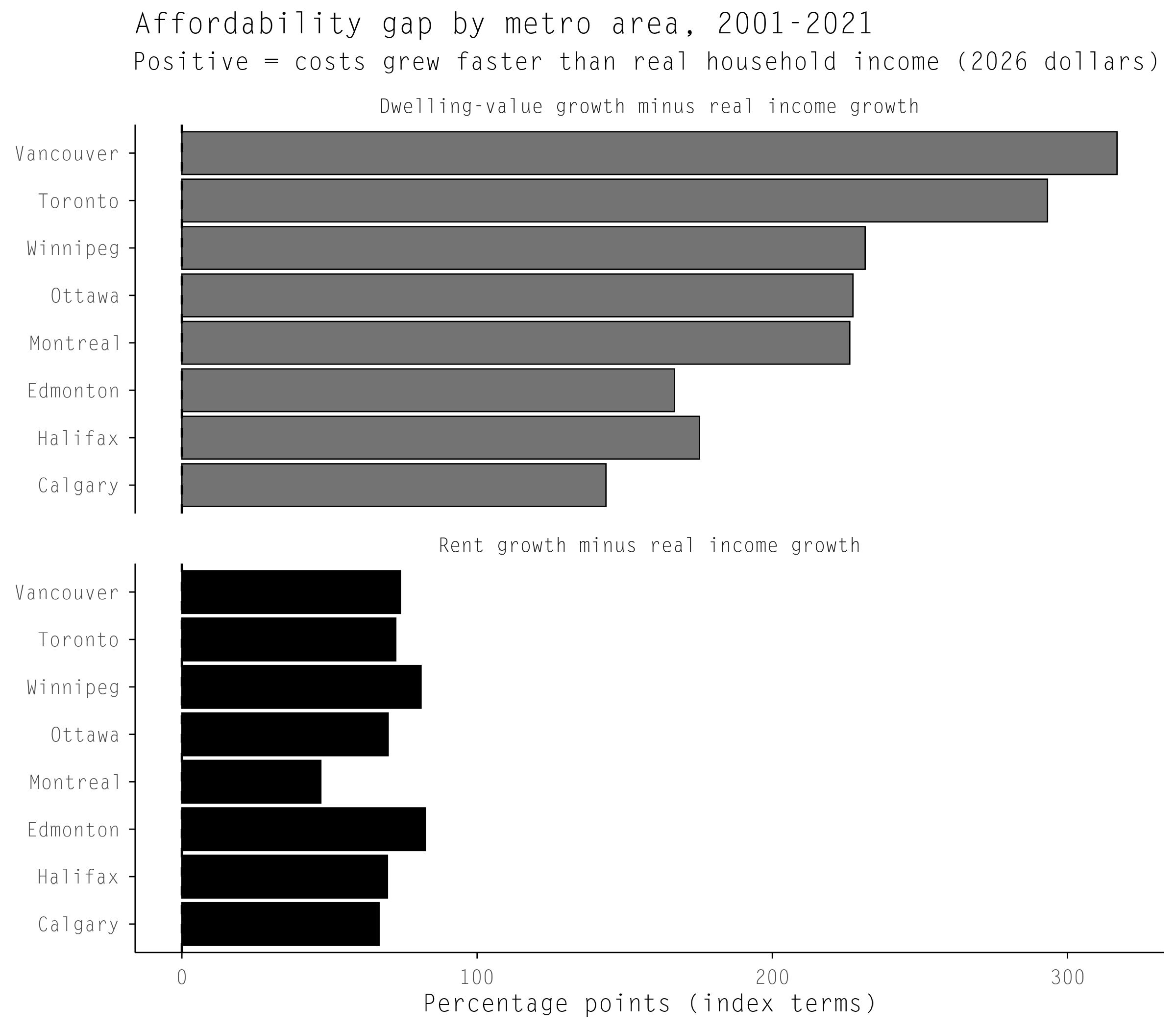
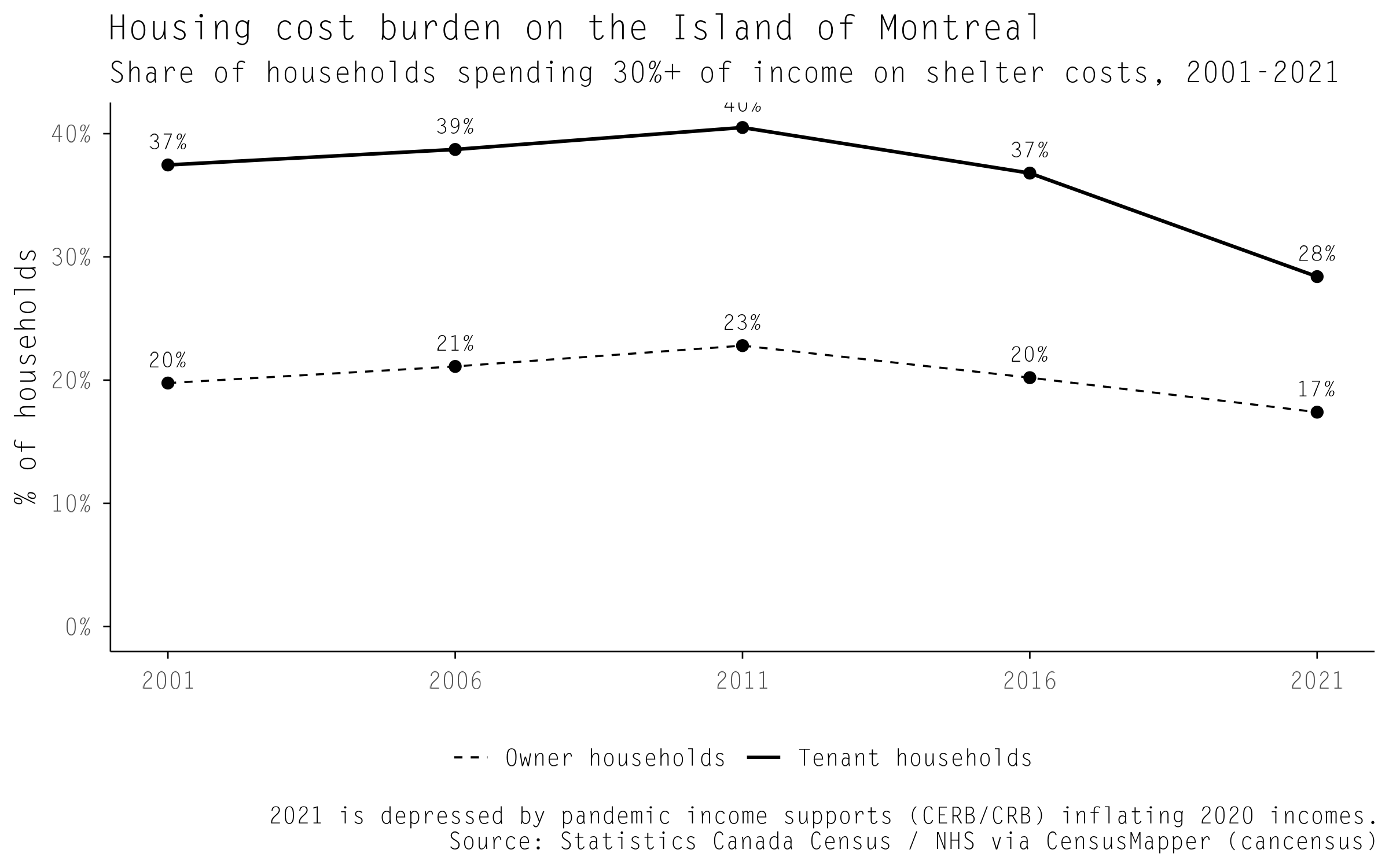
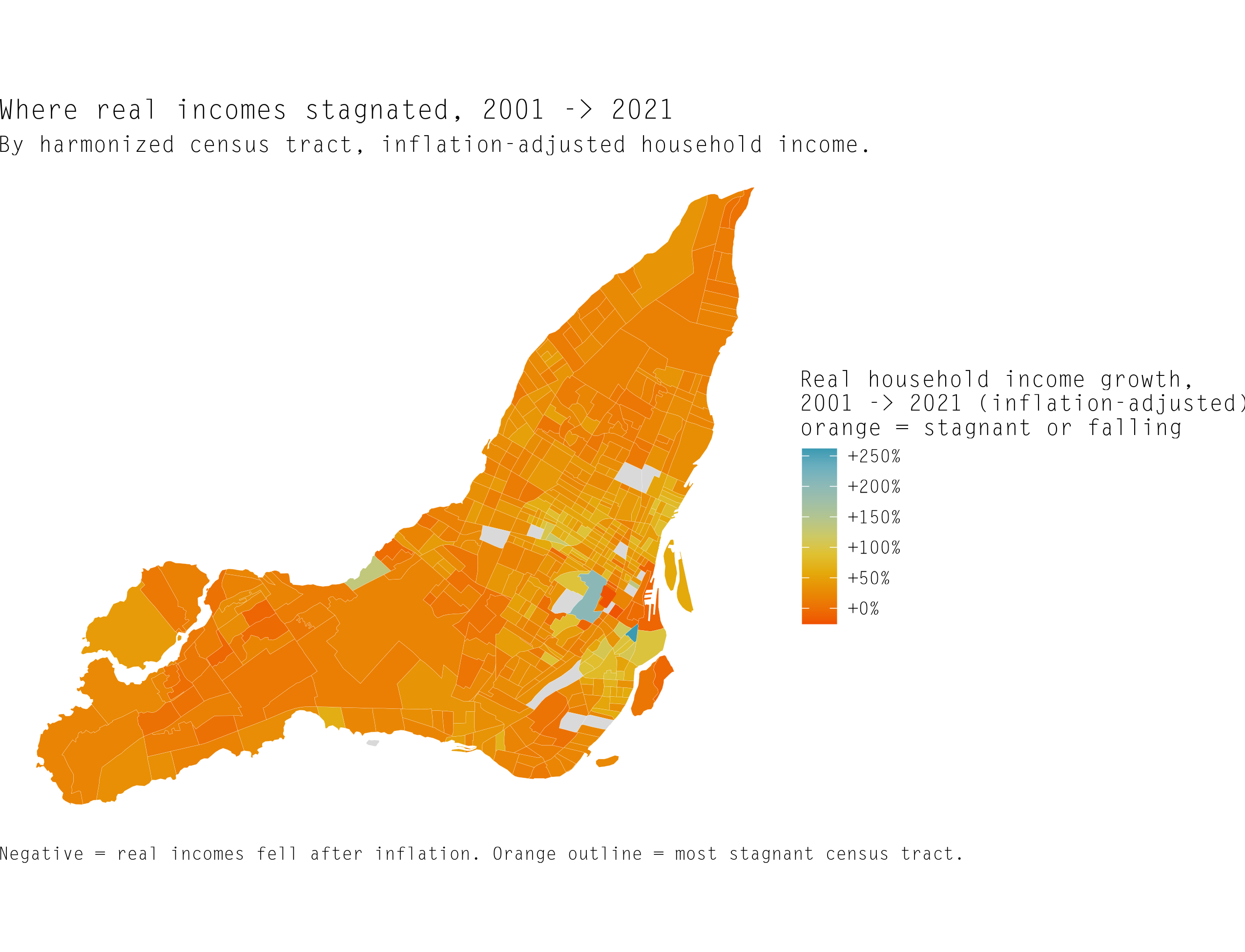
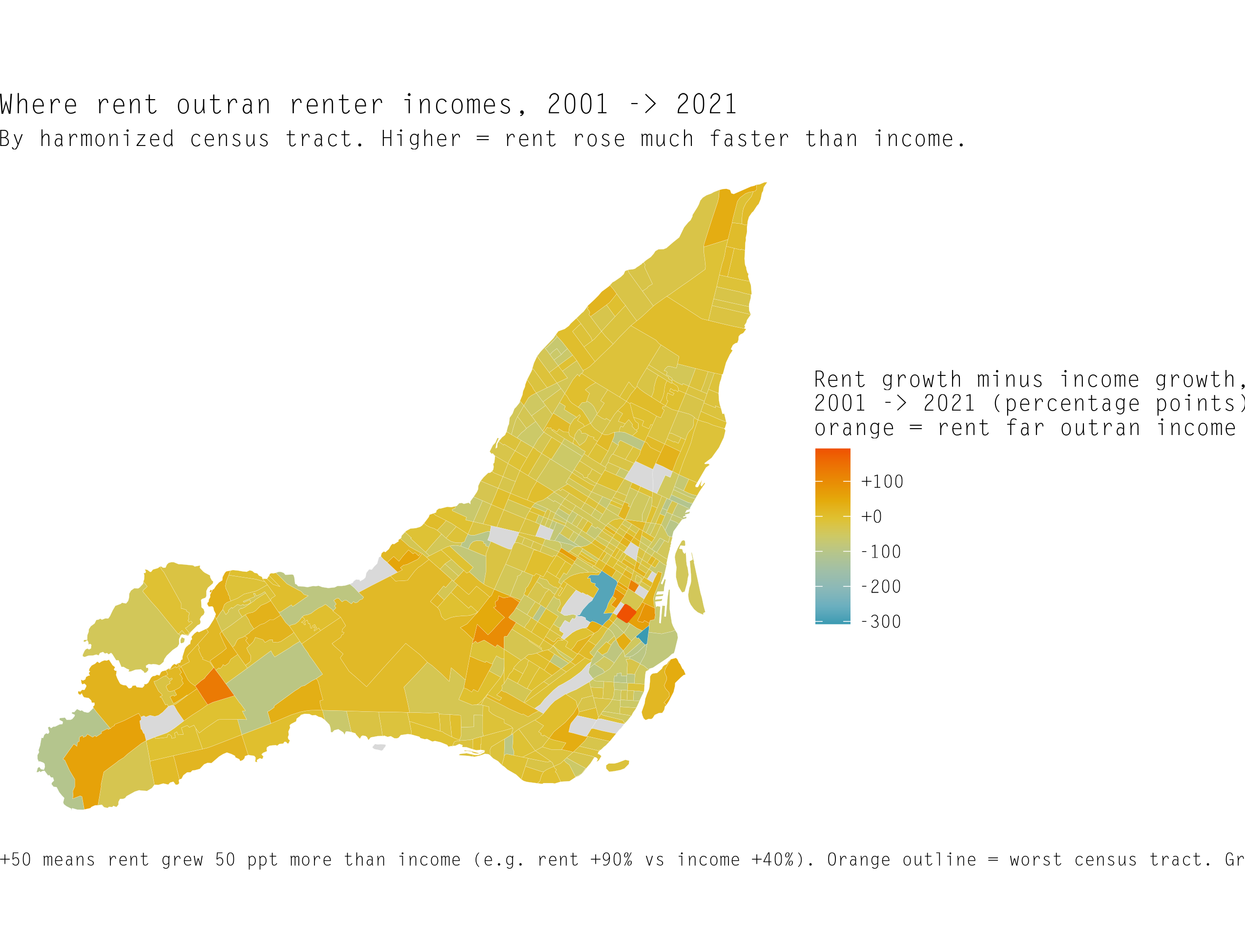
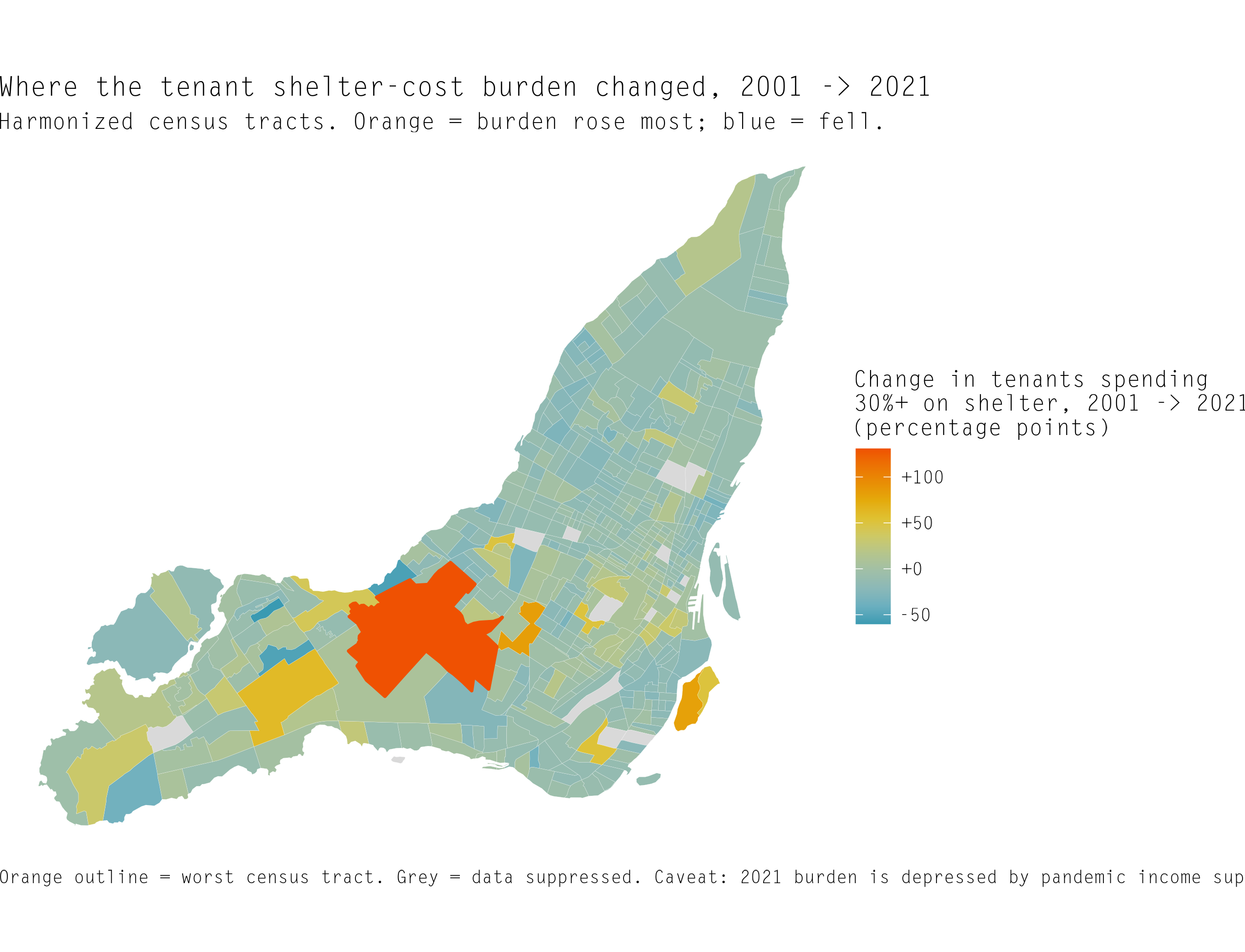
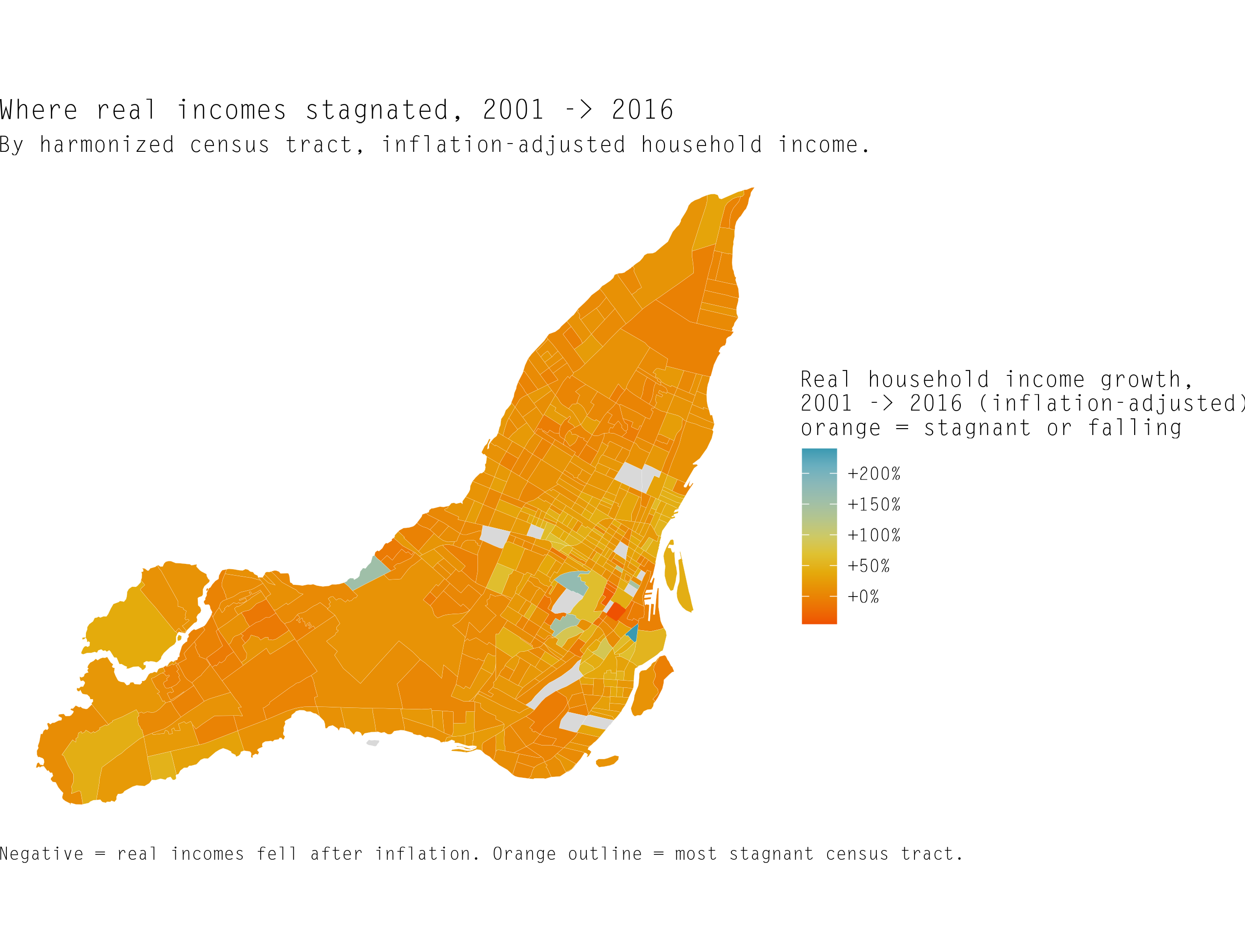
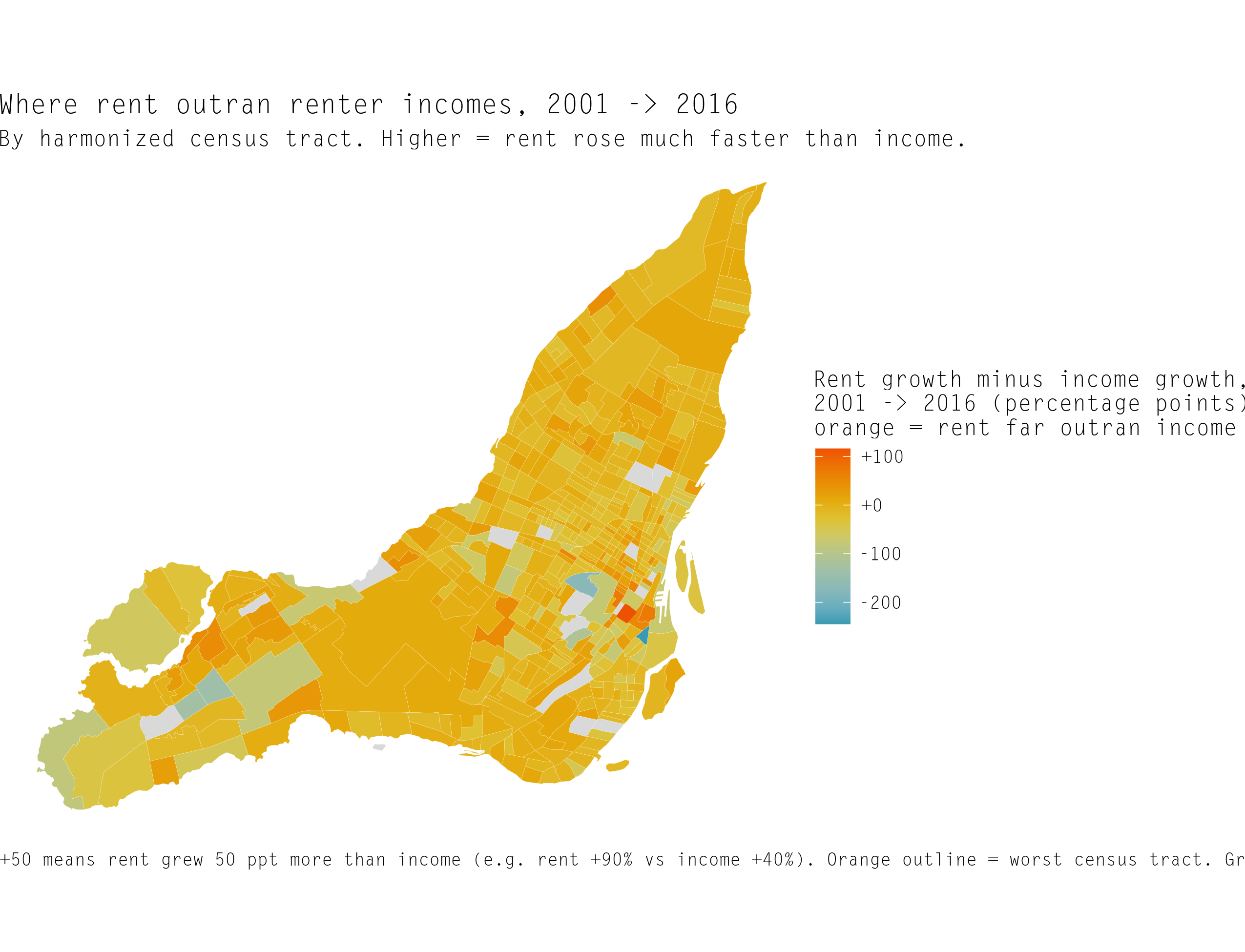
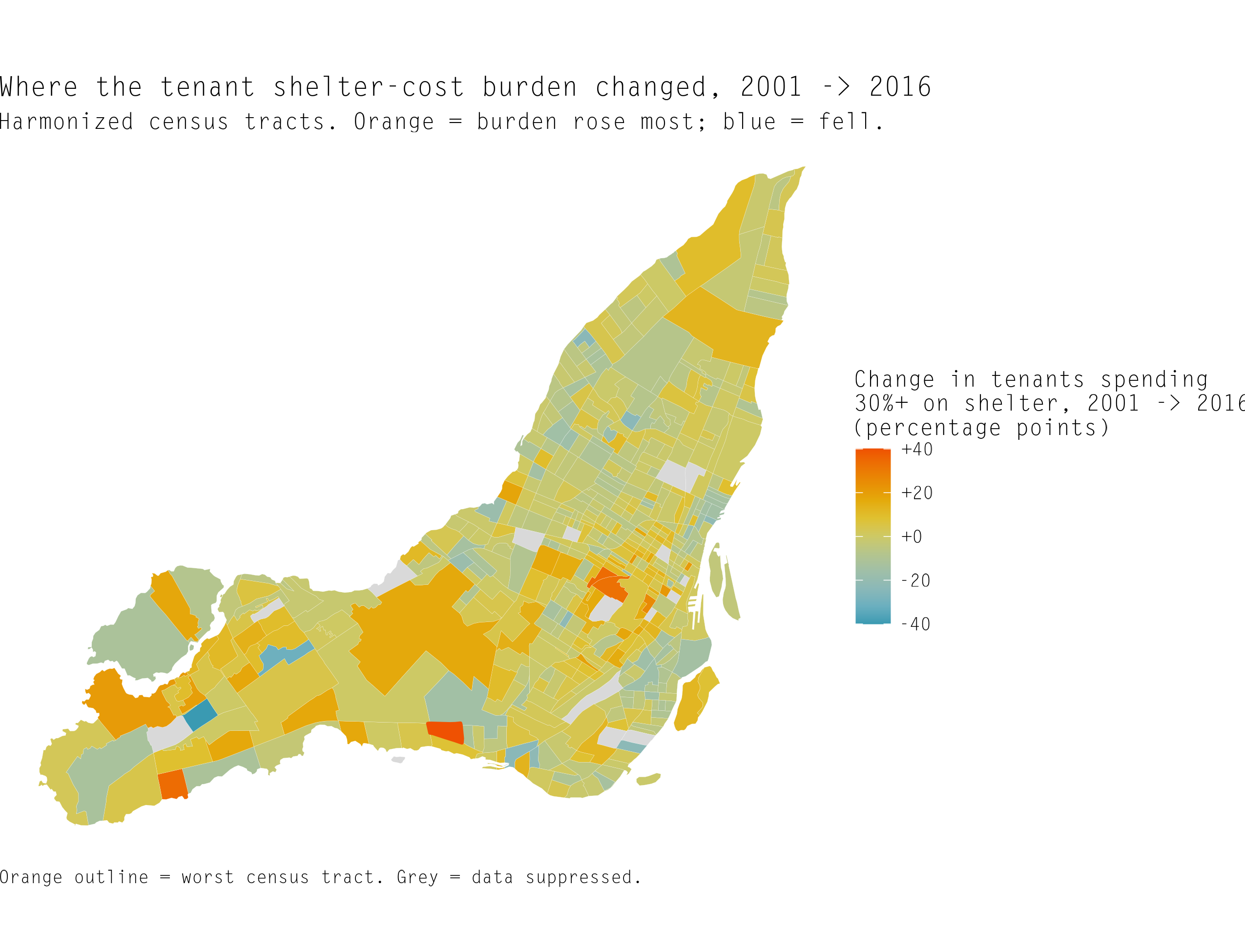
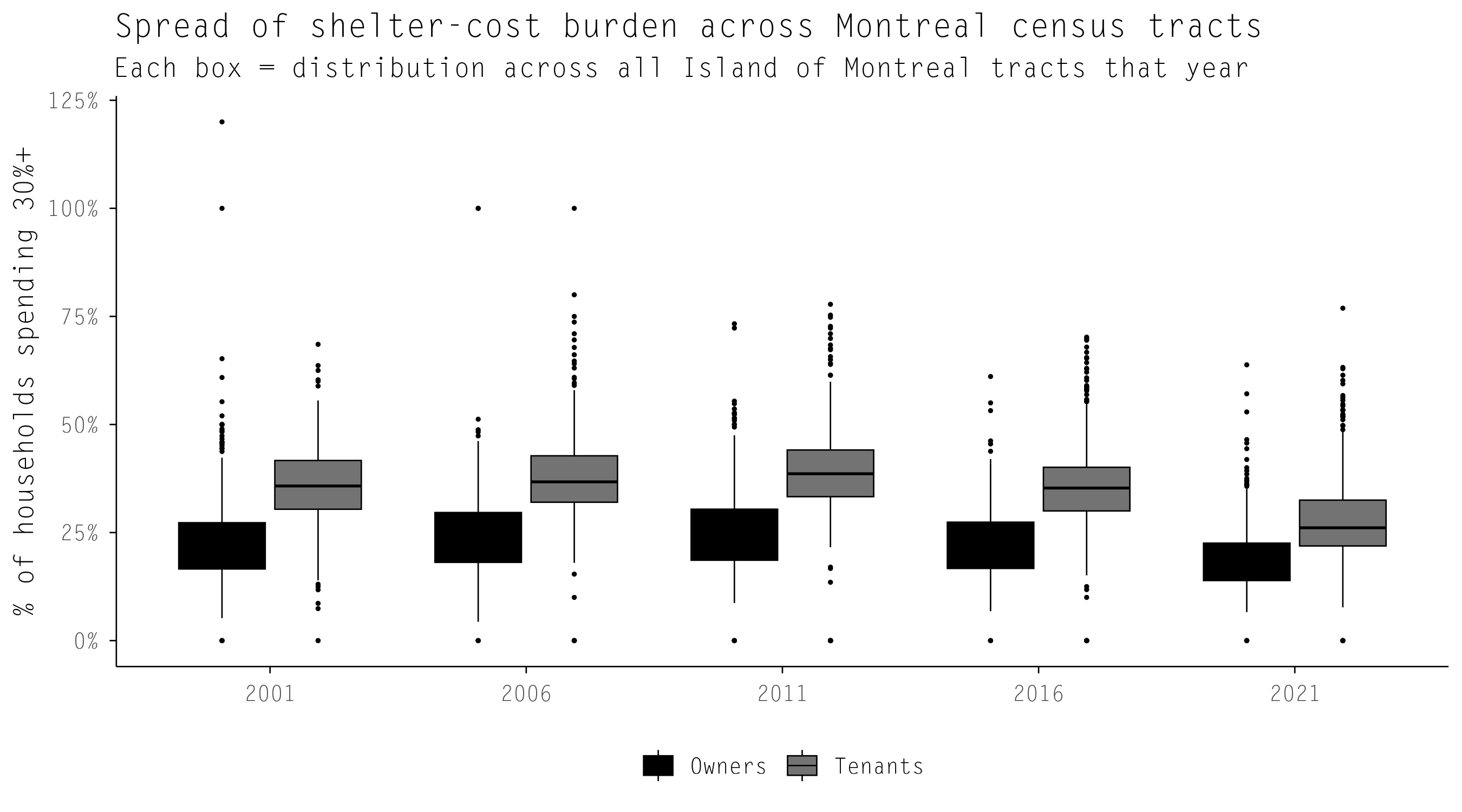
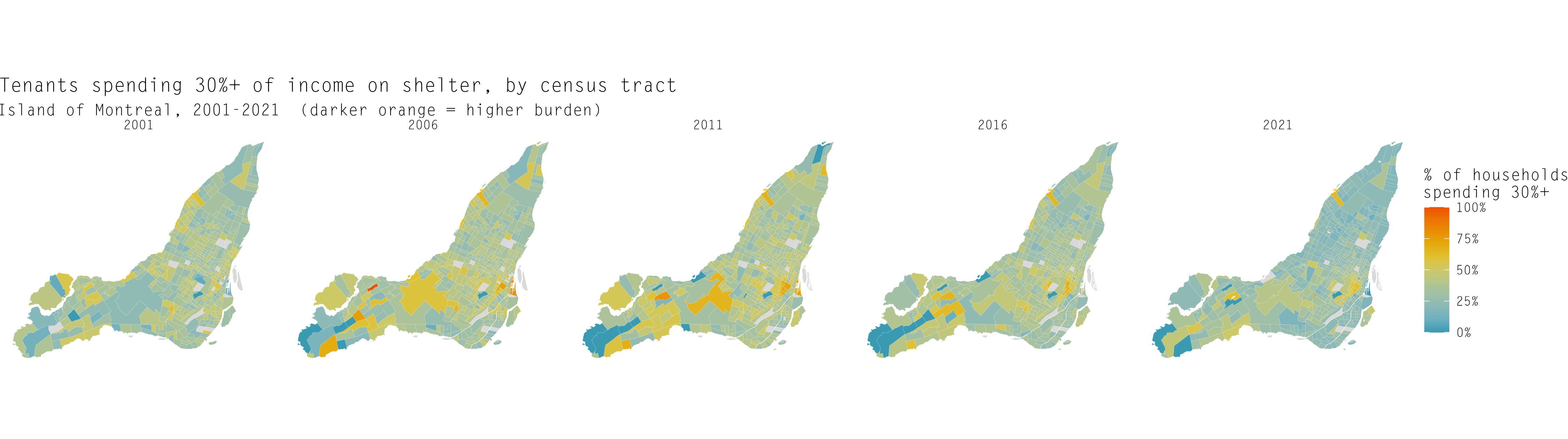
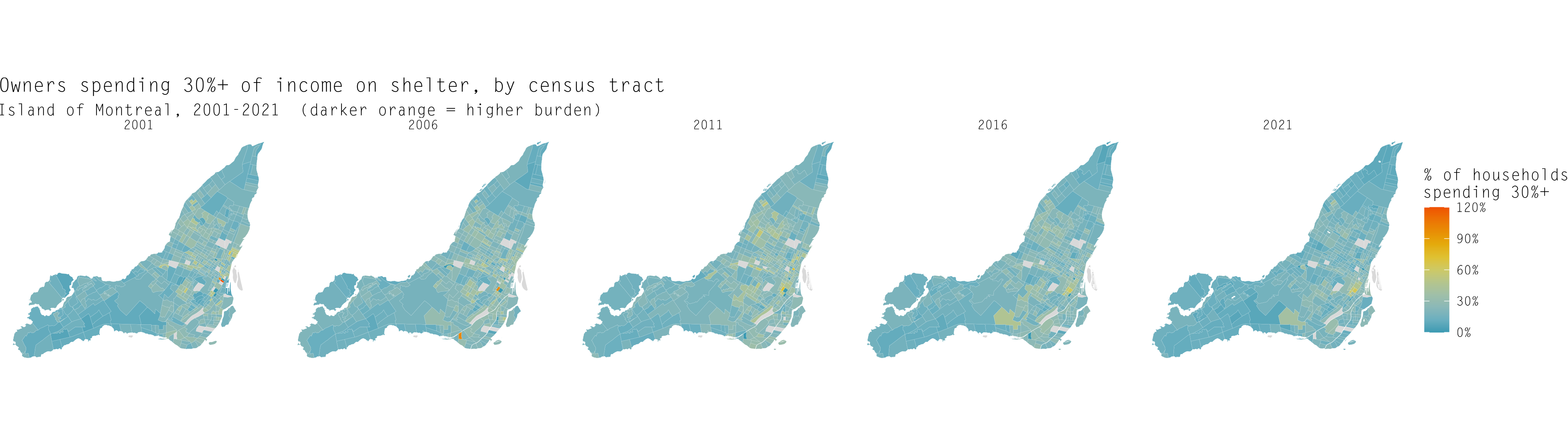
Income stagnation and housing costs burden in Montréal
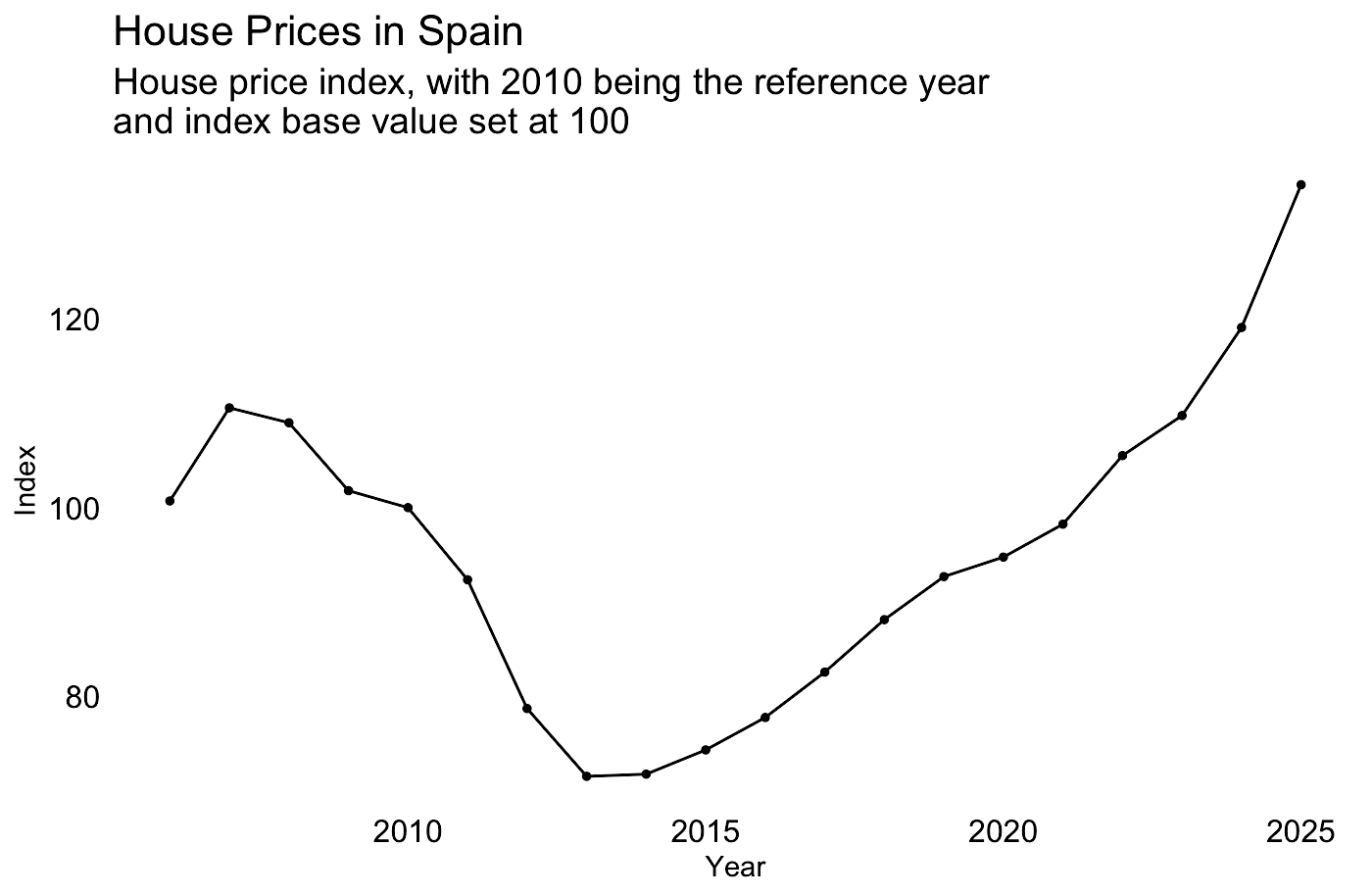
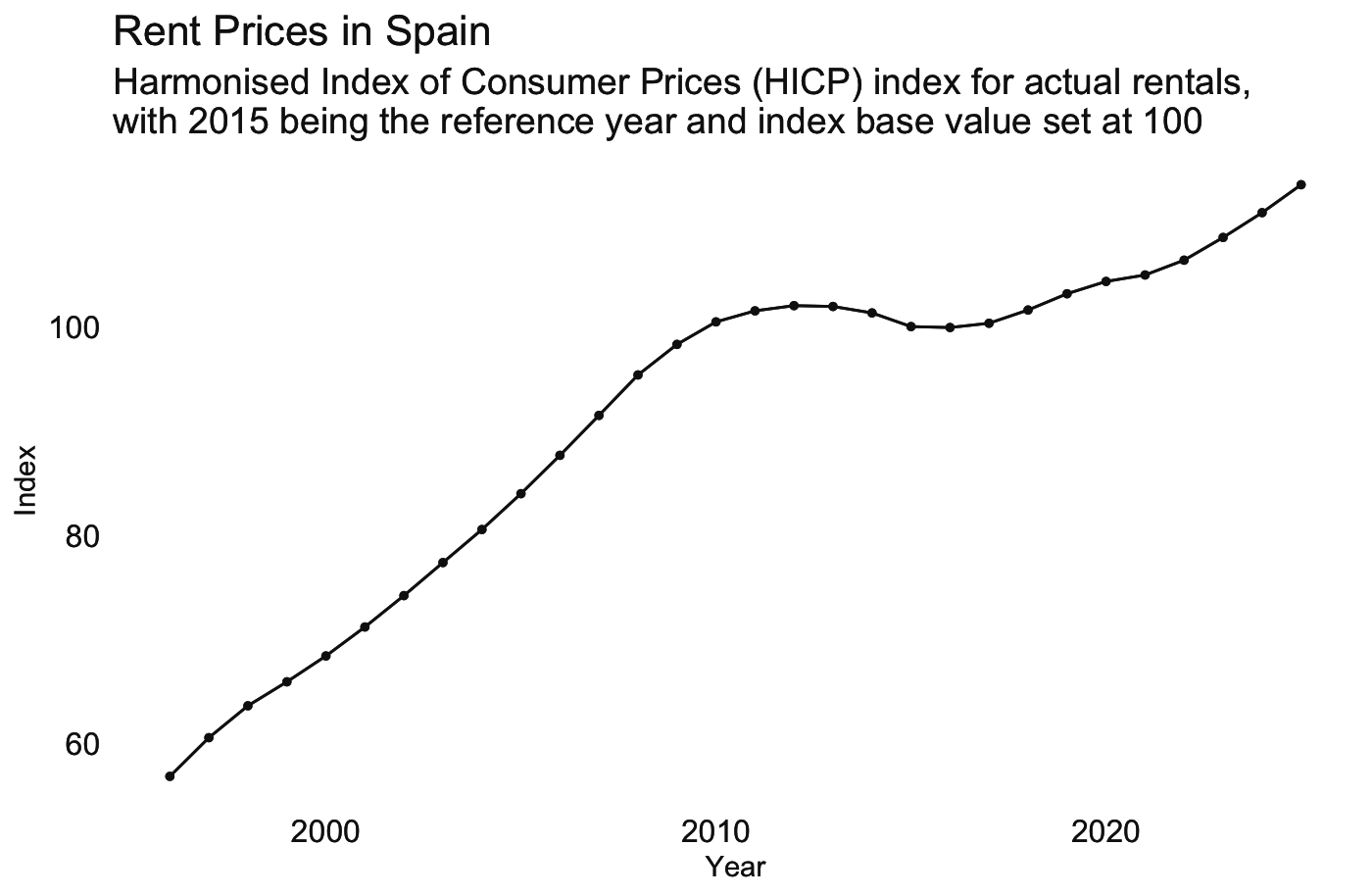
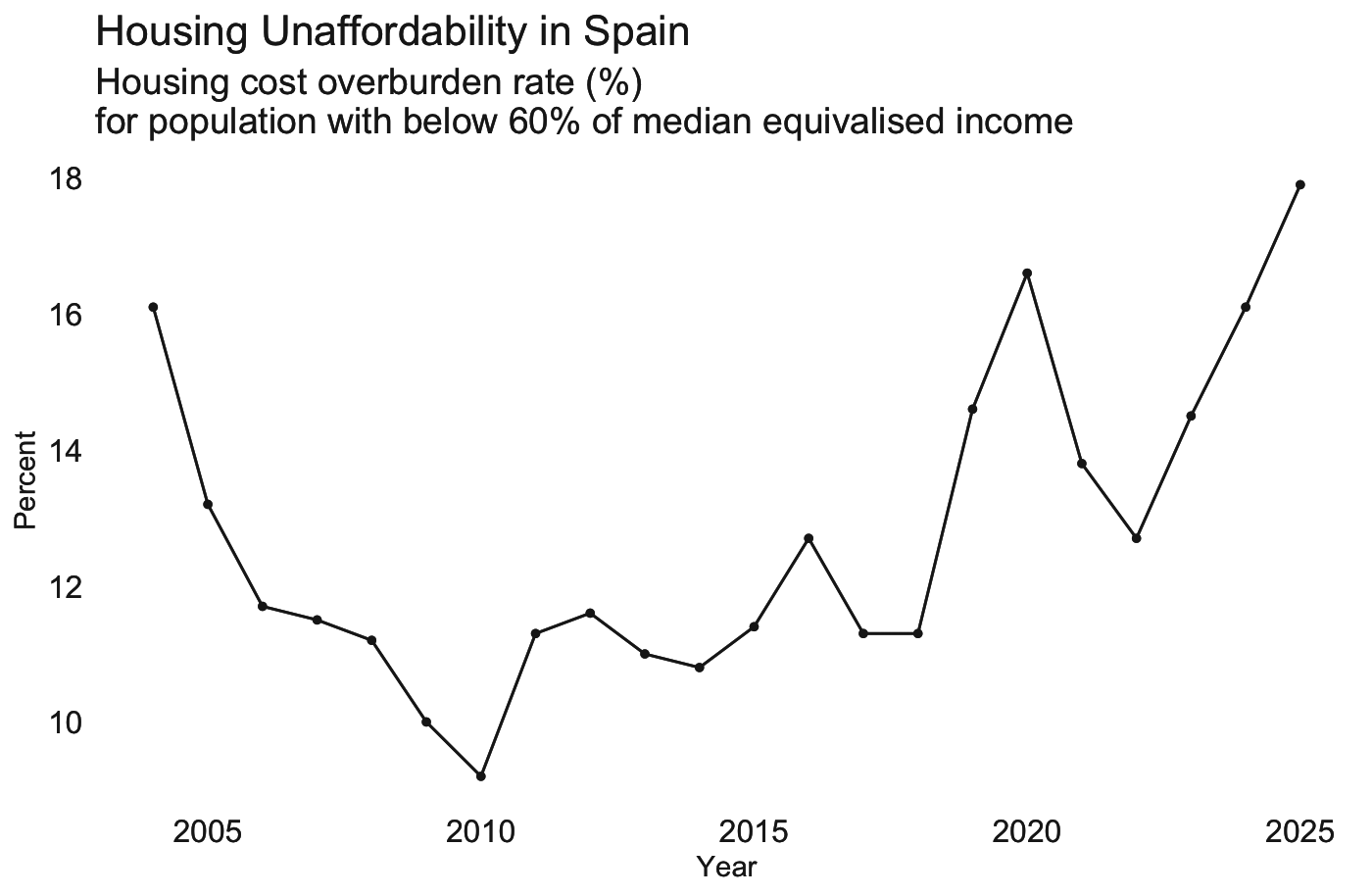
No signs of housing affordability in Spain:
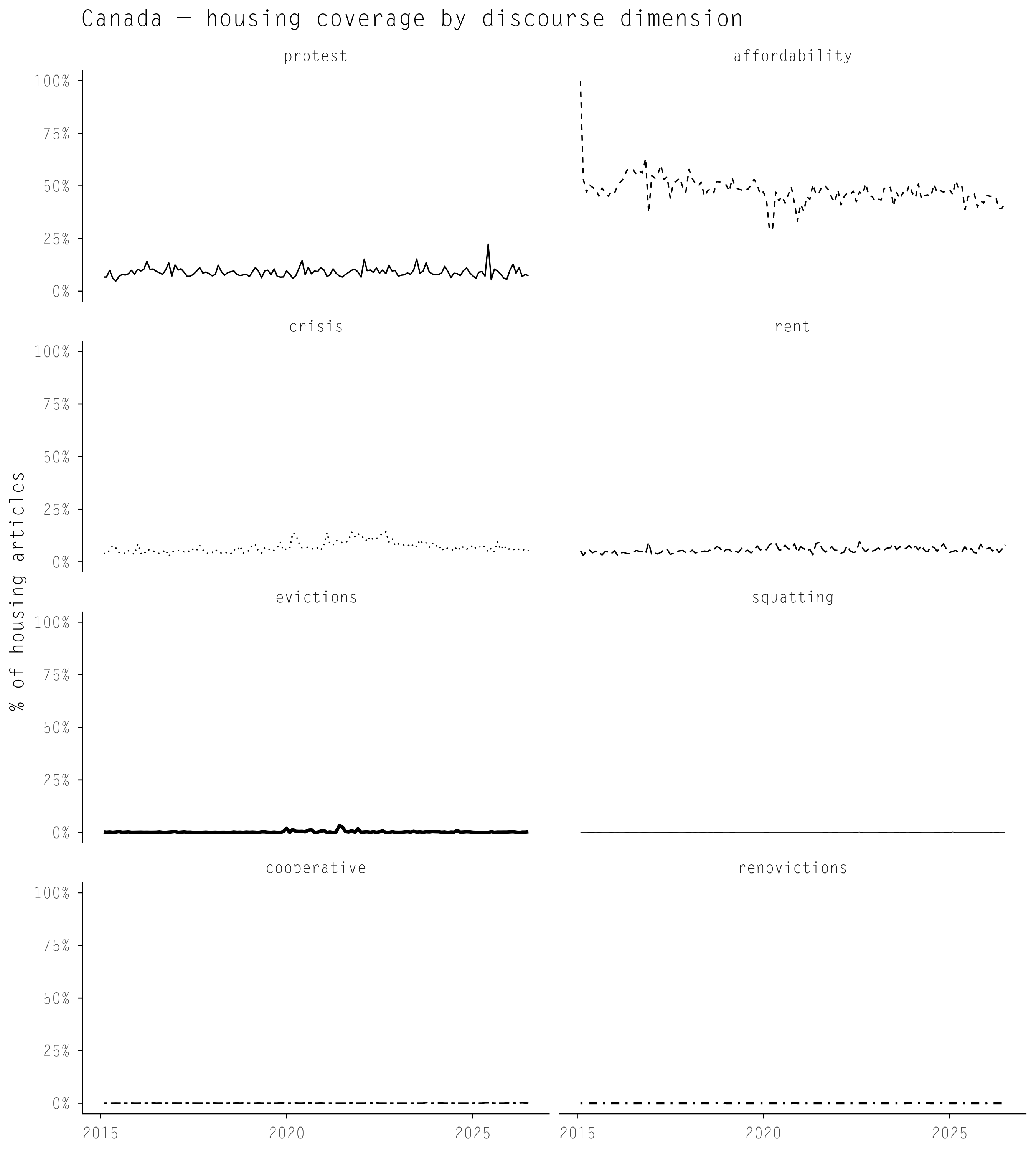
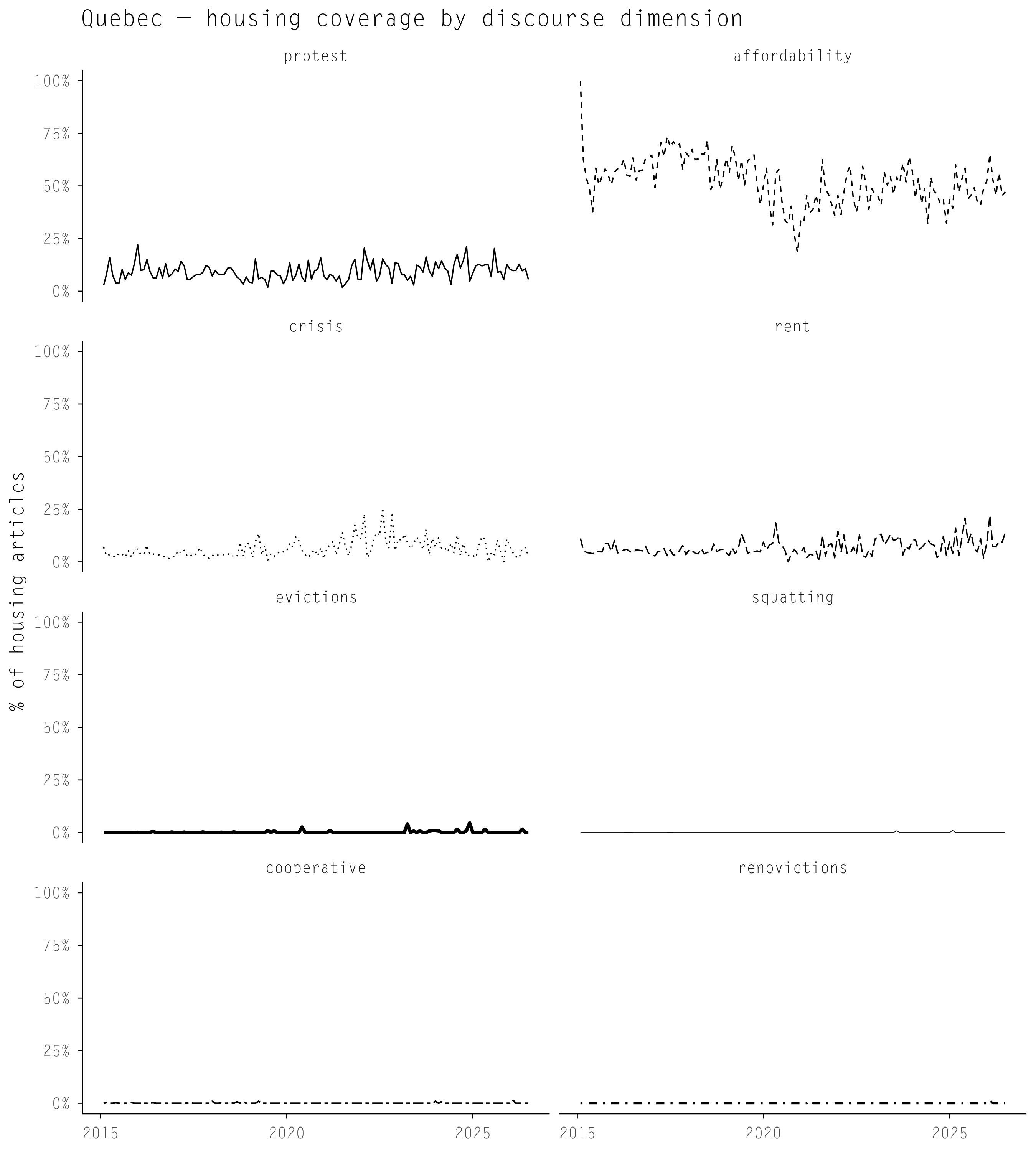
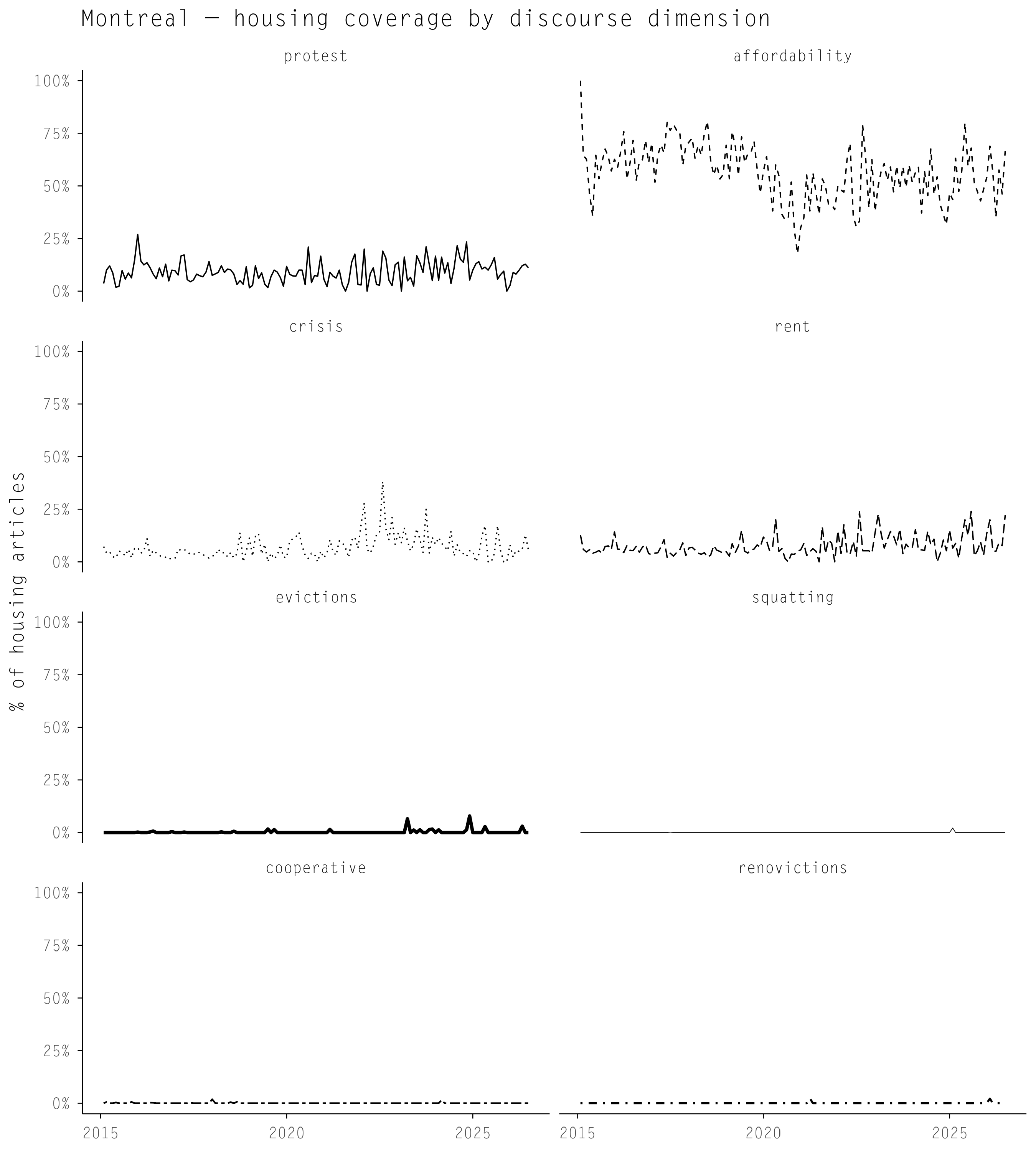
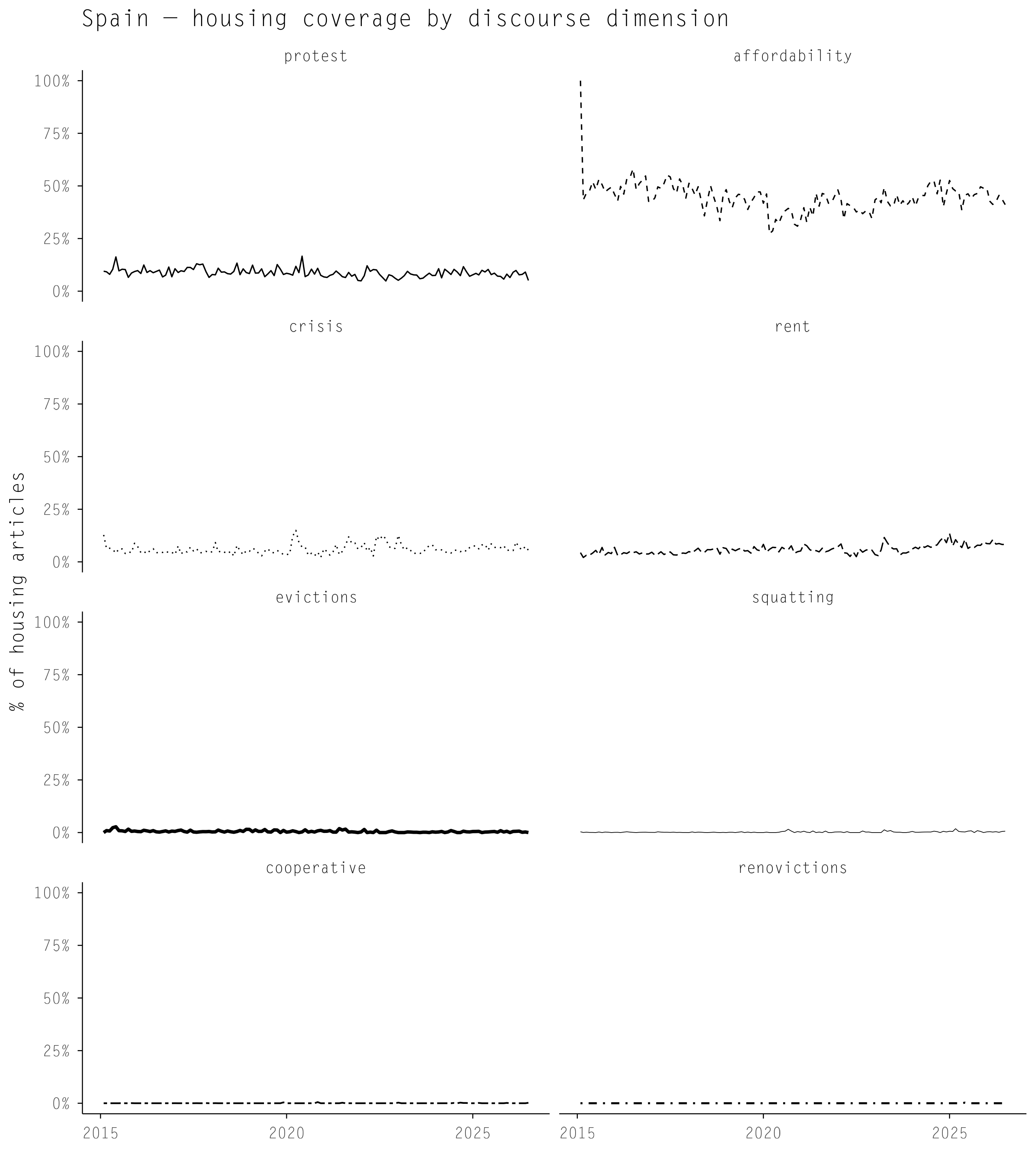
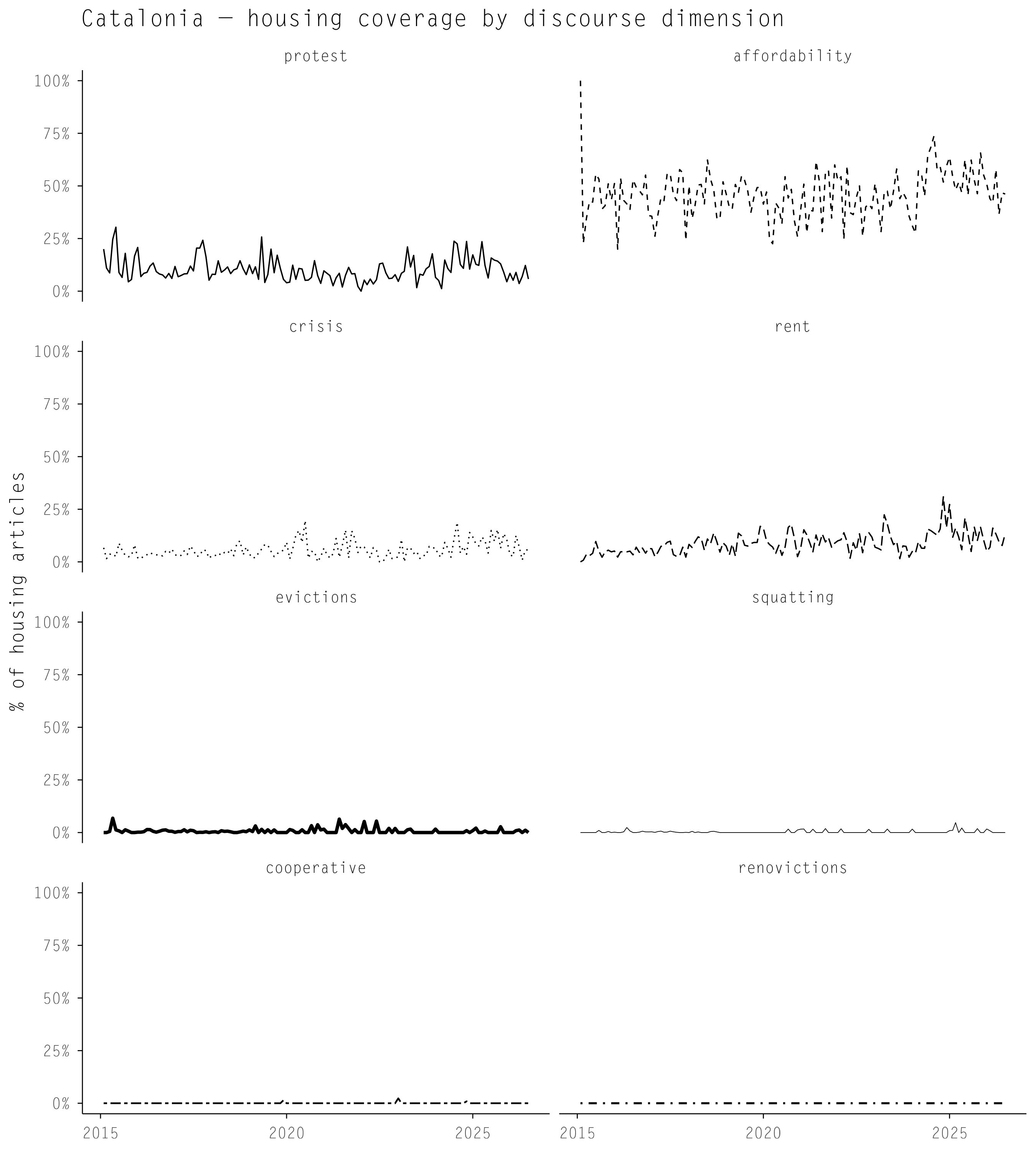
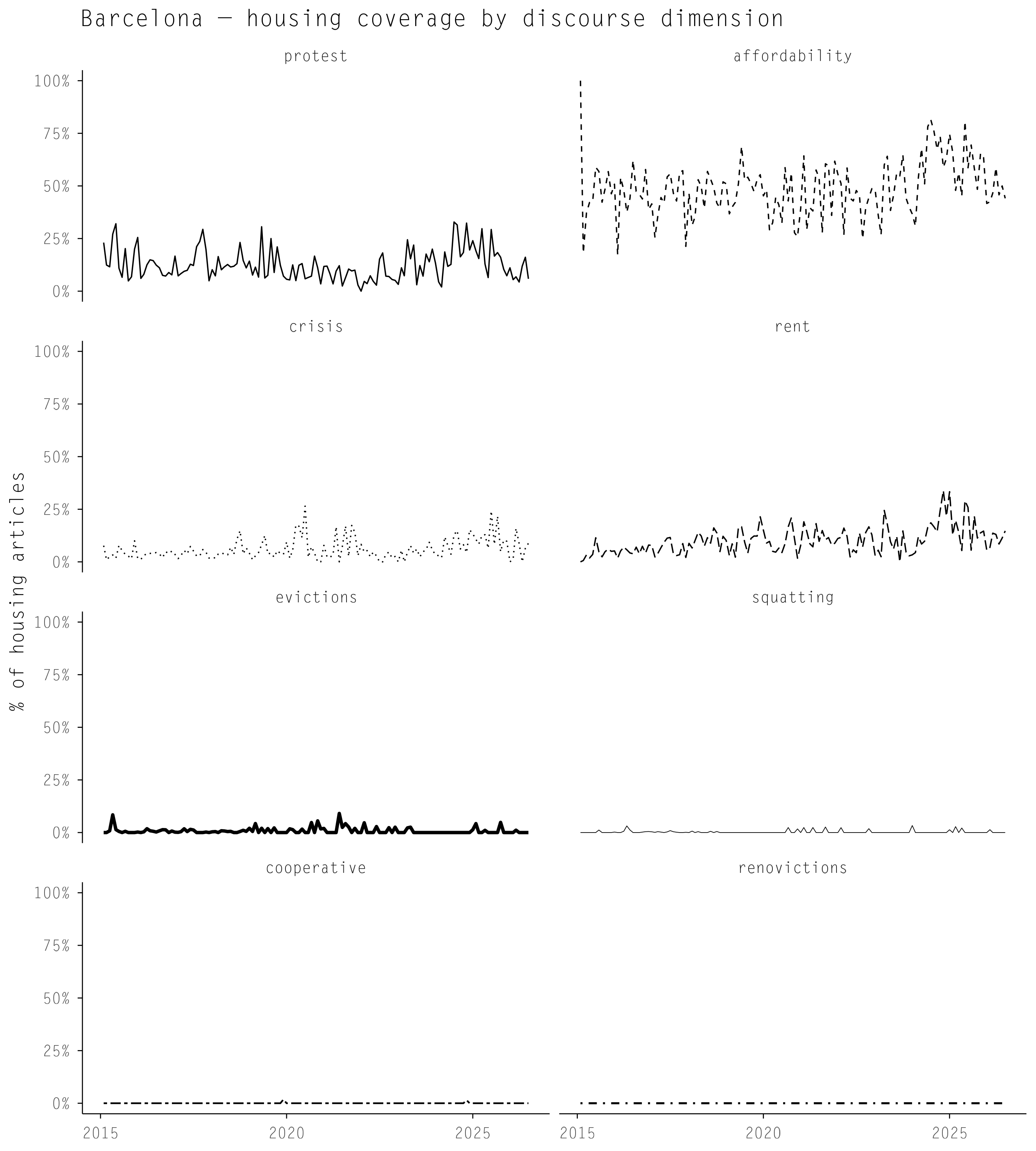
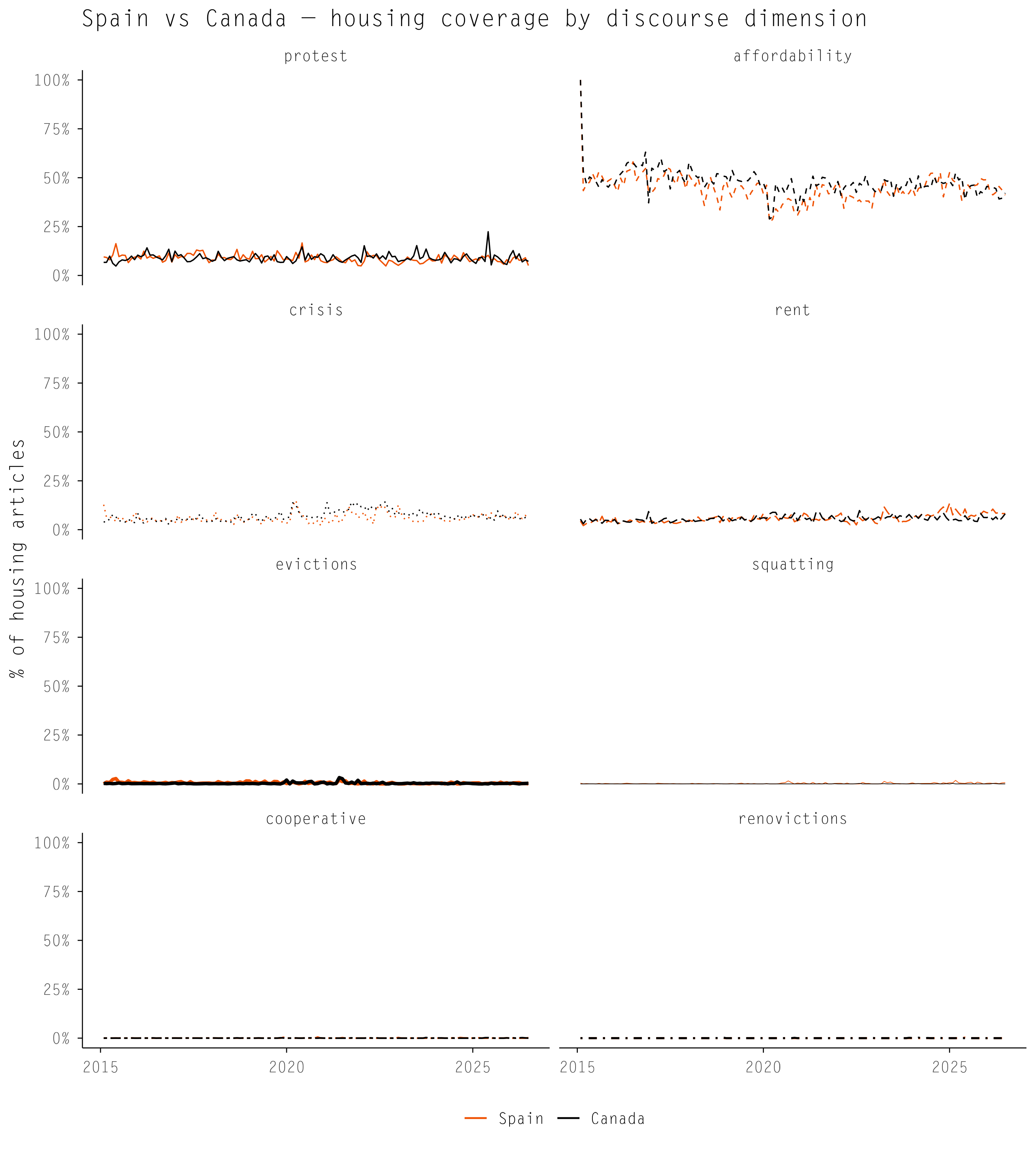
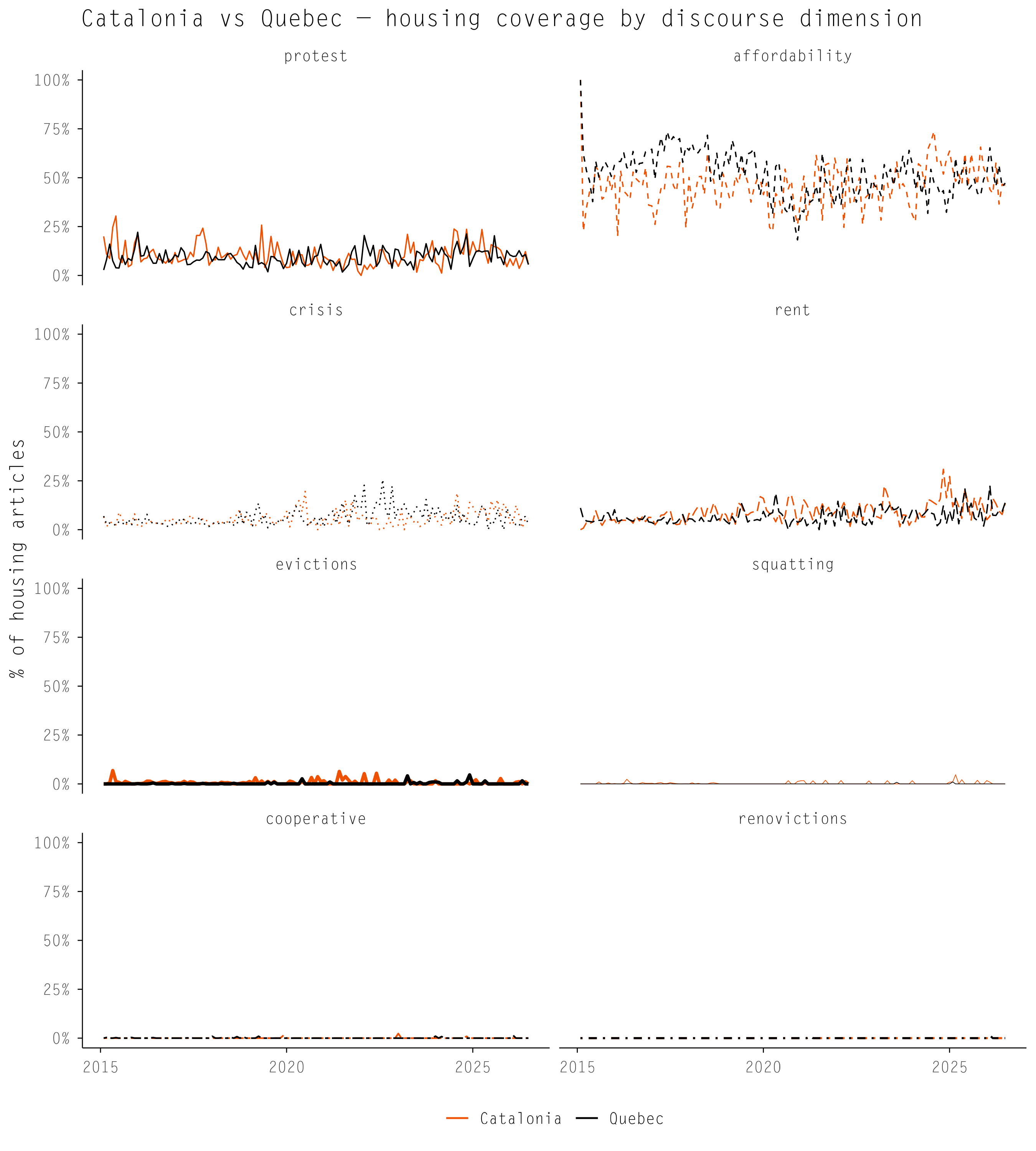
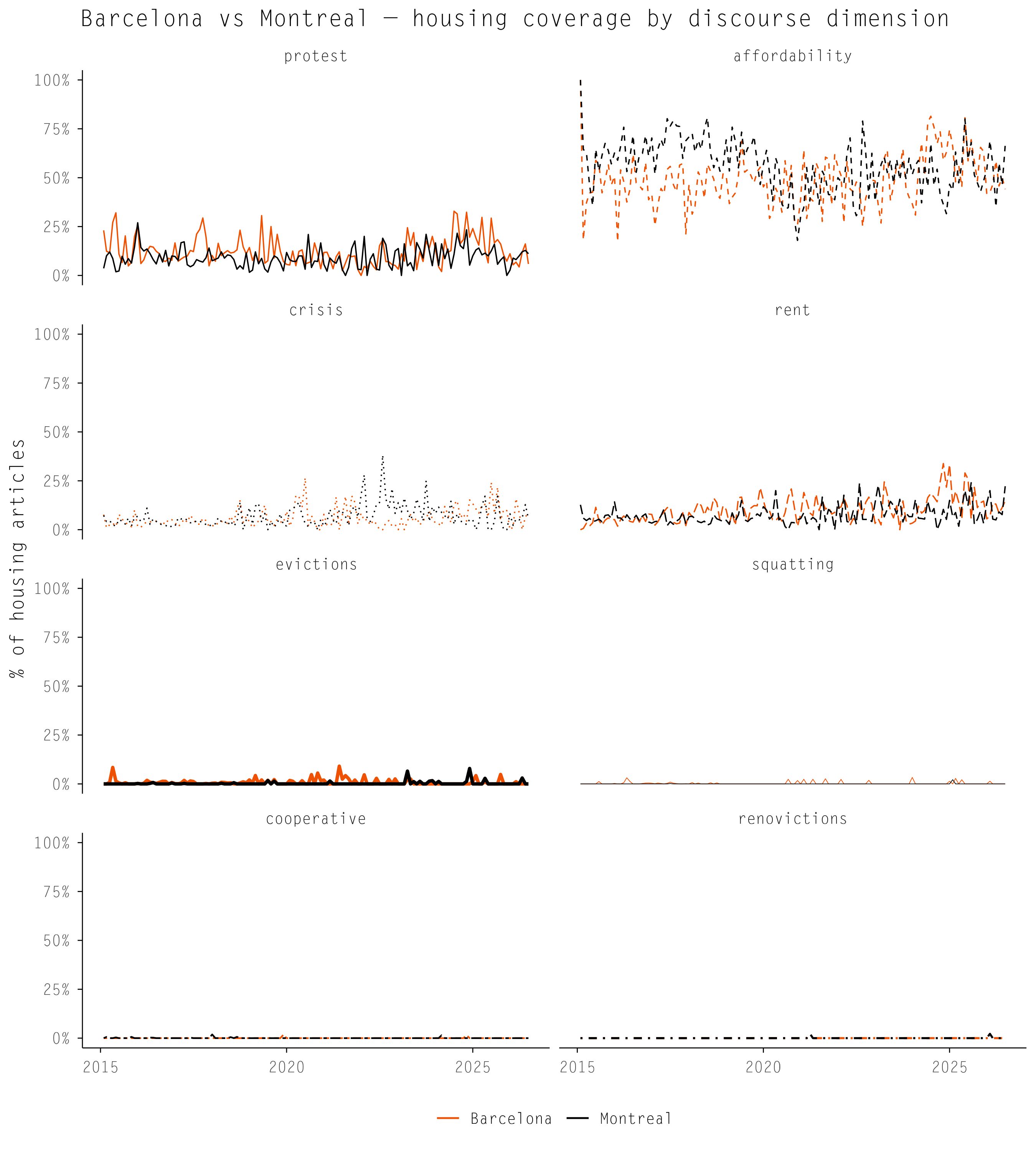
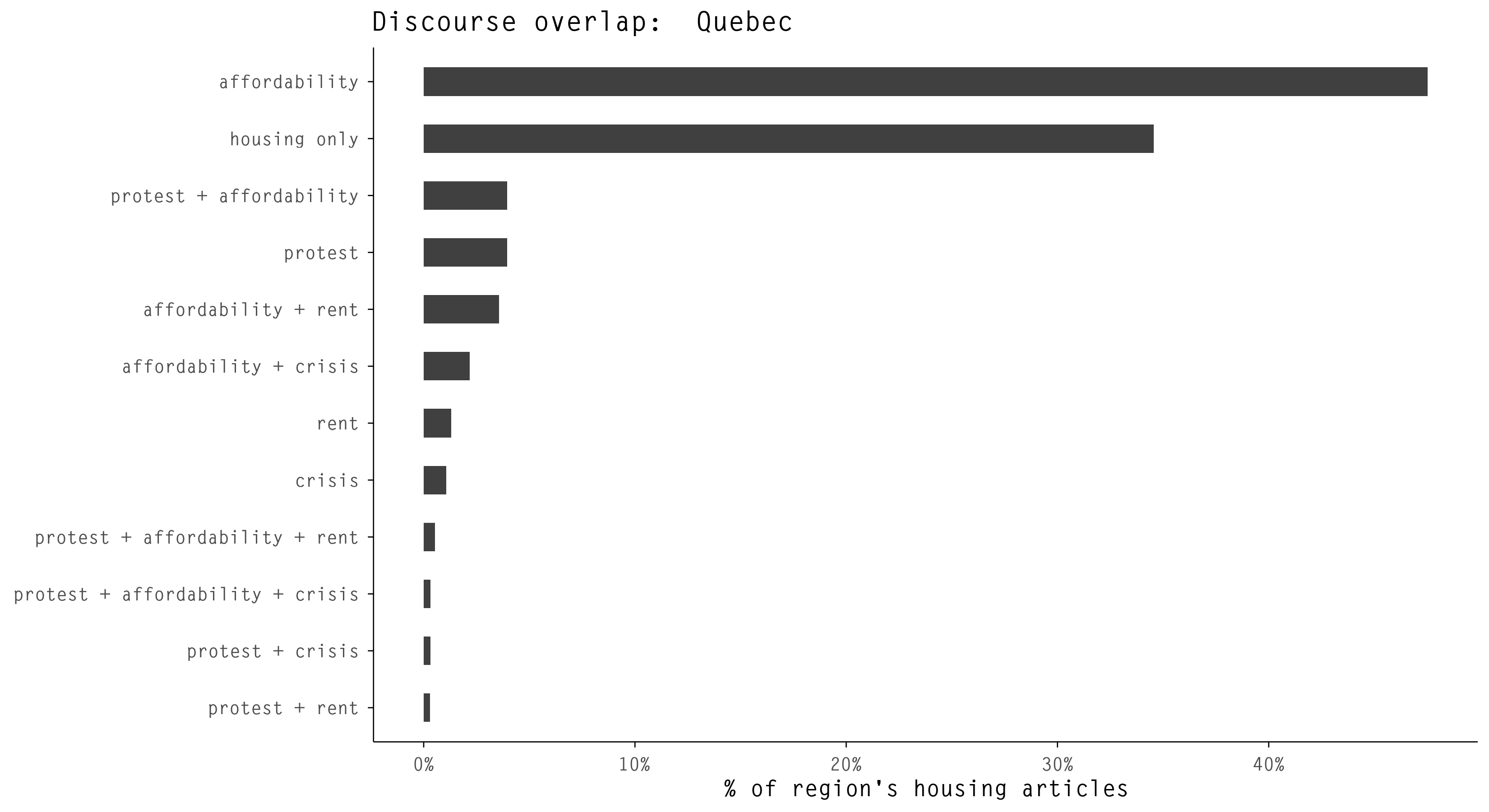
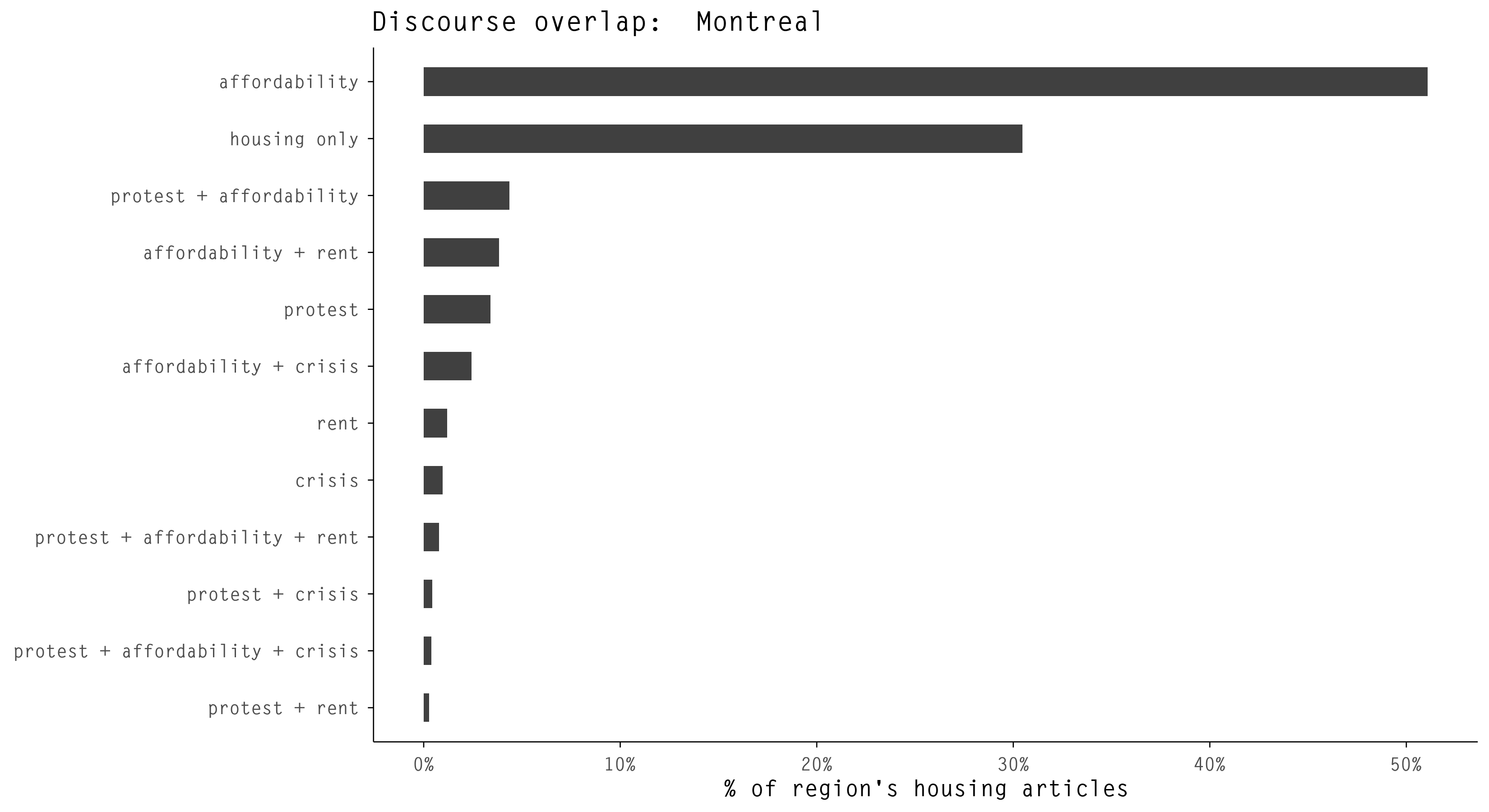
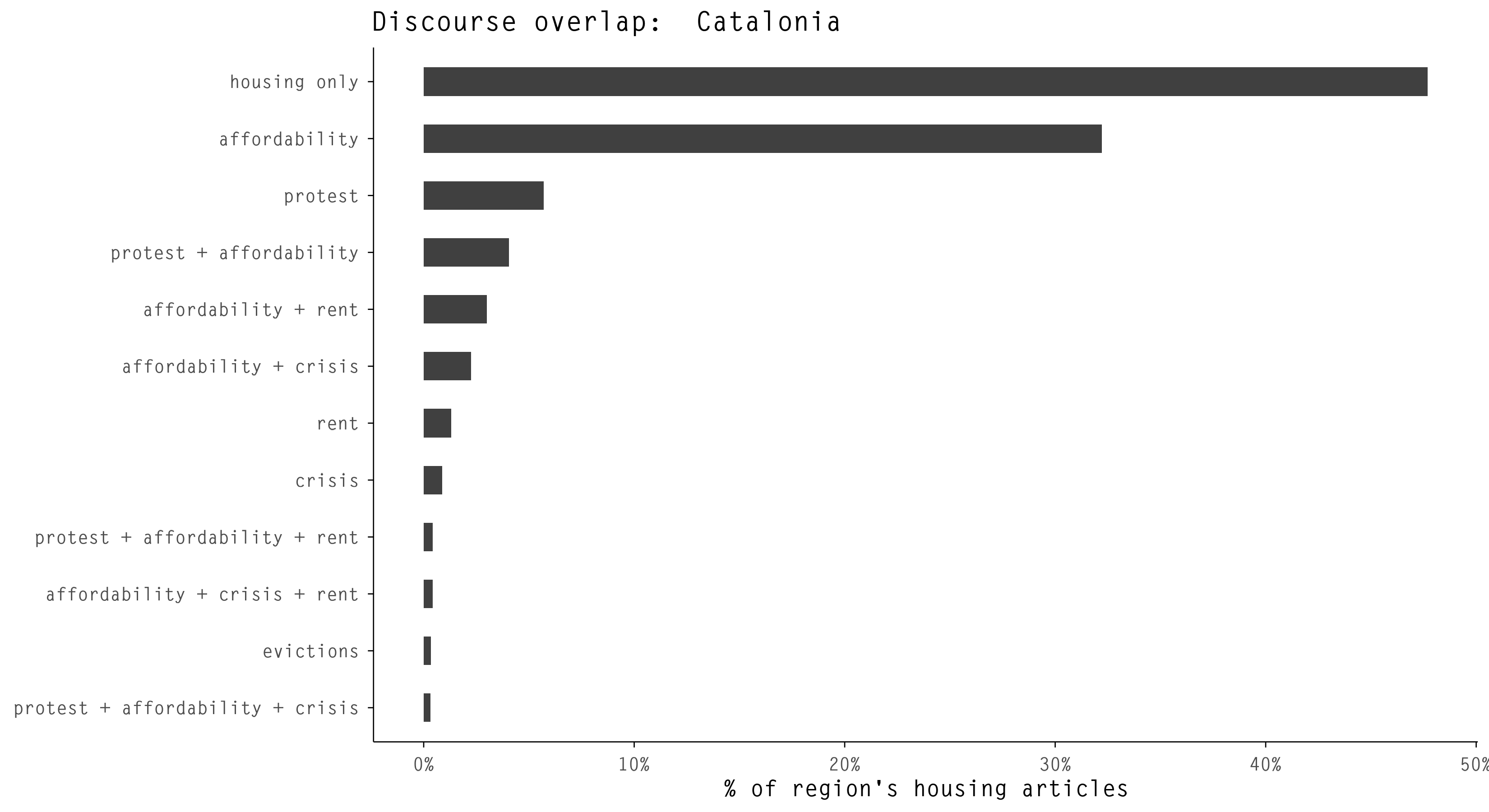
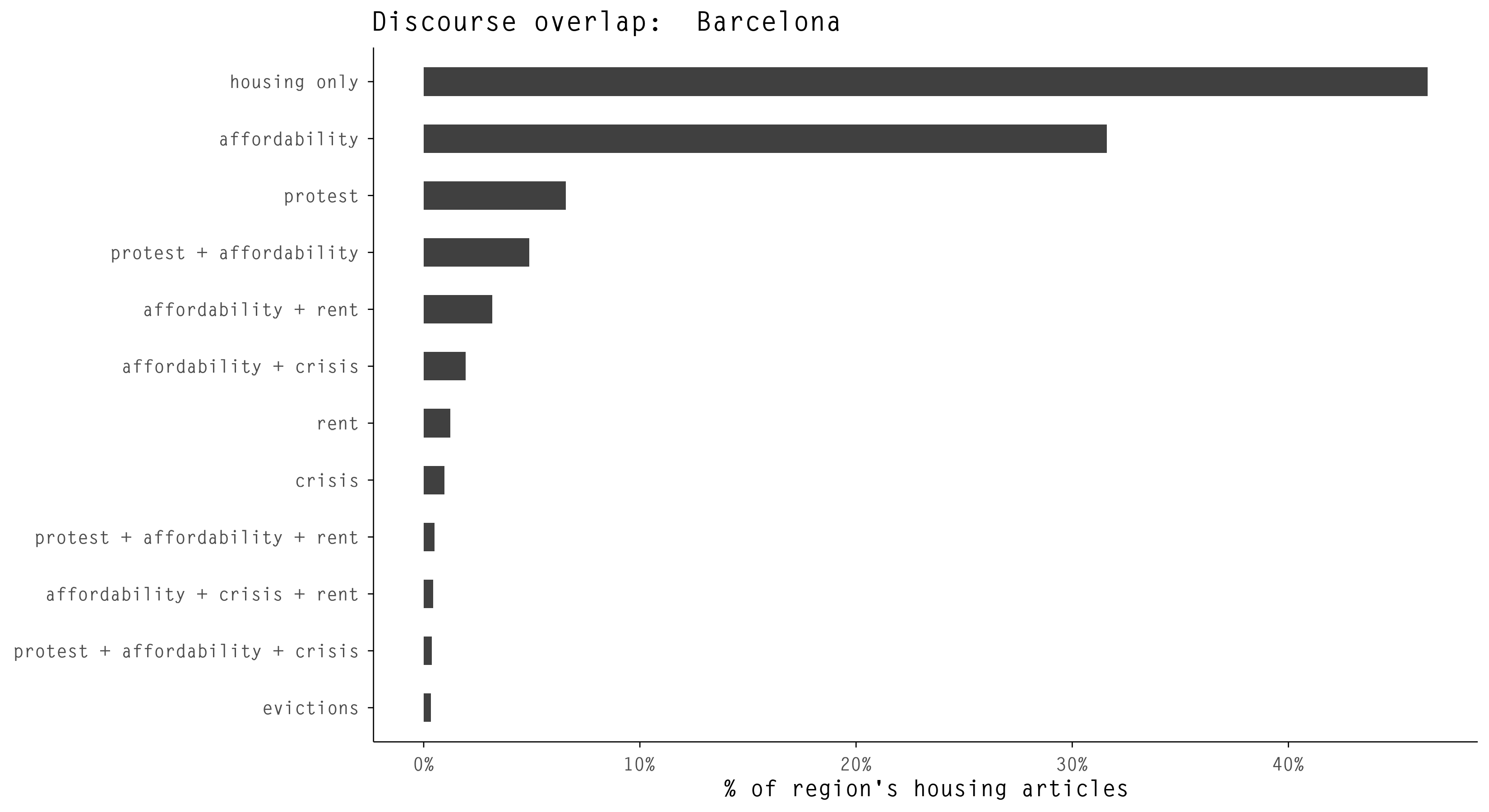
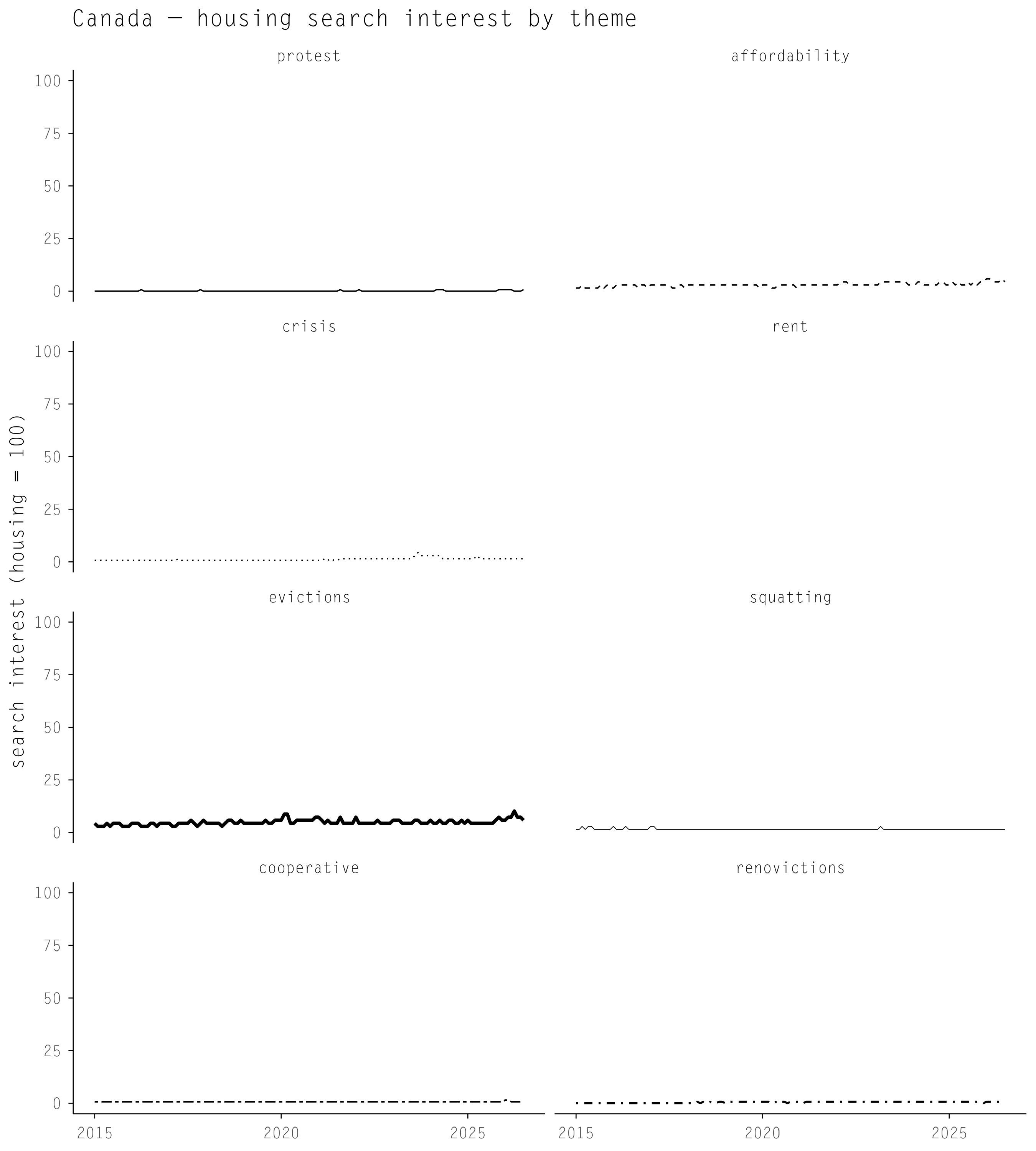
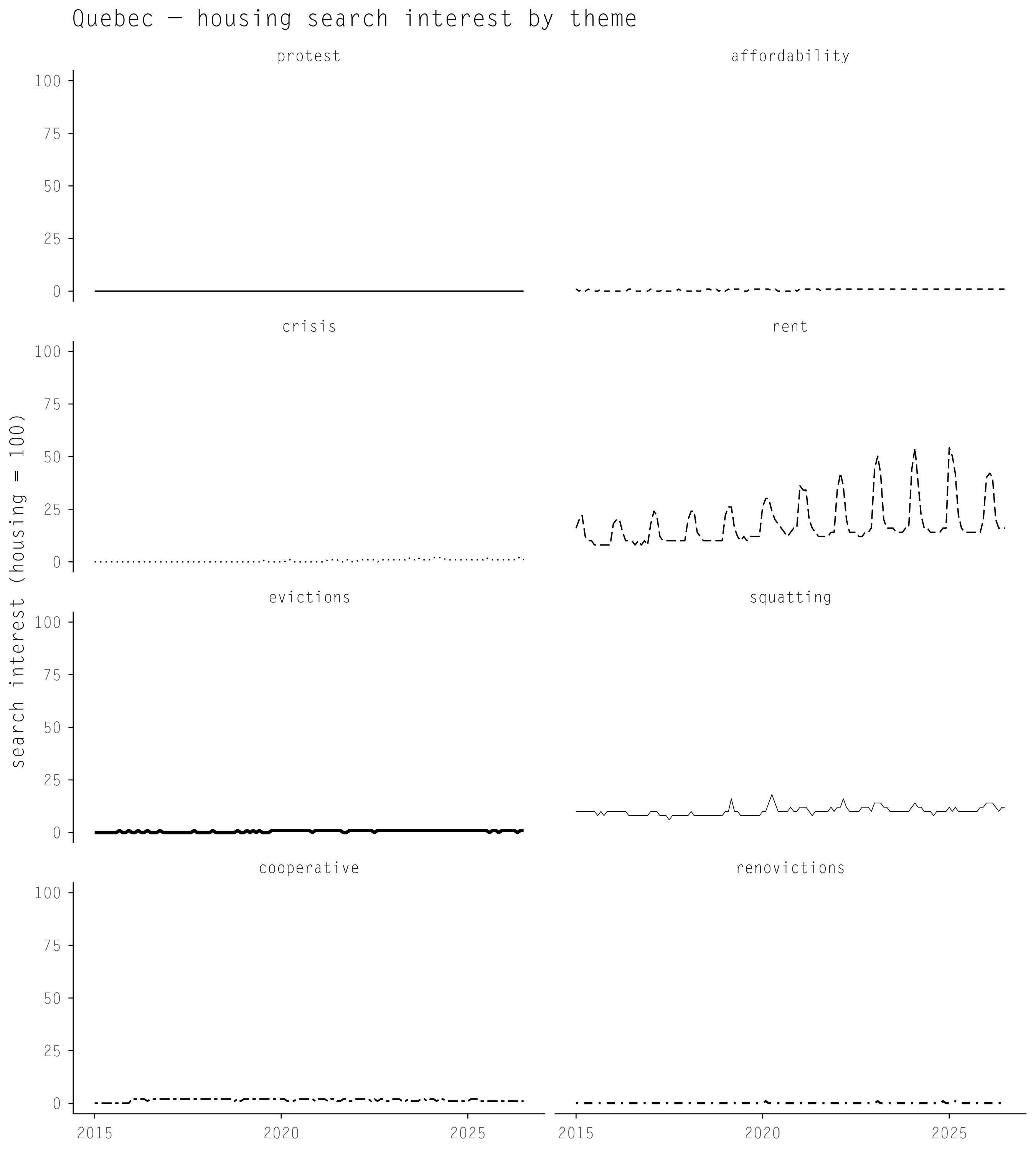
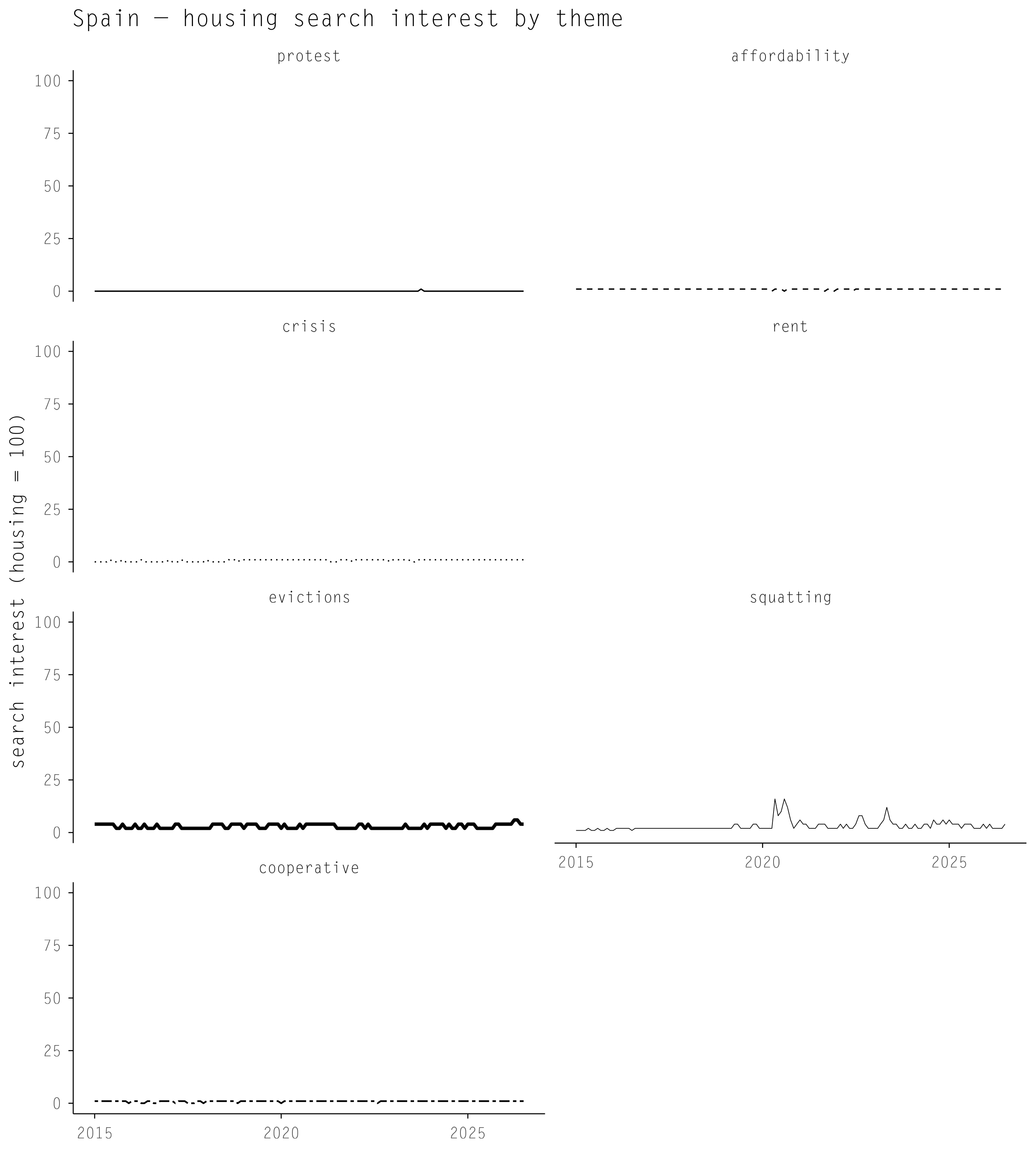
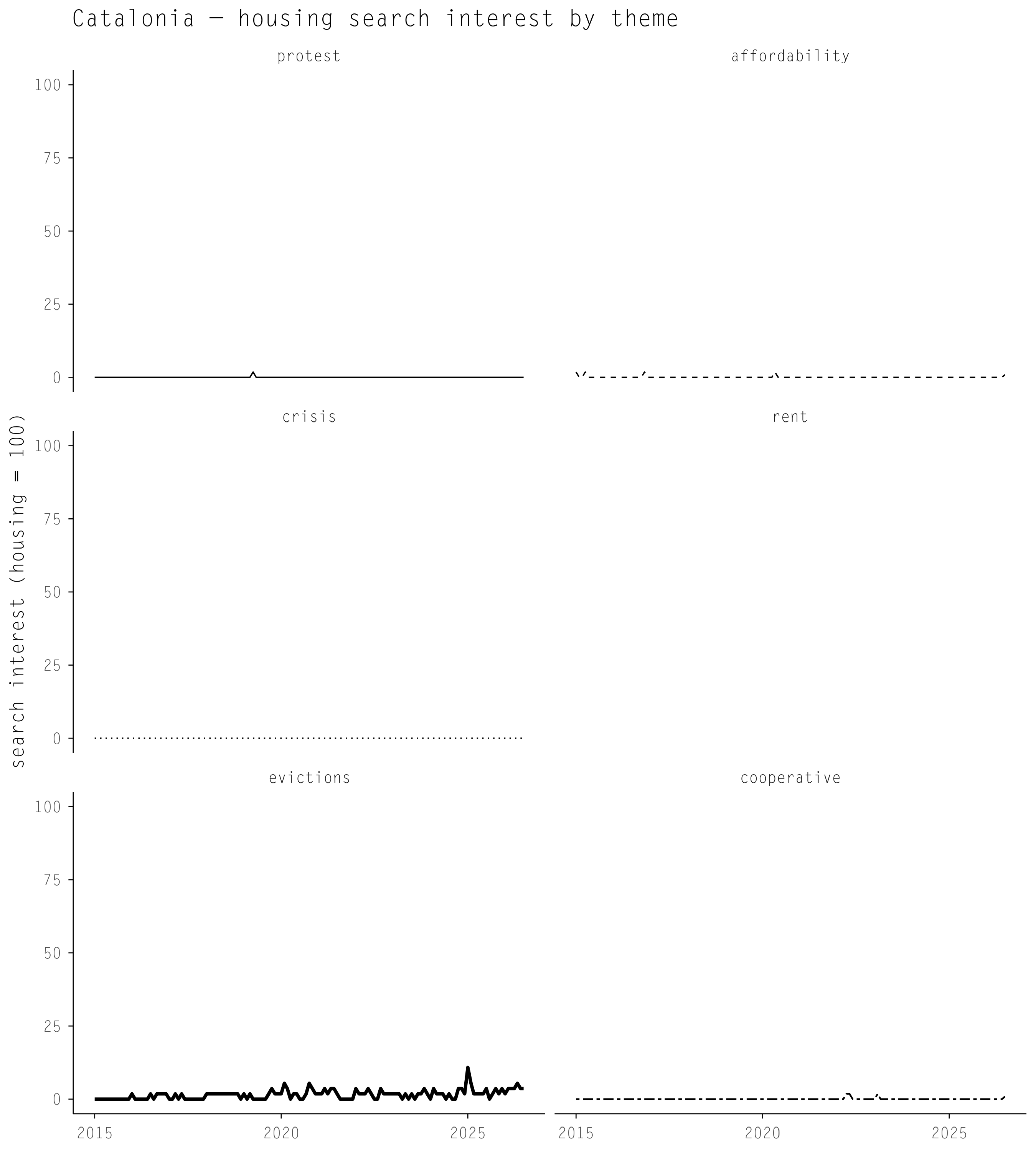
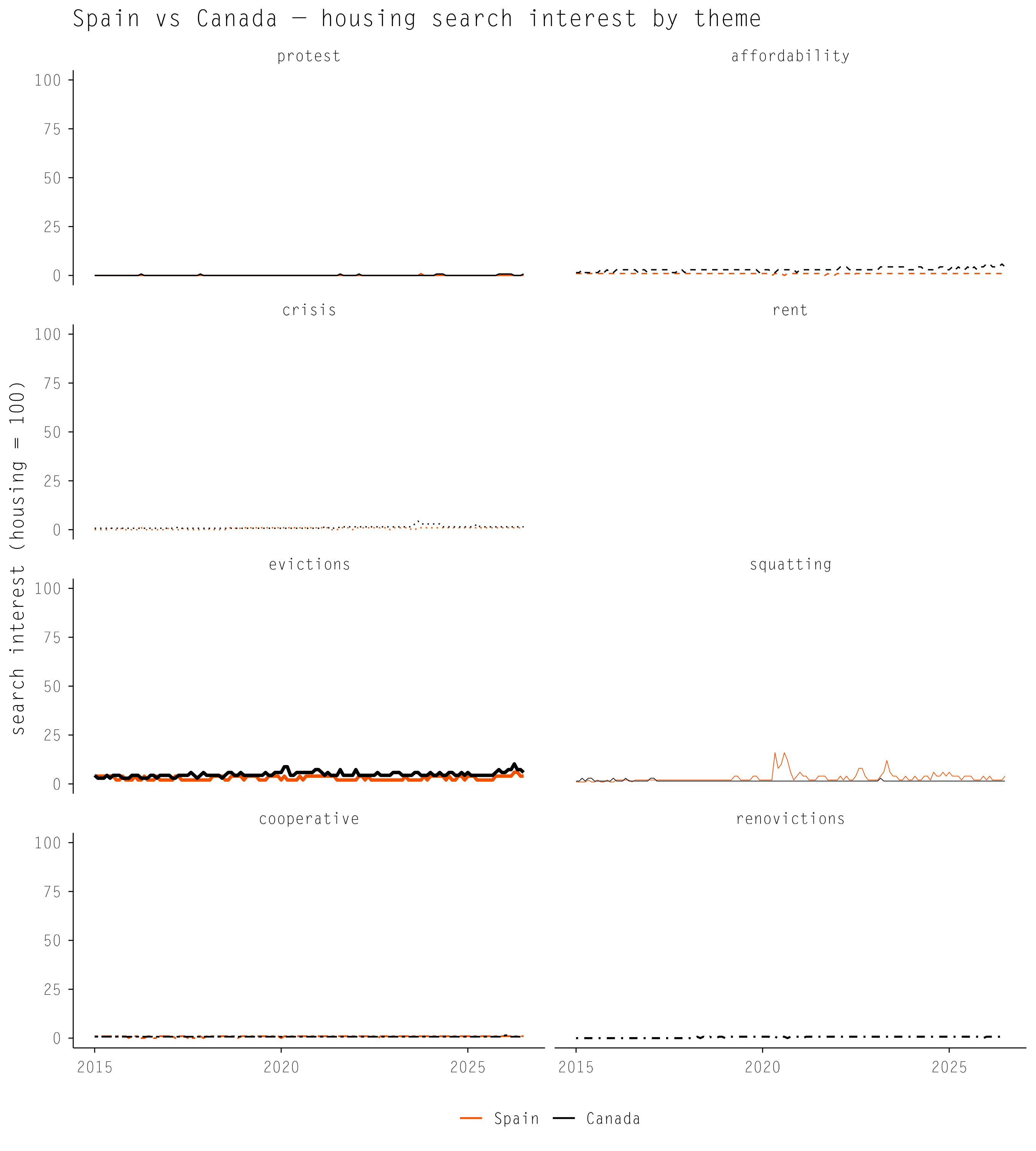
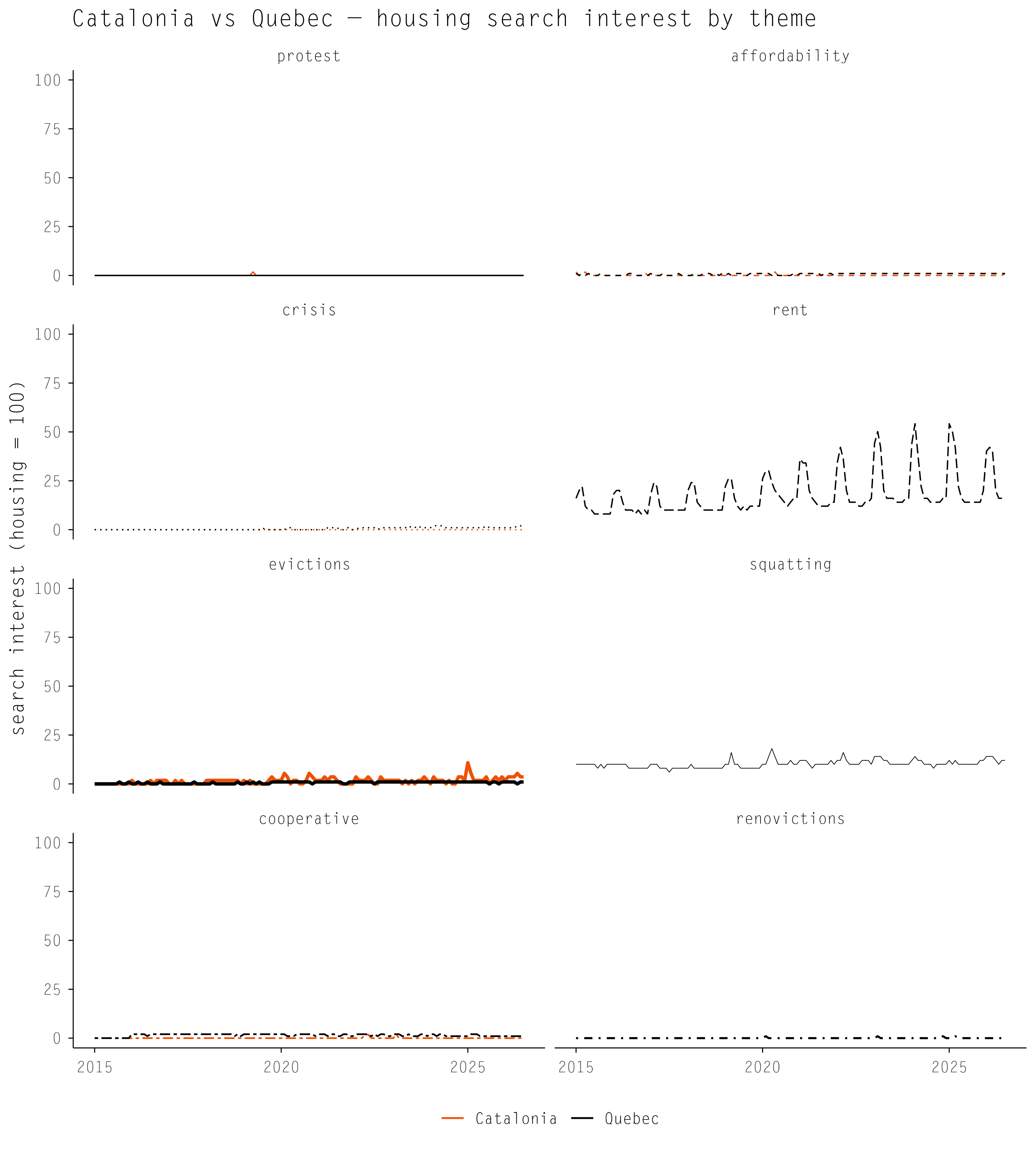
DESKTOP REVIEW FINDINGS: HOUSING DISCOURS IN BOTH CONTEXTS
designed & built by masha vakula